

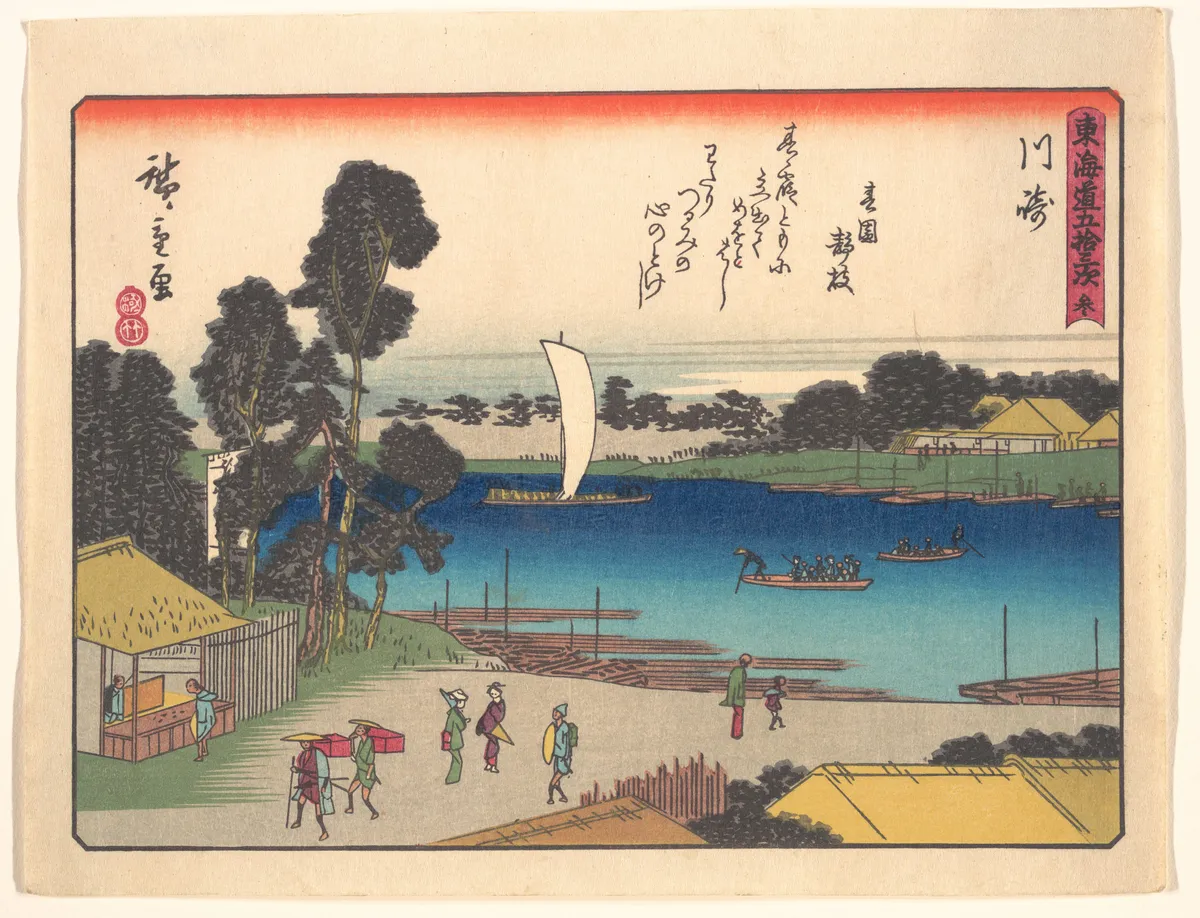
Kawasaki's Passage
The river swells beneath the wooden ferry. Mist hugs the banks, a silent witness to the morning's journey. Figures stand, motionless, on the boat. Their robes, heavy with the damp, hang low. A child clings to his mother's sleeve, eyes wide, peering into the haze. The ferryman pushes against the current with a long pole. His muscles strain, but his face remains impassive. In the distance, faint outlines of rooftops pierce the fog, marking Kawasaki. The air tastes of river silt, a gritty reminder of the land's embrace. Footsteps echo softly as travellers disembark, swallowed by the grey morning. There is no hurry, only the gentle passage of time, the river's soft murmur.
Historical Echo
Kawasaki, a vital stop on the Tōkaidō, connects Edo to Kyoto. In Hiroshige's time, ferries bridged the journey, a simple yet essential crossing. The print captures not just a place, but a moment's pause in perpetual motion. The quiet persistence of travel, the human stories carried across waters, whisper through the woodblock's lines.