

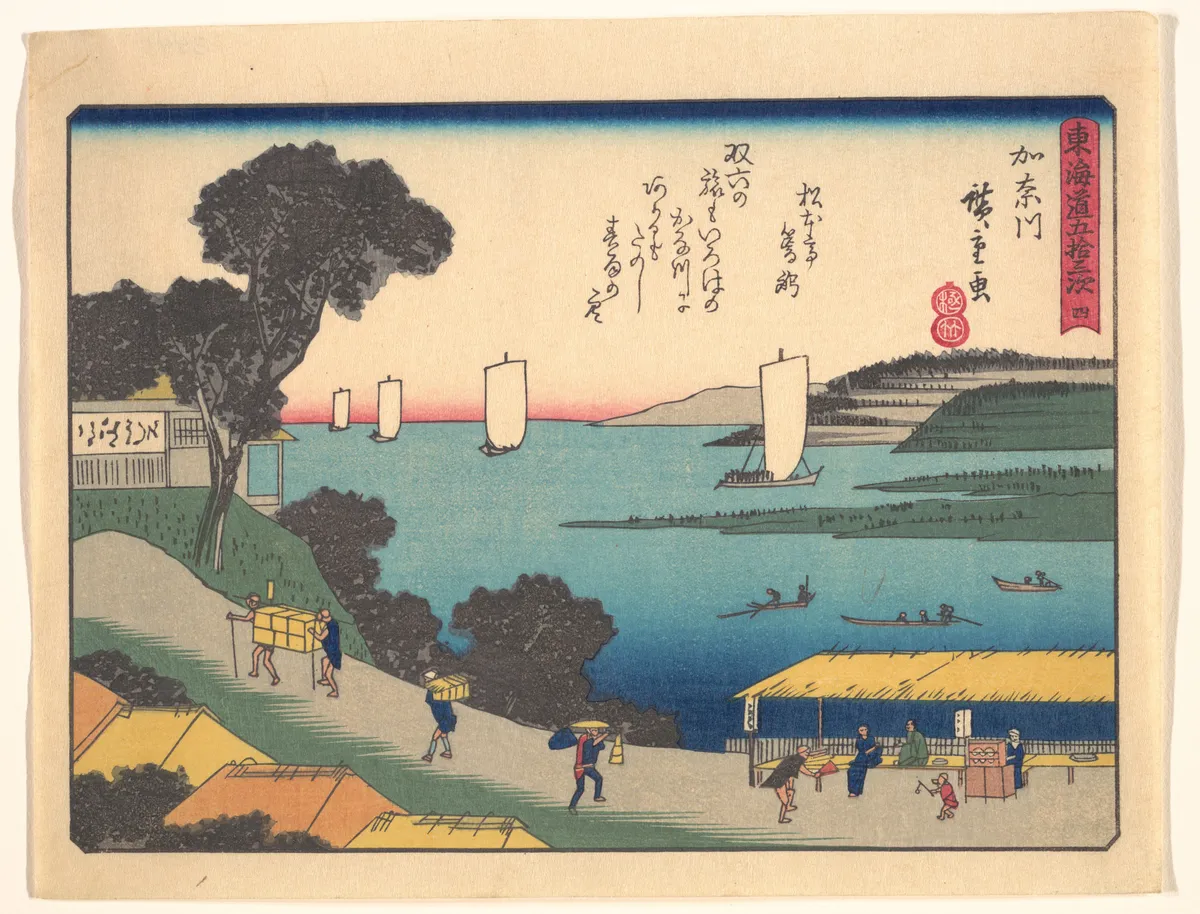
The Road to Kanagawa
The morning mist clings to the road, heavy with the scent of salt and distant pines. A lone traveller pauses, adjusting his wide-brimmed hat against the damp air. The sea murmurs softly to his left, its restless waves barely visible through the veil of fog. Hills rise gently on the other side, their silhouettes softened by the early light. The path ahead snakes through the landscape, promising both solitude and discovery.
A cart creaks in the distance, its wheels crunching over the gravel. The traveller tightens his grip on his walking stick, feeling the weight of the journey in his bones. His footsteps are steady, yet each step echoes with the stories of countless others who have passed this way. Merchants, pilgrims, wanderers—all drawn to the Tokaido Road's promise of connection between Edo and Kyoto.
The air is thick with anticipation. A breeze stirs, lifting the fog momentarily to reveal a glimpse of Kanagawa. The town lies nestled by the shore, its buildings huddled together as if sharing secrets. The traveller continues, drawn by the unseen pull of the sea and the whispers of the road.
Historical Echo
The Tokaido Road was a vital artery in Edo-period Japan, linking the shogun's capital in Edo to the imperial city of Kyoto. Utagawa Hiroshige's prints capture the essence of this journey, blending the mundane with the poetic. In "Kanagawa," the landscape becomes a character, alive with the footsteps of those who traversed its path. The early 20th-century reprinting of Hiroshige's work continues to evoke the quiet yet profound connection between place and memory.