

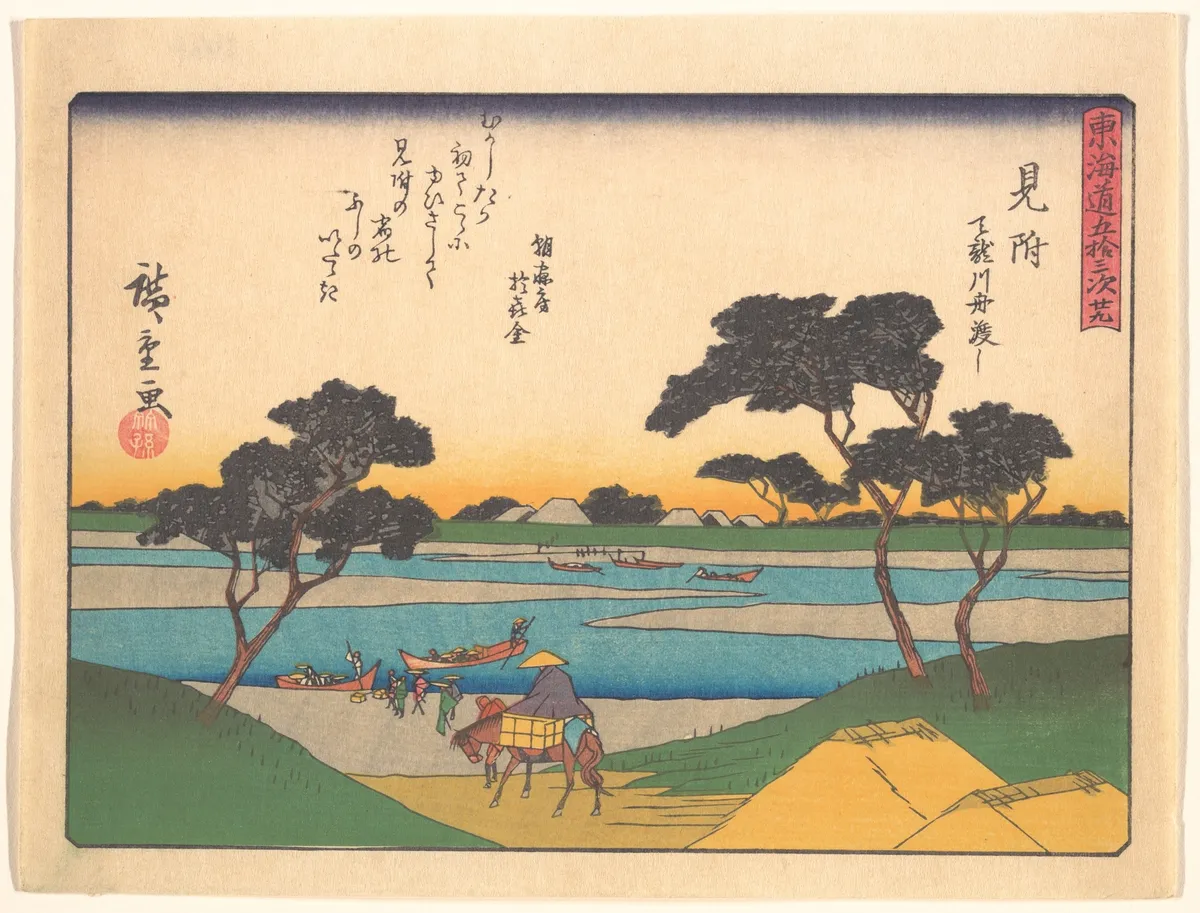
Mitsuke: Tenryū River Crossing
The ferry creaked as it drifted across the Tenryū River. Water lapped softly against wooden planks, each ripple a whispered echo. Morning mist curled above the surface, blurring the horizon between river and sky. The air was moist, cool, carrying the scent of wet earth and pine.
Travellers huddled on the deck, faces shadowed beneath straw hats. They murmured in hushed tones, voices swallowed by the river’s breath. A lone oarsman stood at the helm, his pole dipping rhythmically into the depths. His movements were precise, deliberate, as if drawing invisible lines through mist and water.
The distant shore loomed, trees dark against the pale light. Each stroke brought them closer, yet time seemed suspended, held in the river’s embrace. The ferry was both bridge and boundary, a fleeting world between worlds.
Above, the sky lightened with the promise of day. Yet here, on the water, the world remained quiet, untouched by time’s march. Hiroshige captured it all—the stillness, the passage, the weight of the journey. As the ferry neared land, the travellers’ voices rose, breaking the spell. They stepped ashore, leaving the river’s hold, and the ferry turned back, ready for the next crossing.
Historical Echo
In the Edo period, the Tōkaidō road linked Edo to Kyoto. Mitsuke was one of the fifty-three post stations. The Tenryū River was a formidable barrier. Ferries were essential, navigating swift currents to carry goods and people. Hiroshige’s prints immortalised these transient moments. They captured the quiet drama of travel, the delicate balance between nature and human endeavour.