

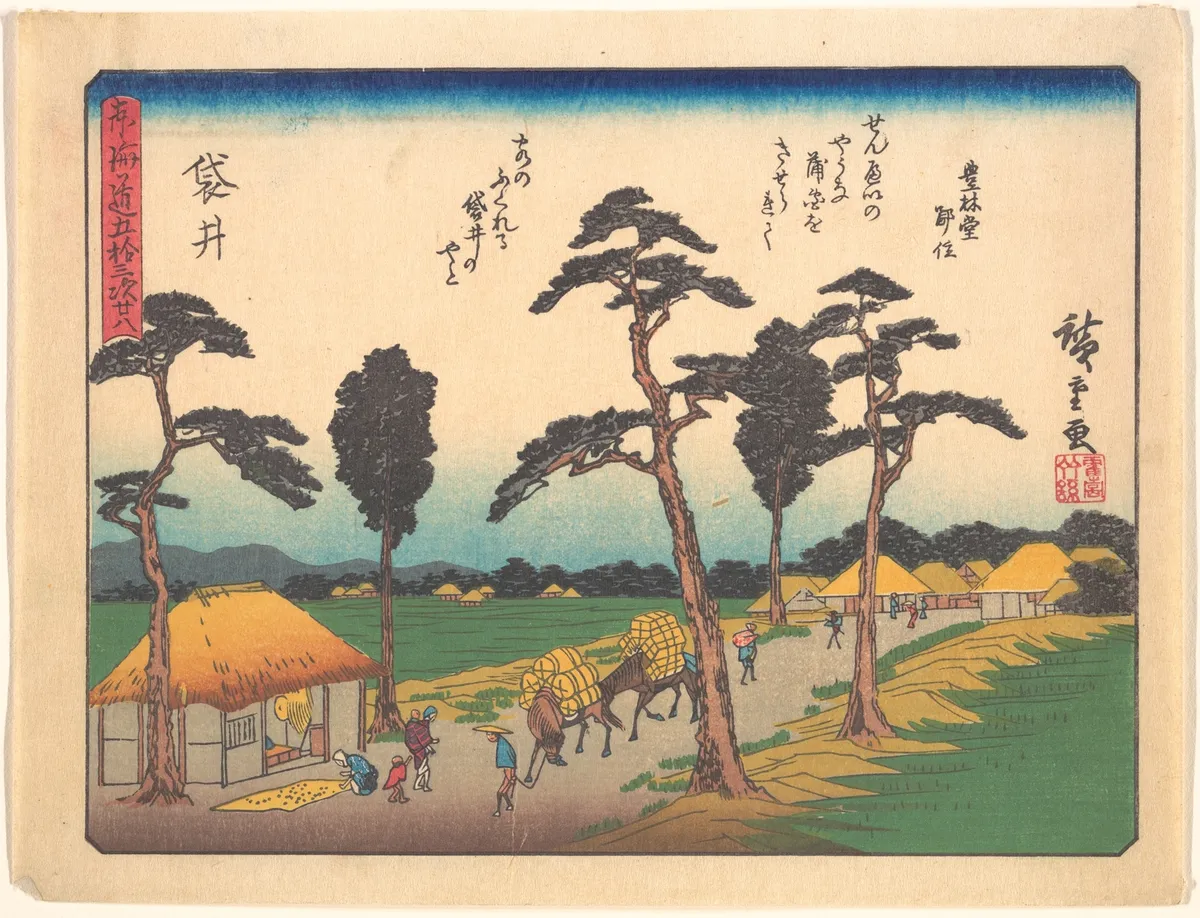
A Quiet Stop at Fukuroi
The air is thick with the scent of damp earth. A gentle mist clings to the pine needles. The road stretches quietly, a ribbon of worn earth beneath the traveller's feet. Somewhere, a bird calls, its voice swallowed by the early morning fog.
Fukuroi is still. A small village, a resting place along the Tōkaidō Road. The huts stand like sentinels, watching over the weary travellers. Their wooden frames creak softly in the breeze. Lanterns sway gently, casting faint light that dances on the wet ground.
A lone figure pauses, adjusting the weight of his pack. His straw sandals leave impressions in the mud. He listens to the silence, to the muted world around him. Each step echoes softly, a companion to the distant rustle of leaves.
The Tōkaidō Road is a lifeline, connecting places and people. It is a path of stories, of whispered history. Here, at Fukuroi, time seems to slow. The road stretches onward, but for a moment, there is peace.
Historical Echo
The Tōkaidō Road was the most important of the Five Routes of the Edo period. It connected Edo, now Tokyo, to Kyoto. Travellers, merchants, and samurai journeyed along its length. Fukuroi was one of the fifty-three stations, a place to rest and replenish.
Utagawa Hiroshige captured these moments. His prints reflect the quiet beauty of the journey. Each station, a vignette of life along the road. His work immortalises the landscapes and the fleeting moments of travel.
In Hiroshige's prints, the Tōkaidō Road becomes more than a path. It is a story, a memory, a quiet echo of a bygone era.