

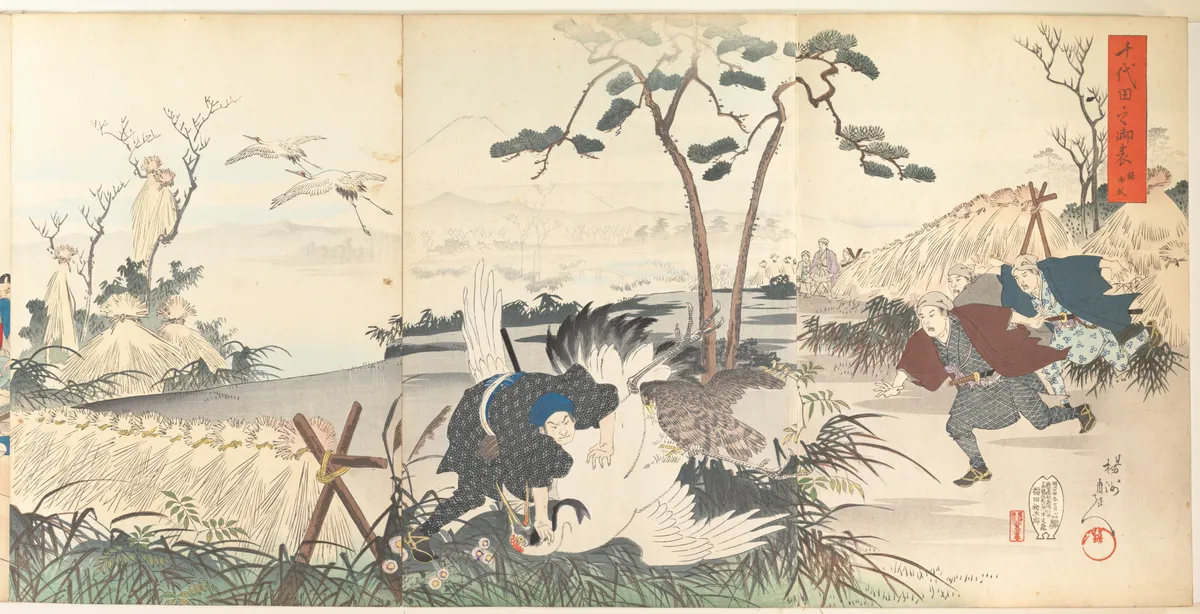
Chiyoda Castle's Quiet Vigil
The castle stood silent beneath a brooding sky. The air, thick with the scent of pine and damp earth, wrapped around its ancient stone walls. A group of samurai, cloaked in the solemnity of their traditional armour, gathered in the castle courtyard. Their presence disturbed neither the stillness nor the gentle whisper of the wind through the trees.
Each warrior moved with deliberate grace, their footfalls muffled by the earth. The weight of their swords, resting against their hips, balanced their resolve and honour. Shadows played across their faces, cast by the flickering lanterns that hung from the castle eaves.
An old pine leaned over the courtyard, its needles stirring with secrets of the past. The samurai's eyes followed its movement, searching the branches for signs, omens perhaps, from the days when their ancestors roamed these grounds. The castle, a testament to endurance, held their stories within its stone embrace.
Far in the distance, the city murmured. Unseen, yet present, it lay beyond the castle's protective walls. The samurai, guardians of tradition, stood as sentinels against the encroaching tide of change. Their silence spoke louder than any battle cry, a vow to uphold the honour of Chiyoda.
Historical Echo
Chiyoda Castle, nestled in the heart of Edo, now Tokyo, served as the seat of power for the Tokugawa shogunate. In 1897, as Japan teetered on the brink of modernisation, Yōshū Chikanobu captured its timeless essence. His woodblock print, a poignant reminder of the samurai's fading world, echoes the stillness and dignity of a bygone era.