

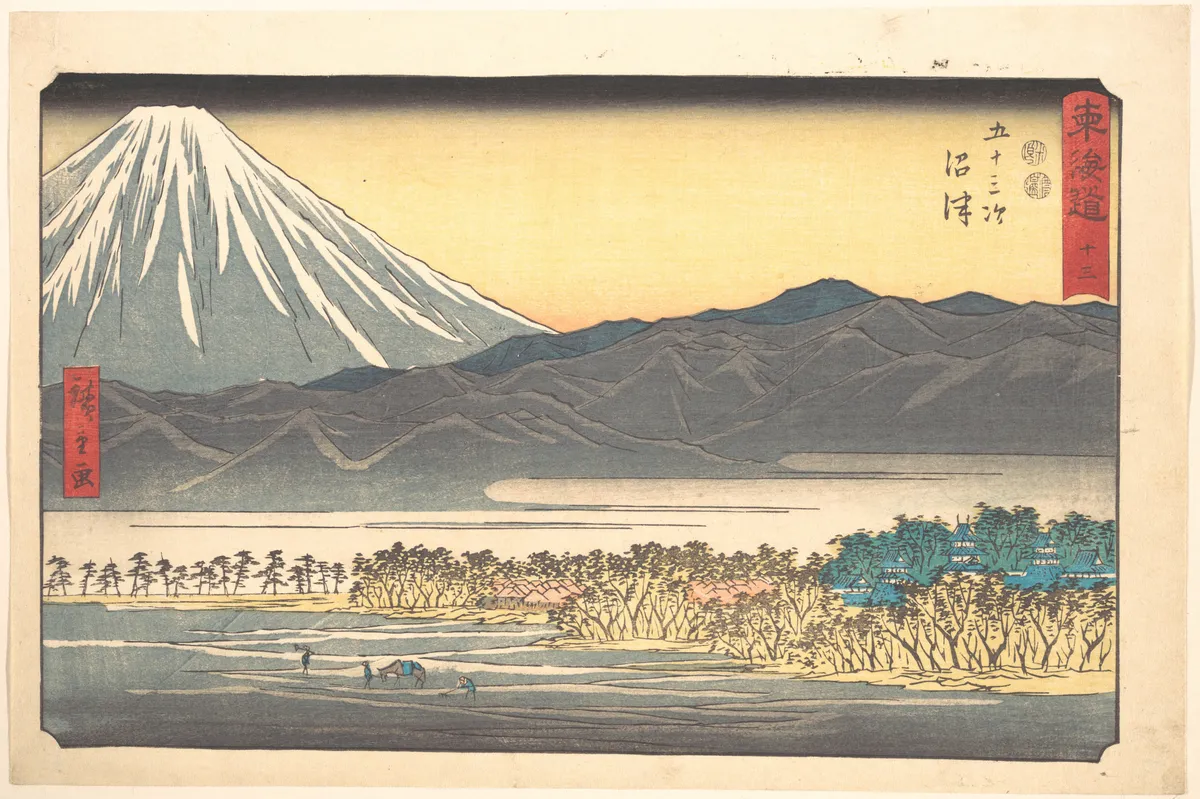
Quiet Journey Through Numazu
The night air hung heavy over Numazu. A faint mist clung to the path, softening the edges of the world. The moon, a pale lantern, cast a silvery light, guiding weary travellers along the Tōkaidō road. Their footsteps whispered on the damp earth, a gentle rhythm in the stillness.
A small group moved slowly, their silhouettes dark against the night sky. Cloaked figures, burdened by the weight of their journeys, trudged onward, each step an echo of distant shores. The scent of pine lingered, mingling with the cool breeze from the nearby sea.
A solitary lantern swung from a traveller's hand, casting flickering shadows on the ground. Voices murmured in low tones, weaving tales of far-off places, of homecomings and farewells. The road stretched endlessly before them, a ribbon of hope and longing.
Above, the stars watched silently, ancient witnesses to countless stories. Here, on this road, life unfolded in quiet moments, each step a testament to endurance and dreams. Numazu, a fleeting pause in the journey, cradled their steps in its gentle embrace.