

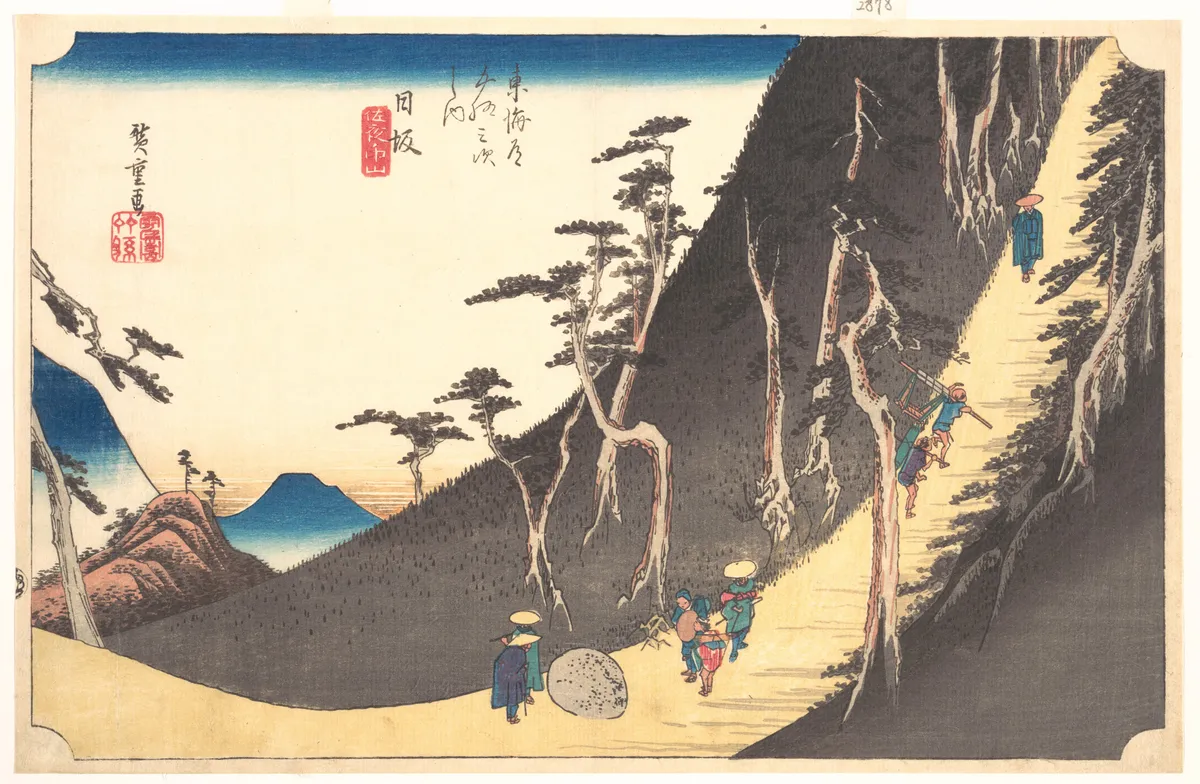
Sayo no Nakayama
A narrow path wends through the mountains. The mist clings to the slopes. It is early morning, and the air is heavy with the scent of damp earth. Pine needles carpet the ground, muffling the travellers’ footsteps.
A man leads a horse, its hooves pressing into the soft soil. The sound is a dull thud, rhythmic and steady. Beside him, a woman adjusts her hat against the morning chill. Her breath is visible, a ghostly wisp that mingles with the fog.
The ascent is steep, but the travellers move with quiet determination. They pass a stone marker, its surface worn smooth by countless hands. The mountain's silence is profound, broken only by the occasional call of a distant bird.
At a bend in the path, the trees part to reveal a sweeping view. Valleys stretch out below, shrouded in a veil of mist. The world seems vast and intimate all at once. The travellers pause, taking in the scene.
Their journey along the Tokaido road is long, filled with such moments of quiet beauty. Each step is a testament to endurance, each breath a whisper of the past.
Historical Echo
Hiroshige’s print captures a moment of tranquil passage on the Tokaido road, a vital artery of Edo-period Japan. The Nissaka station, known for its steep incline, was a notable challenge for travellers. These journeys were both physical and spiritual, a connection to the land and its stories. The Tokaido road linked Edo to Kyoto, bustling with life and commerce. Yet here, in the mountains, there is only the path, the mist, and the quiet companionship of travellers.