

The Silent Turning
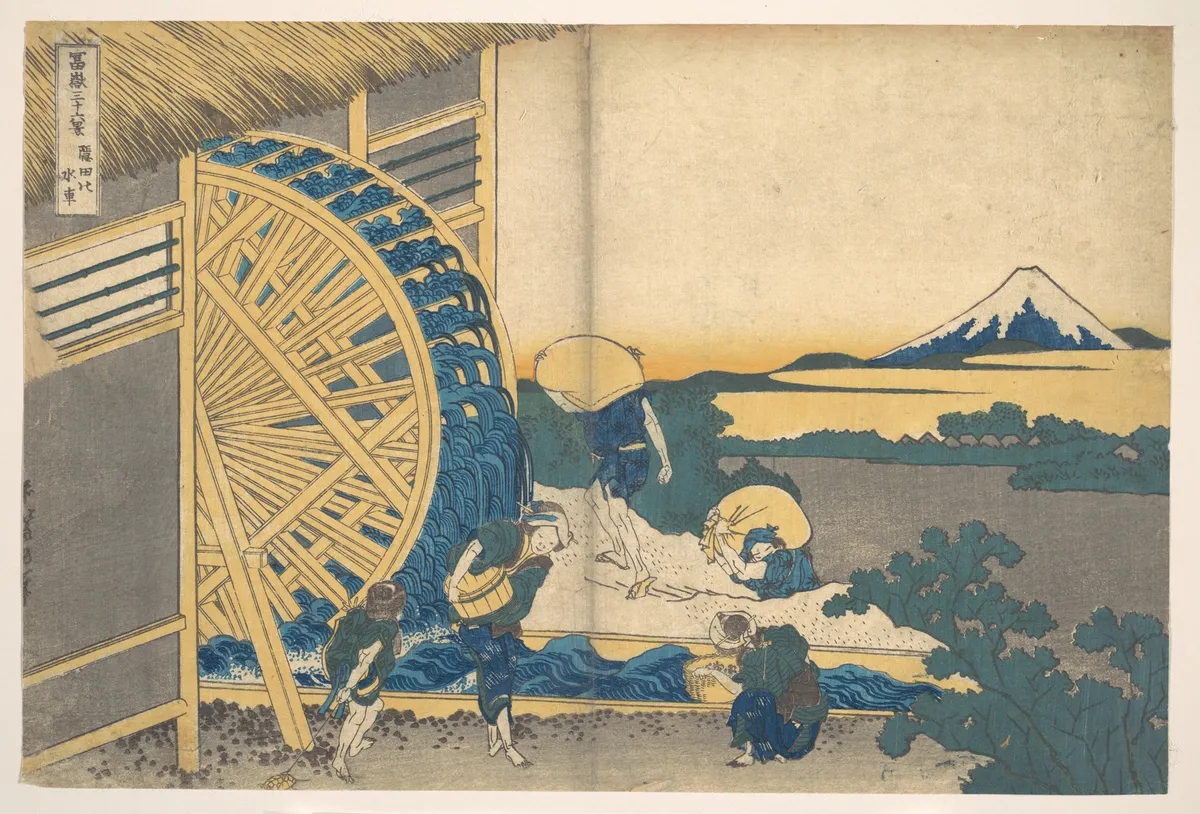
The waterwheel groans, its ancient wood soaked with the damp of countless seasons. Each creak is a whisper, a secret shared with the flowing stream below. The air is thick with the scent of wet earth, and the quiet rustle of the breeze through the reeds. Onden is hushed, save for the rhythmic turning of the wheel.
In the distance, Mount Fuji looms, its presence a silent guardian over this tranquil scene. The mountain's peak pierces the sky, a stark silhouette against the soft hues of the dawn. The villagers, wrapped against the morning chill, move like shadows along the narrow paths. Their footsteps are muted, swallowed by the thick grass and the soft earth.
A lone figure pauses by the water's edge. Their gaze is fixed on the wheel, its steady motion a meditation. Time seems to slow, caught in the endless cycle of the turning wood and the flowing water. The world narrows to this moment, this place—a slice of the eternal, captured in woodblock and ink.
Historical Echo
In the early 19th century, Katsushika Hokusai captured the essence of Japan's landscapes in his series, "Thirty-six Views of Mount Fuji." This particular view, "The Waterwheel at Onden," reflects the harmony between nature and human industry. Waterwheels were vital to rural life, powering mills and aiding agriculture. Hokusai's print serves as a haunting reminder of a slower, quieter world, where even the mountains seemed to breathe in rhythm with the land.