

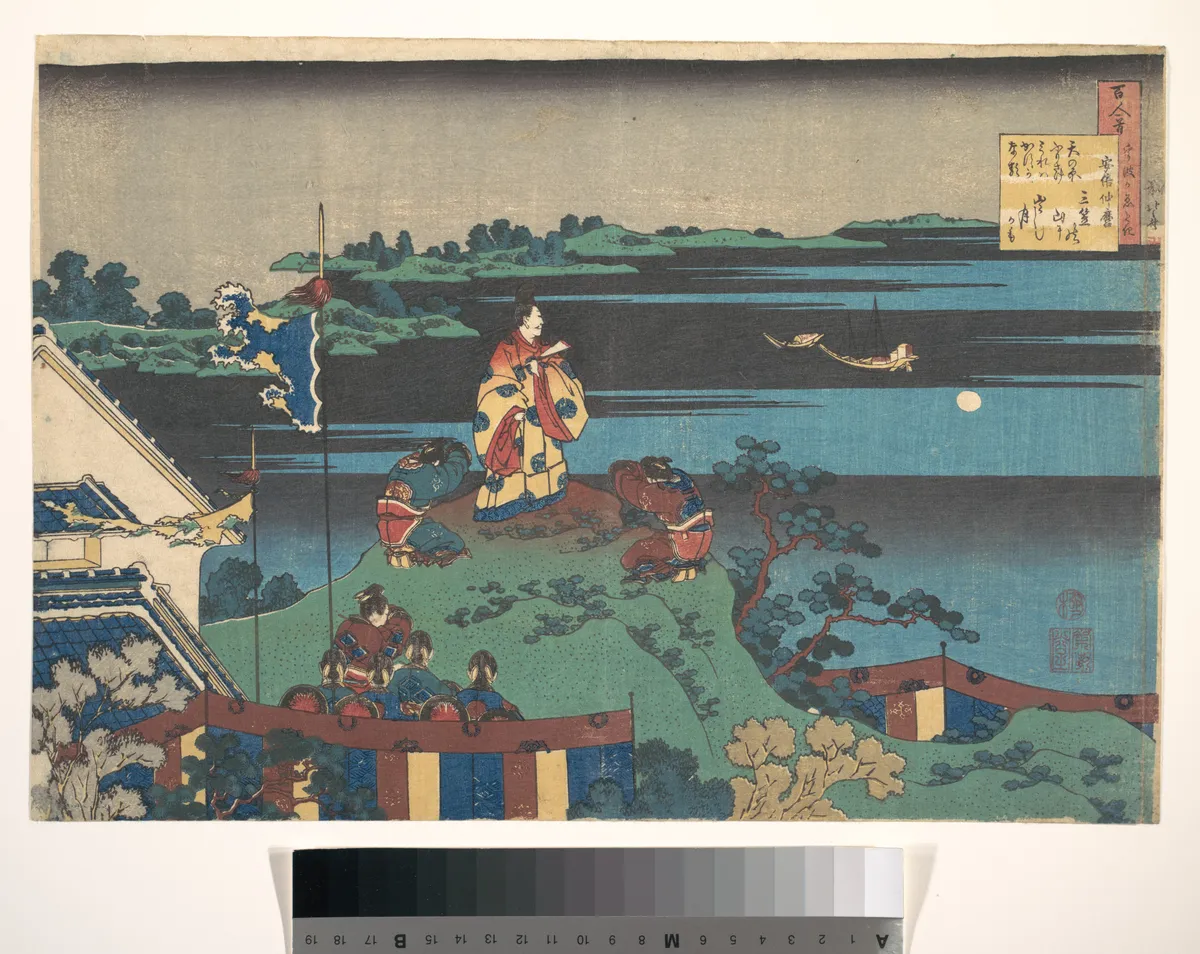
Under the Moon's Watch
Abe no Nakamaro stood alone beneath the vast night sky. The moon hung low, its reflection trembling upon the water's surface. Silence enveloped him, broken only by the soft rustle of leaves. Each breath he took seemed to echo in the stillness.
His eyes traced the moon's journey across the heavens. Memories of distant lands and lost companions filled his mind. He felt the weight of time in the cool night air. Stars blinked above, indifferent and cold.
Nakamaro's thoughts drifted back to his homeland. The scent of pine, the feel of rough paper beneath his fingers as he penned poems by candlelight. Here, in this foreign land, those memories seemed like dreams.
A gentle breeze stirred the grass at his feet. The earth felt solid, yet the world seemed to shift around him, fluid and uncertain. He was a poet adrift, anchored only by the glow of the moonlight.
Historical Echo
Abe no Nakamaro, a scholar and poet, lived during the Nara period. Sent to China, he longed for his homeland, Japan. His poetry captured the melancholy of exile. Katsushika Hokusai immortalised this sentiment in his depiction, blending landscape and longing in one frame. The moon, a constant companion, mirrored the poet's reflection on time and distance.