

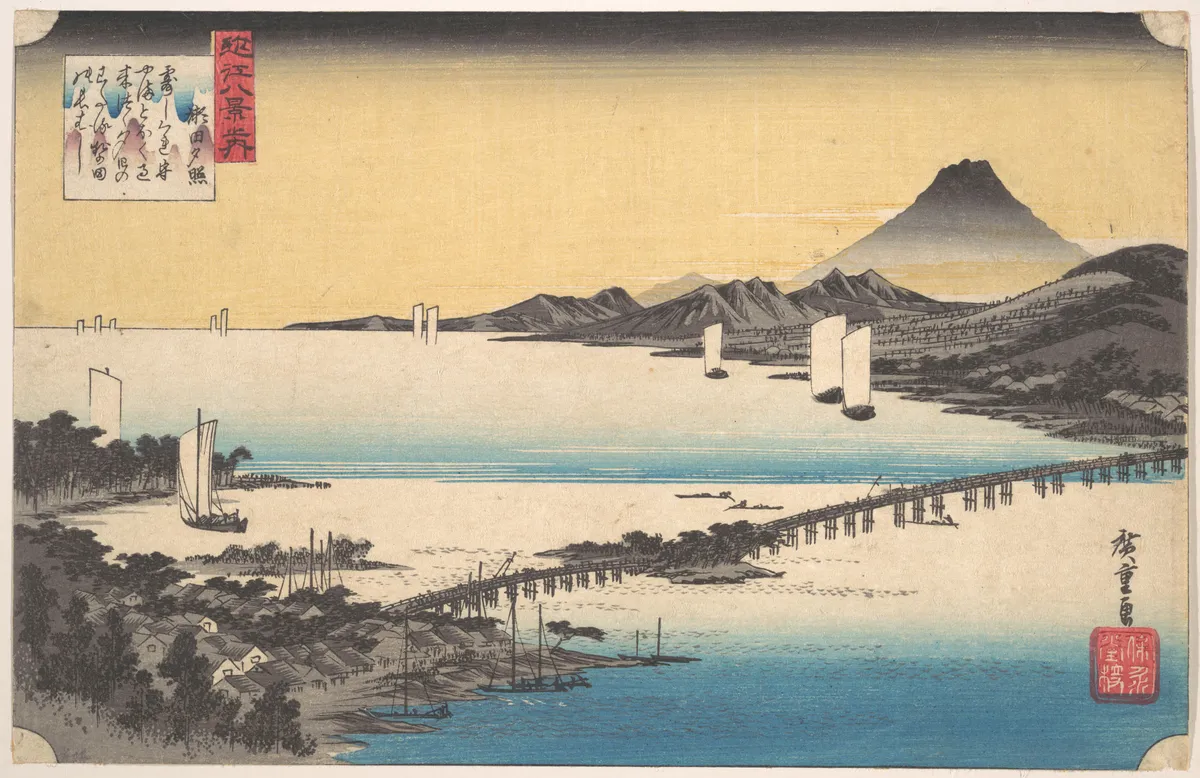
Sunset at Seta
The light fades over Seta. The bridge slices across the quiet water. Silhouettes of boats drift beneath. The air is heavy with evening mist. Pine trees stand like silent watchers. Their needles whisper in the faint breeze.
A lone figure pauses on the bridge. A traveller, weary from the road. His robes are dust-laden, shadowed by the setting sun. The sky bleeds into the lake, colours deepening with every moment.
The traveller listens to the muted lapping of the waves. The wooden planks creak softly underfoot. The world is hushed, as if holding its breath.
He moves on, footsteps echoing. The bridge stretches endlessly. The far shore seems unreachable, a memory.
Yet in this twilight, time blurs. The traveller is both here and not here. He is a part of the landscape. A fleeting presence in Hiroshige's eternal moment.
Historical Echo
Utagawa Hiroshige's landscapes capture fleeting beauty. His "Sunset at Seta" evokes a serene melancholy. The bridge at Seta is a famous landmark. It spans the expanse where Lake Biwa meets the Seta River.
In the Edo period, such scenes were both familiar and distant. Travellers like the lone figure were common. They journeyed through Japan's picturesque routes, seeking both enlightenment and escape.
Hiroshige's work reflects this duality. The print is a meditation on impermanence. It invites us to pause, to breathe with the landscape. To become one with the fading light.
The sunset at Seta remains, a quiet echo. An eternal moment, captured in ink and paper.