

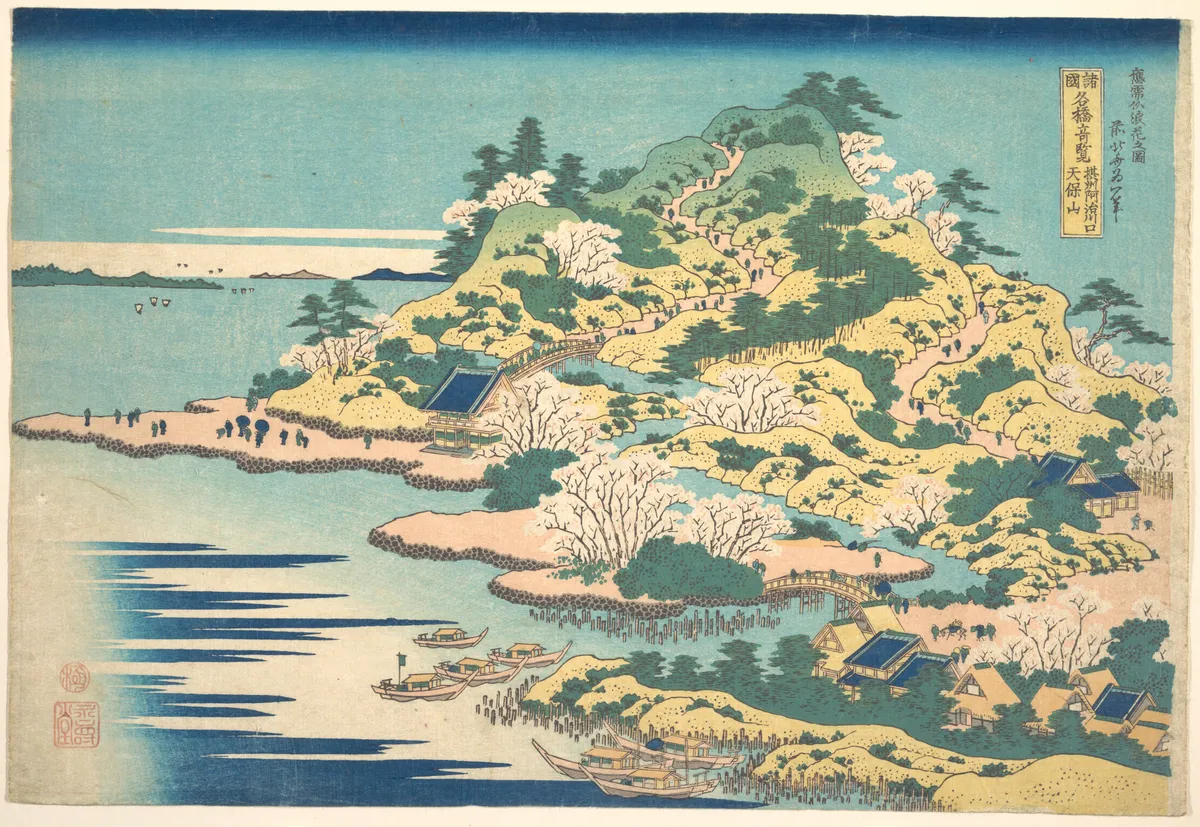
Tenpōzan at the Mouth of the Aji River
The sky is vast and clear. A gentle breeze ripples across the Aji River. Small boats drift lazily, their sails like white wings against the blue. Men work silently, hauling nets. Their voices are low, mingling with the whisper of water. The bridge stands firm, arches reflecting in the river's surface. A mountain, Tenpōzan, rises beyond—its silhouette serene. The scene breathes a quiet harmony, suspended in time.
Historical Echo
During the Edo period, the mouth of the Aji River was a bustling hub. Tenpōzan, though modest in height, was a landmark. It signified human endeavour in taming nature. Hokusai captured this balance—between man, water, and land—with precise elegance. His prints offered an escape, a momentary pause in the relentless flow of life.