

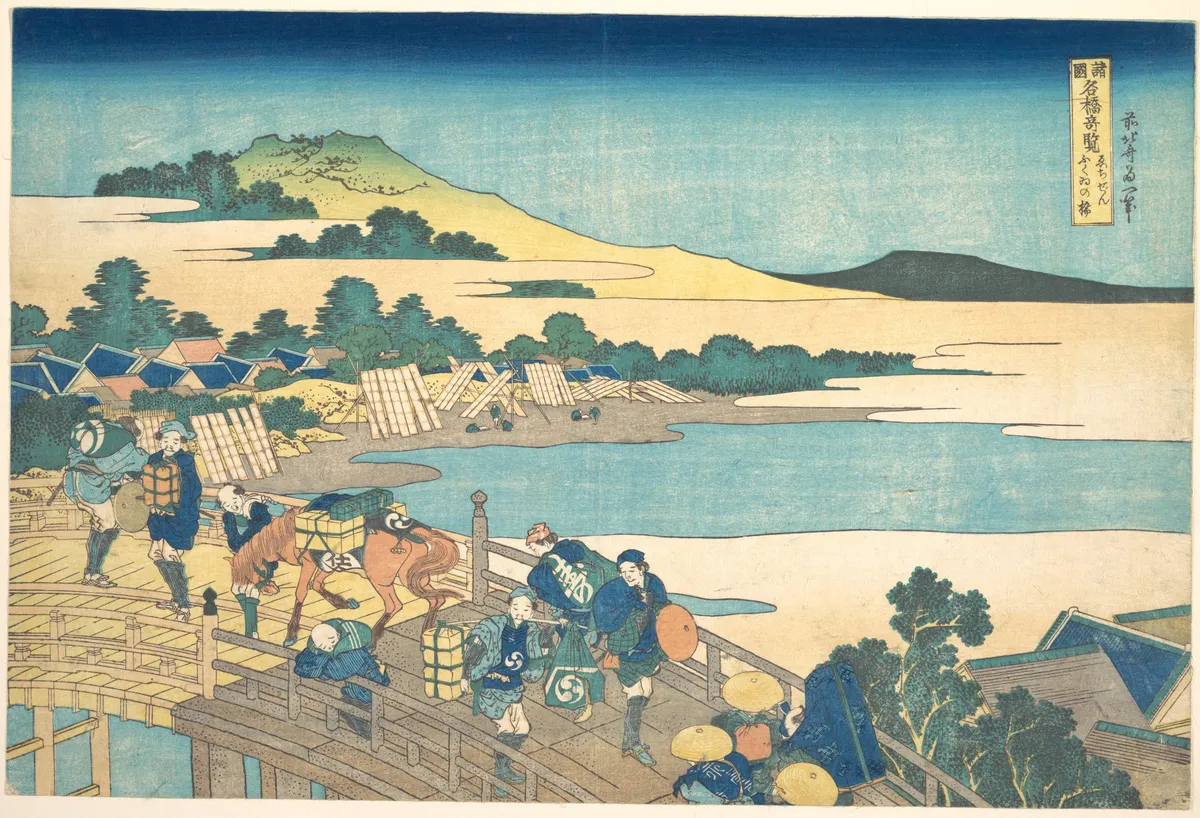
Beneath Fukui Bridge
A soft mist clings to the river. The Fukui Bridge stretches across, a silent guardian over the flowing waters. Fishermen in small boats glide beneath, their poles dipping into the depths with quiet precision. The air is cool, the muted whispers of the river melding with the creak of wood and the gentle splash of oars.
On the bridge, figures move with deliberate grace. Their silhouettes are softened by distance and haze. A vendor shuffles with his wares, the faint clink of pottery accompanying his steps. A woman in a simple kimono pauses, her gaze lost in the swirling currents below.
The scene is timeless. The bridge stands firm, yet it breathes with the life that crosses it. Above, the sky is a pale wash, the sun hidden behind a veil of clouds. The scent of damp earth rises, mingling with the faint tang of river water.
Here, in this moment, the world is hushed. Hokusai has captured not just a place, but the soul of a morning in Echizen. The bridge, the river, the people—all part of a quiet, enduring tableau.
Historical Echo
In the early 19th century, bridges were more than mere crossings. They were lifelines, connecting distant lands and lives. Katsushika Hokusai, in his series "Remarkable Views of Bridges in Various Provinces," sought to capture this essence. The Fukui Bridge, in Echizen Province, stands as a testament to the simplicity and beauty of everyday life. Through Hokusai's eyes, the bridge becomes a stage for the subtle drama of existence, where nature and humanity meet in quiet harmony.