

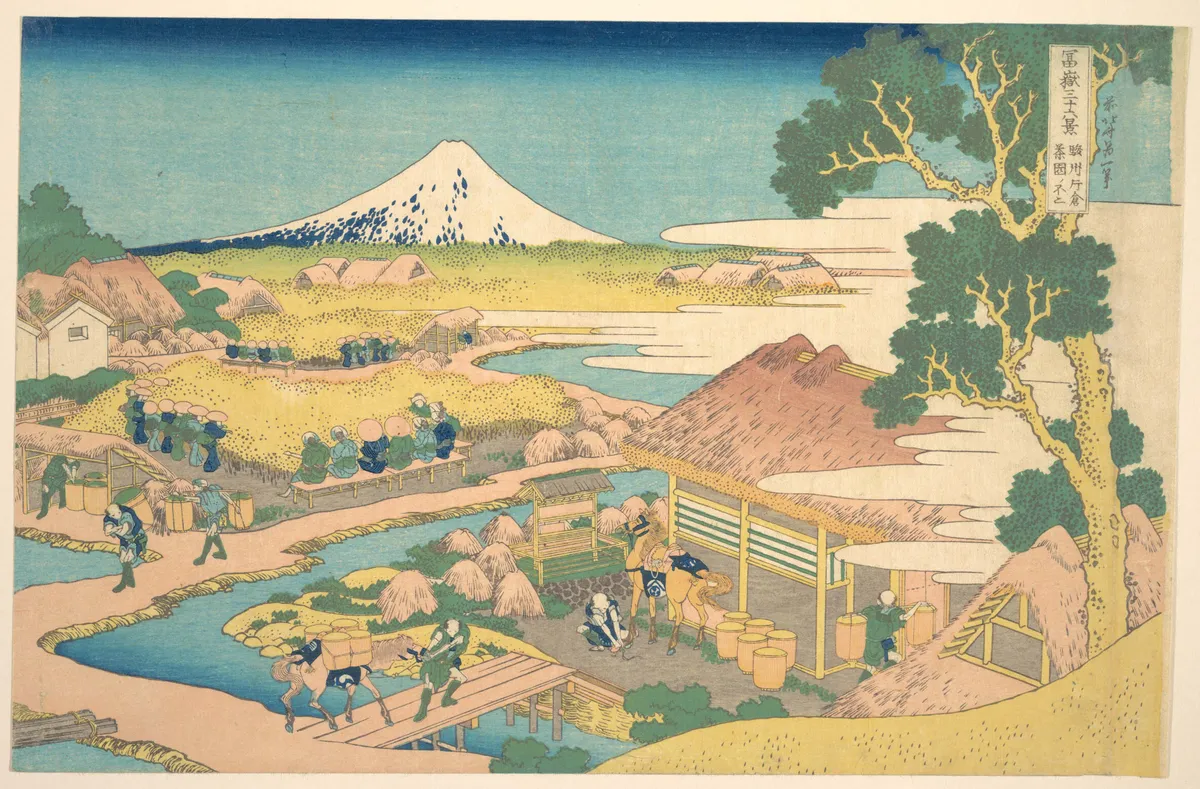
Fuji from the Katakura Tea Fields in Suruga
The air hangs heavy with morning mist. A chill breeze rustles the leaves of the tea bushes. Workers move silently, their straw hats swaying gently as they pluck leaves with practised fingers. Each movement is deliberate, each breath timed to the rhythm of the earth.
Beyond, Mount Fuji rises, its peak kissed by the first light of dawn. The mountain stands eternal, untouched by the passage of time. A solitary crow caws in the distance, its call echoing through the stillness.
The scent of fresh tea leaves mingles with the crisp mountain air. The workers pause, glancing towards Fuji's majesty. For a moment, all is still. Time stretches, the world holding its breath.
A woman adjusts her basket, breaking the silence. The rustle of woven reeds whispers through the fields. The sun climbs higher, painting the clouds in hues of gold and pink. Shadows dance across the land, fleeting and ethereal.
Mount Fuji watches, unmoved. The tea fields stretch onwards, an endless sea of green. Life continues, a quiet symphony beneath the mountain's gaze.
Historical Echo
Katsushika Hokusai captured the serene beauty of Mount Fuji and the tea fields of Suruga in this woodblock print. Created between 1830 and 1832, it is part of his iconic series, Thirty-six Views of Mount Fuji.
In Hokusai's time, tea cultivation was a vital industry in Japan. The workers' lives were intertwined with the land, their days marked by the cycle of the seasons.
This print reflects the harmony between nature and human endeavour. It whispers of a world where the mountain stands as a silent guardian, a constant presence amidst the ephemeral life below.
Mount Fuji remains a symbol of enduring beauty. Hokusai's vision captures not just a landscape, but a moment in time, suspended in the delicate balance of light and shadow.