

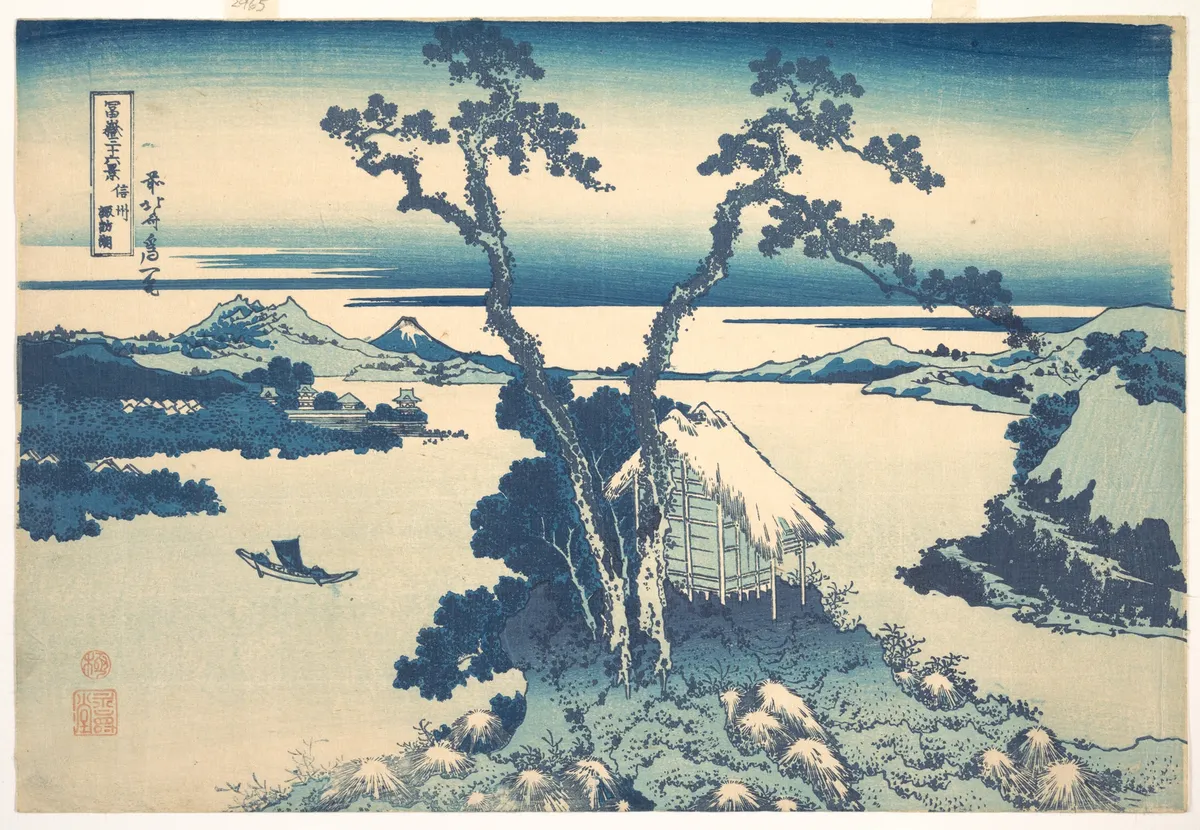
The Silent Lake
The air was crisp around Lake Suwa. Silence, broken only by distant calls of unseen birds, wrapped the scene. Boats lay anchored, their wood creaking softly as they bobbed with the gentle waves. Hokusai's brush had captured the immensity of Mount Fuji, its peak shrouded in mist, looming over the tranquil waters. Fishermen, mere silhouettes, moved slowly, their presence a whisper against the vastness. The scent of pine mingled with the cool lake breeze, carrying whispers of ancient tales across the water. Light played upon the surface, a dance of shadows and reflections. The day stretched, timeless. Nature's quiet conversation continued, unhurried, beneath the watchful gaze of Fuji.
Historical Echo
In the early 1830s, Hokusai embarked on a journey to immortalise Mount Fuji from varied perspectives. "Thirty-six Views of Mount Fuji" became a seminal series, portraying the mountain's majesty and its relationship with the surrounding landscape. Lake Suwa, captured here, is known for its unique natural phenomenon, the "God's Crossing," where the lake's frozen surface cracks audibly in winter. Hokusai's work transcends mere depiction, inviting viewers into the serene interplay between human life and nature's grandeur.