

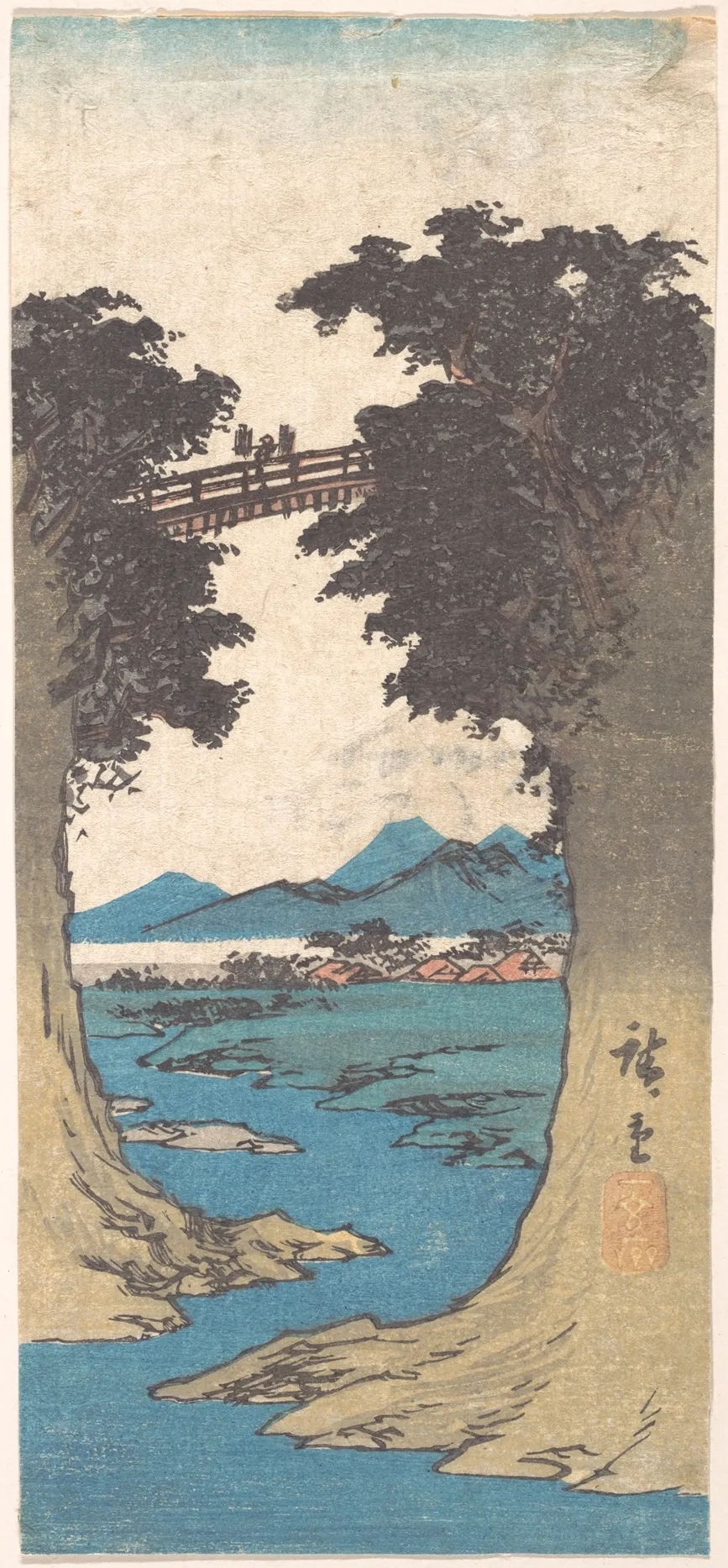
The Silent Crossing
Mist clung to the valley, a soft shroud over the Monkey Bridge. The air was thick, damp with the promise of rain. Below, a river murmured, its voice muffled by the fog. Trees stood sentinel along the banks, their branches hanging heavy with moisture. A lone traveller paused at the bridge's edge. His sandals left faint impressions in the mud. He adjusted the straw hat shielding his face from the drizzle. The world felt distant, swallowed by the mist.
His breath formed clouds in the morning chill. The bridge creaked beneath his weight, a whispered protest. Step by step, he crossed the wooden span. Beneath, water lapped against stone, a gentle rhythm. As he reached the centre, the fog shifted, revealing the far bank. He paused, gazing into the distance. The trees blurred into shadow, their forms indistinct. Silence enveloped him, save for the river's endless song.
The traveller moved on, footsteps echoing in the stillness. Behind him, the bridge faded into mist once more. Only the soft rustle of leaves remained, a memory of the crossing.
Historical Echo
The Monkey Bridge, a place of legend and lore, finds its image captured by Utagawa Hiroshige. In the Edo period, such landscapes were more than mere scenery. They held stories, whispers of the past woven into the present. Hiroshige's work often embraced this interplay between nature and human presence. Here, the bridge becomes a connection not just of land, but of moments shared across time, where travellers like the one in the story leave their invisible footprints on history.