

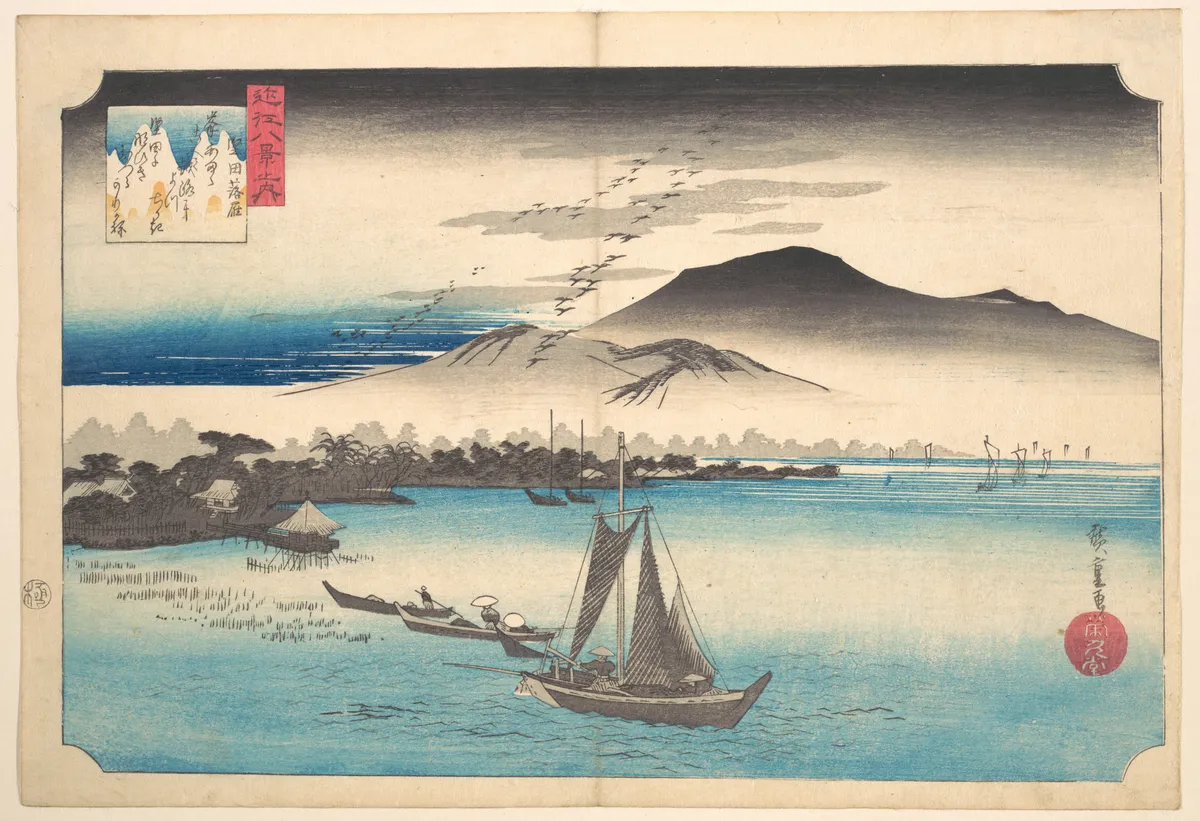
Returning Geese at Katada
The evening settles over Lake Biwa. A soft mist drapes the water. The air, heavy and cool, holds the scent of pine. Geese return, slicing through the sky, their cries echoing in the stillness.
A lone fisherman stands by the shore. His small boat rocks gently in the water. He watches the geese, their wings a blur against the fading light. The lantern beside him flickers, casting a dance of shadows on the rippling lake.
Katada's shoreline is quiet, save for the rustle of the reeds. The village rooftops, barely visible, merge with the distant mountains. The world seems hushed, waiting for night to envelop it.
Each honk of the geese is a note in the symphony of dusk. The fisherman listens, his heart attuned to the rhythm of nature. He knows this scene well, yet each return of the geese brings a new whisper of time's passage.
Historical Echo
In the early 1830s, Utagawa Hiroshige captured the essence of Edo's landscapes. His work, "Returning Geese at Katada," is an ode to the tranquility of nature. The geese, a symbol of change and return, connect the human heart to the eternal cycle. Hiroshige's prints were a window into a world on the brink of modernity, yet still deeply rooted in the harmony of its natural surroundings.