

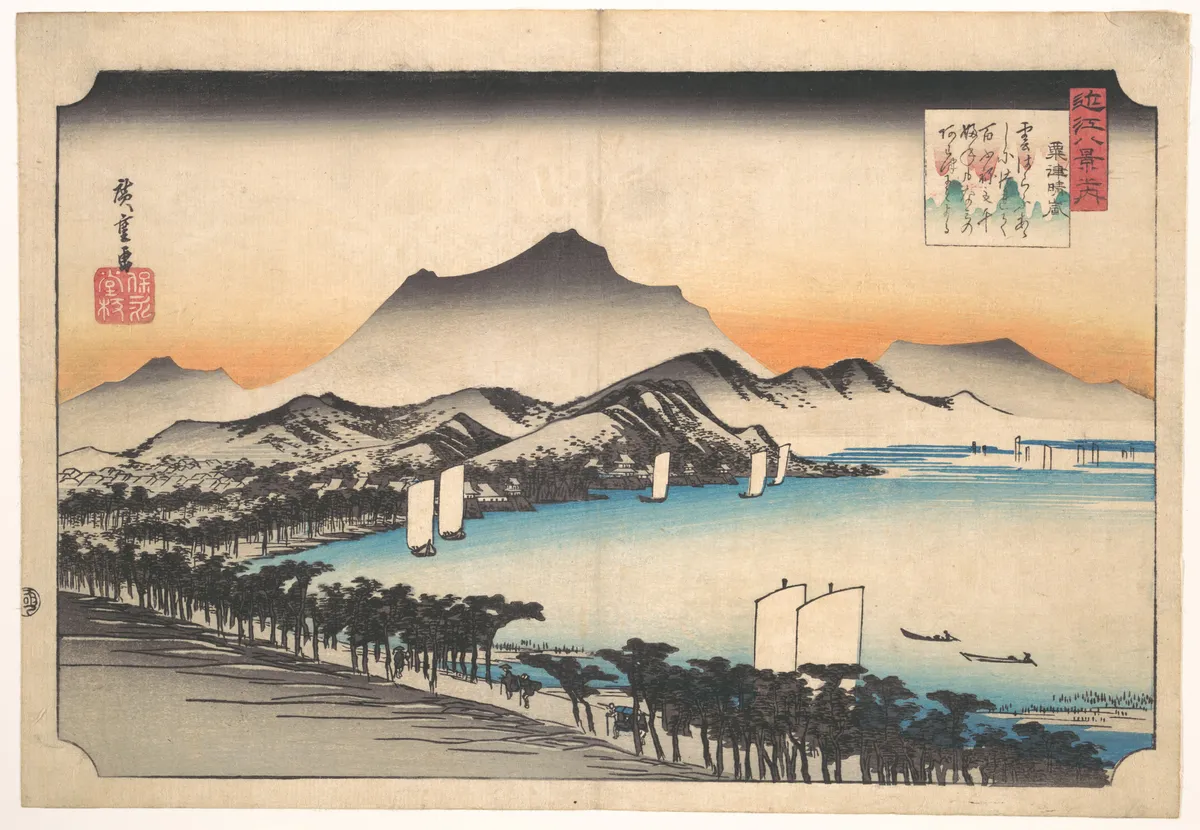
Clearing Weather at Awazu
The rain had passed. The earth still smelled of wetness, heavy and rich. A gentle breeze stirred the leaves, whispering through the branches of the ancient pines that stood like sentinels along the shore. The lake, now calm, mirrored the freshly washed sky, a soft blue punctuated by lingering clouds.
Farmers, their straw hats bobbing, returned to the fields. Their feet pressed into the damp soil with a soft squelch, marking the earth with the rhythm of their labour. Nearby, birds shook water from their wings, their calls echoing in the clear air.
Beyond, the mountains stood shrouded in mist, their forms softened by the receding storm. The air was cool and carried the distant scent of pine resin and earth. A lone traveler, cloak wrapped tightly, watched the scene unfold, his breath visible in the crisp air. Silence enveloped the land, a pause between the storm and the return of daily life.
Historical Echo
In the Edo period, landscapes like Awazu were often subjects of admiration and reflection. Utagawa Hiroshige captured these fleeting moments with precision, bringing the serene beauty of Japan’s countryside to those who could not journey there themselves. His prints remind us of nature's transient moods and the quiet resilience of those who live within its embrace.