

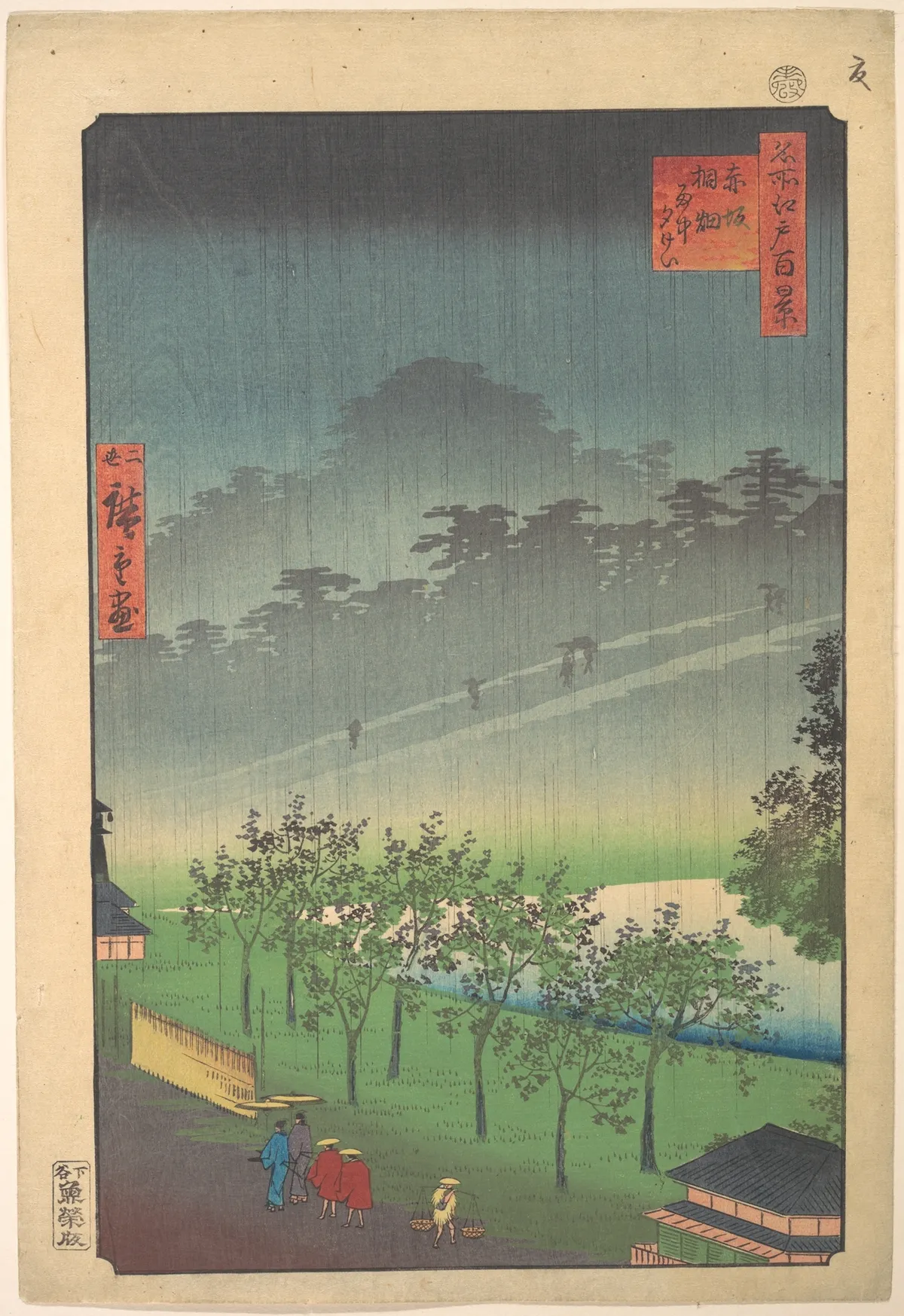
Evening Rain at Akasaka
The rain fell softly over Kiribata, a gentle murmur against the wooden eaves. A lone traveller moved along the path, the fabric of his umbrella taut against the downpour. His sandals whispered over the wet earth, leaving faint imprints that filled with water. Lantern light flickered from a nearby inn, casting a warm glow that seeped into the misty air. The scent of damp pine lingered, mingling with the distant aroma of miso soup. Shadows danced in the lantern light, alive in the evening hush.
Akasaka felt quiet, almost sacred, under the rain. The traveller paused, listening to the rhythm of droplets on leaves. Somewhere, a shutter creaked open, a brief interruption in the rain's song. The moment passed, and silence returned, a cocoon of soundless whispers. The traveller resumed his walk, the rain a constant companion, the path winding into the muted horizon.
Historical Echo
In 1859, Utagawa Hiroshige II captured the essence of Akasaka in rain. The woodblock print reflects the subtle beauty of Edo-period landscapes, where nature and humanity coexist in quiet harmony. Rain, a favoured motif, symbolised renewal and the ephemeral nature of life. Hiroshige II, a student of the famed Hiroshige, continued his master's legacy, portraying everyday scenes with poetic simplicity. The print not only illustrates a place but evokes the timeless, melancholic spirit of Japan's changing seasons.