

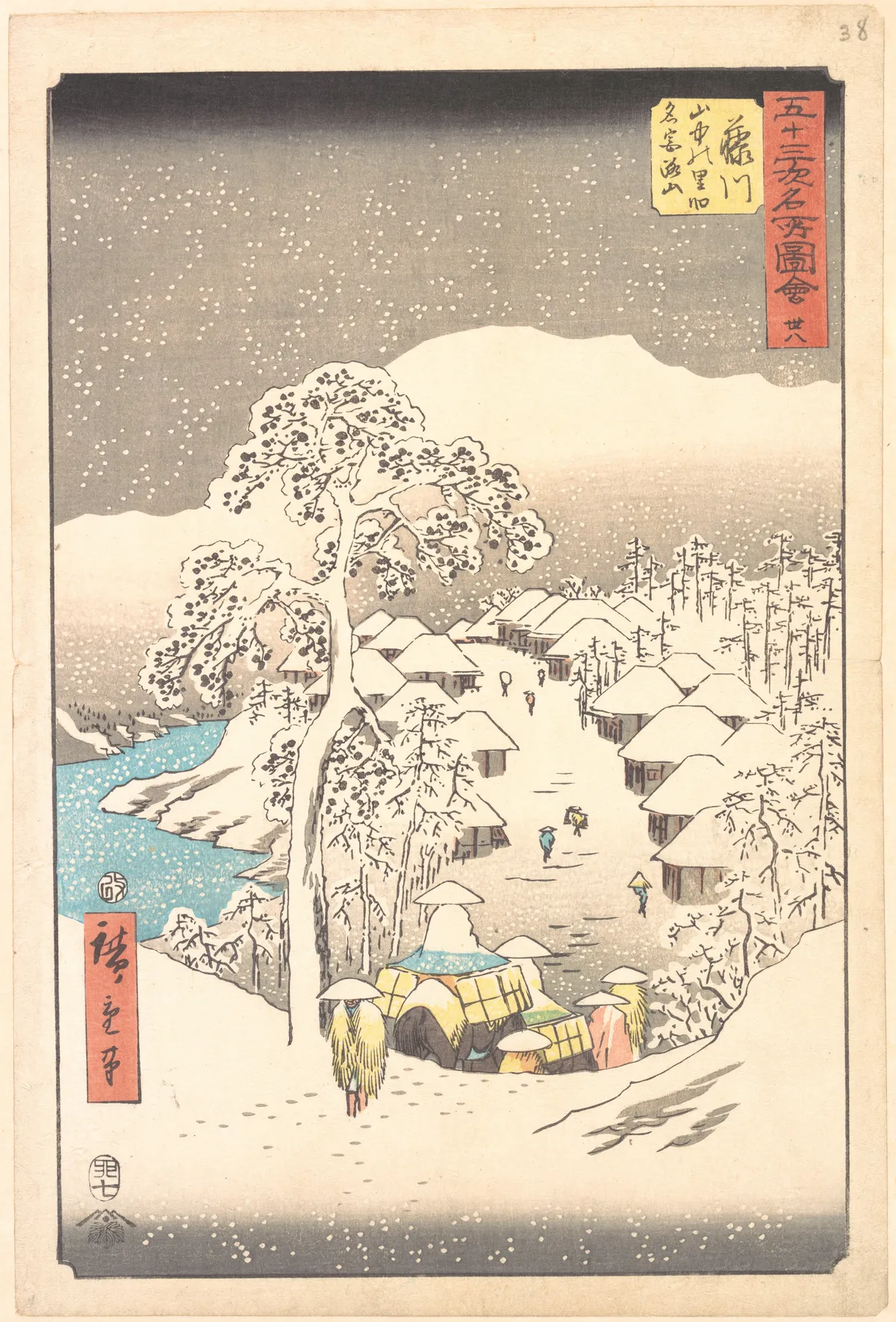
The Quiet of Fujikawa
Dusk settled over Fujikawa. The mountains loomed, ancient and silent. Houses clustered like whispered secrets. Pine trees stood tall, their needles brushing the evening sky. A narrow path wound through the village, trodden by countless feet. The air was cool, touched with the scent of earth and pine.
A lantern flickered in the gathering darkness. Its light cast gentle shadows on the wooden walls. An old man, wrapped in a heavy coat, shuffled along the path. His footsteps were soft, almost part of the wind. He paused, listening to the rustle of leaves and distant murmurs of a stream.
In the distance, a woman’s voice called softly. It was a lullaby, tender and timeless. The song drifted through the village, mingling with the evening mist. Children, weary from play, huddled under warm blankets. Their dreams promised adventures in the mountains, among spirits and legends.
Fujikawa, once known as Miyajiyama, held its stories close. The village was a place where time moved slowly, where each day was a gentle echo of the past. As the sky darkened, stars appeared, scattered like grains of rice. Silence wrapped the village, deep and profound.
Historical Echo
Fujikawa was nestled in the mountains, a village with a history steeped in tradition. Utagawa Hiroshige captured its essence in 1855. The artist's eye saw the quiet beauty of this place, its landscape unchanged by time. Once called Miyajiyama, the village was a stop on the Tōkaidō road, a path connecting Edo to Kyoto. Travellers found solace in its serene surroundings. Hiroshige’s work reflects the stillness and the gentle rhythm of life that defined Fujikawa. His prints preserve the spirit of a village where nature and humanity existed in quiet harmony.