

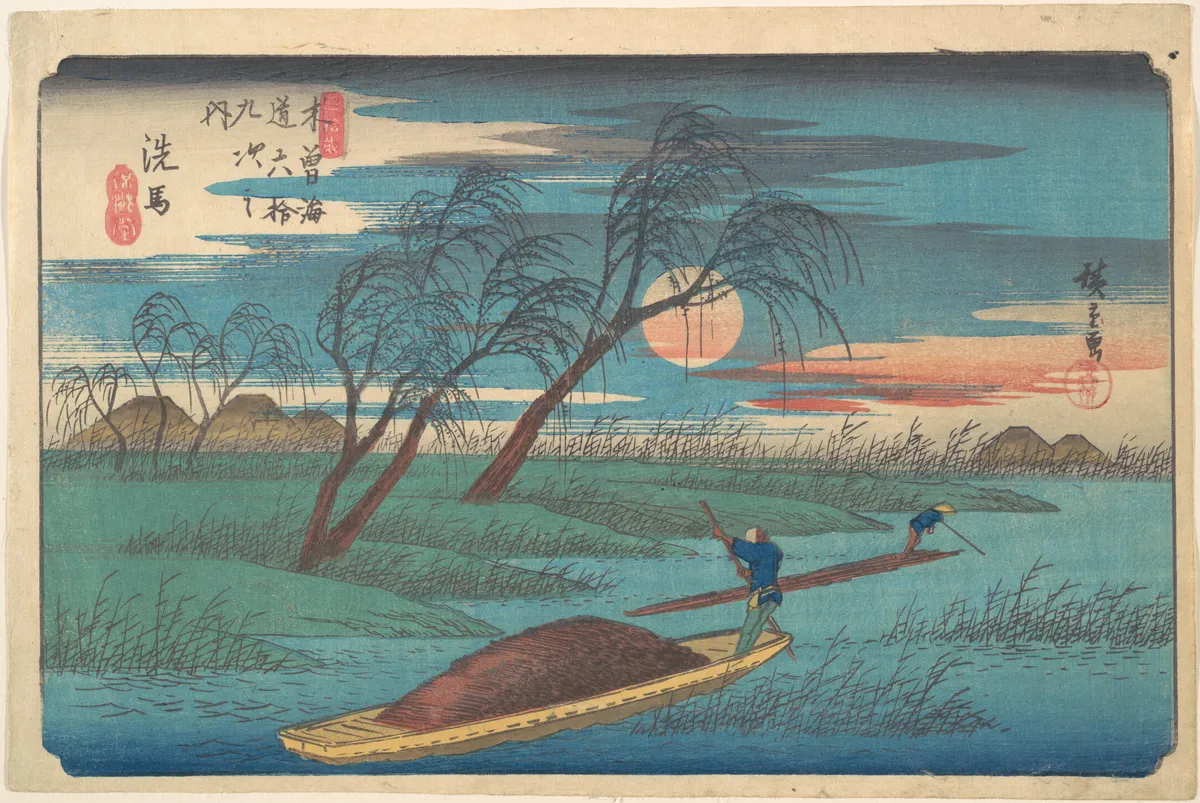
Quiet Passage
Dusk drapes over Senba Station. A chill seeps through the air. Travellers move like shadows, their footsteps muffled by the soft earth. Lanterns flicker, casting long, trembling reflections on the ground. The railway snakes into the distance. The horizon swallows its iron spine.
A lone figure pauses, holding a parcel close. Breath condenses in the evening air, a momentary cloud. The smell of pine and damp leaves lingers. Nearby, a vendor closes his stall, the clatter of wooden shutters breaking the silence.
The station breathes gently, a transient space between worlds. Trains arrive, then leave, their presence marked by a distant rumble. People come, then go, leaving behind echoes of conversations. Night creeps in, wrapping the station in a cloak of solitude.
Historical Echo
Senba Station stands as a witness to countless journeys. In 1836, Hiroshige captured this ephemeral scene, an intersection of humanity and nature. The station, a symbol of transition, reflects the Edo period's embrace of modernity. Yet, it remains rooted in the land's ancient rhythms. The print whispers stories of travellers and time, a serene moment held in the artist's delicate lines.