

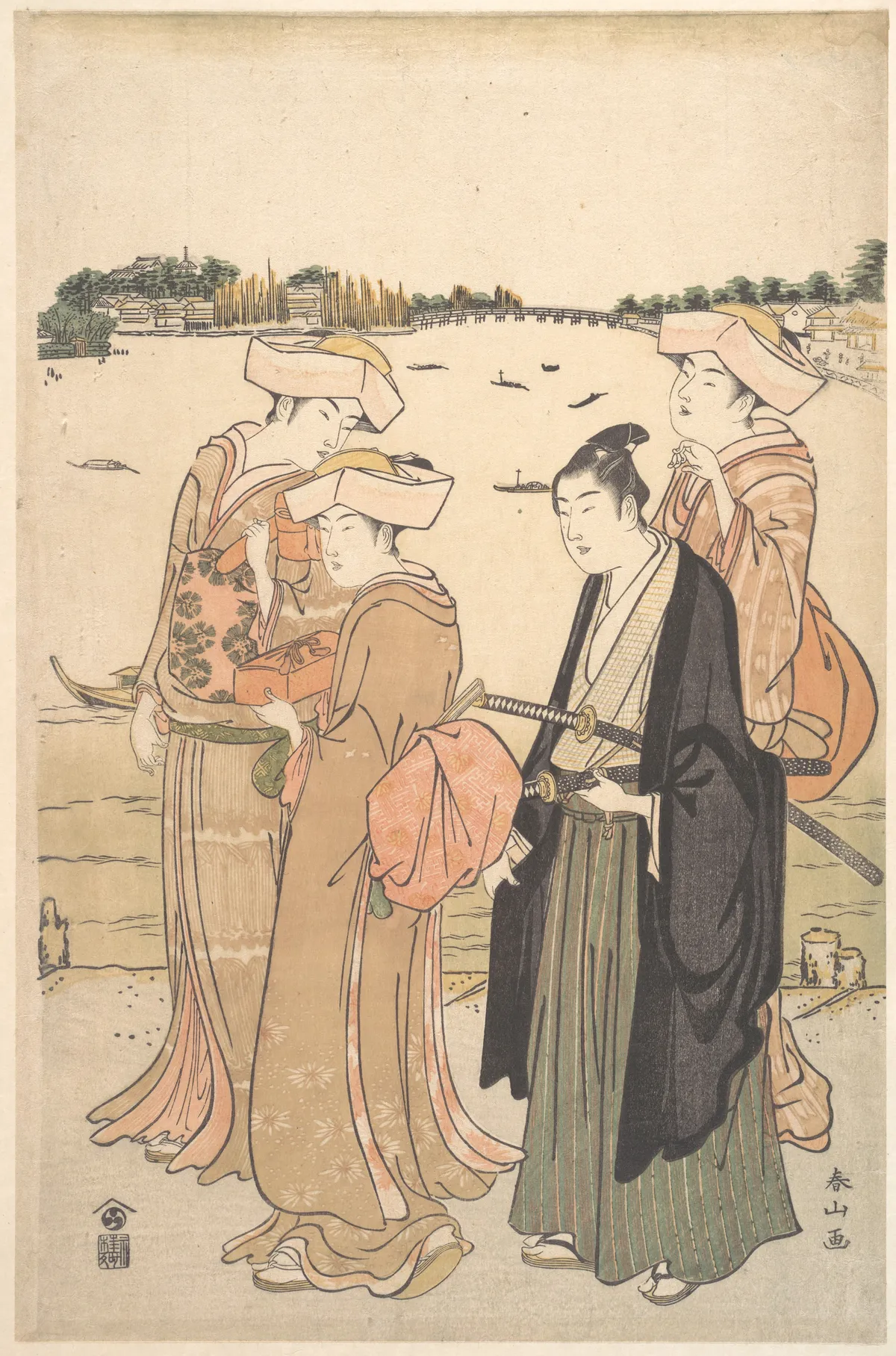
A Quiet Gathering
The room is dimly lit, shadows flickering on the shoji screens. The air is thick with the scent of incense, hanging like an unspoken tension. A young samurai sits with his back straight, his gaze steady but distant. His armour glints faintly under the soft candlelight, reflecting the weight of unspoken words.
Three women sit across from him, their kimonos a riot of muted colours and intricate patterns. The silence between them is palpable, broken only by the hushed rustle of silk. The eldest woman, her hair threaded with silver, pours sake with practiced grace. The cup lands softly on the tatami, a gentle reminder of the moment's formality.
The youngest woman steals a glance at the samurai, curiosity flickering in her eyes. Her hands rest delicately in her lap, fingers tracing unseen patterns on the fabric. The middle woman, poised and serene, watches the samurai with a knowing smile, as if she alone understands the quiet storm within him.
Outside, the wind stirs the cherry blossoms. Petals drift past the open window, a silent dance of fragility. The samurai shifts slightly, the movement almost imperceptible, yet it speaks volumes. He is a man poised between duty and desire, tethered by tradition yet yearning for something unnamed.
The room breathes with history. Each figure holds their own story, woven into the fabric of Edo's twilight. The samurai, the women, the flickering shadows—they are echoes of a world caught between the past and the present, suspended in a moment both fleeting and eternal.
Historical Echo
Katsukawa Shunzan's work captures the nuanced interplay of societal roles in Edo Japan. The young samurai, emblematic of duty and honour, sits amidst women who embody grace and tradition. The scene is a delicate balance of tension and tranquility, a reflection of the era's intricate social fabric. Shunzan's deft use of line and shadow brings forth the quiet drama of everyday life, a testament to the enduring human spirit.