

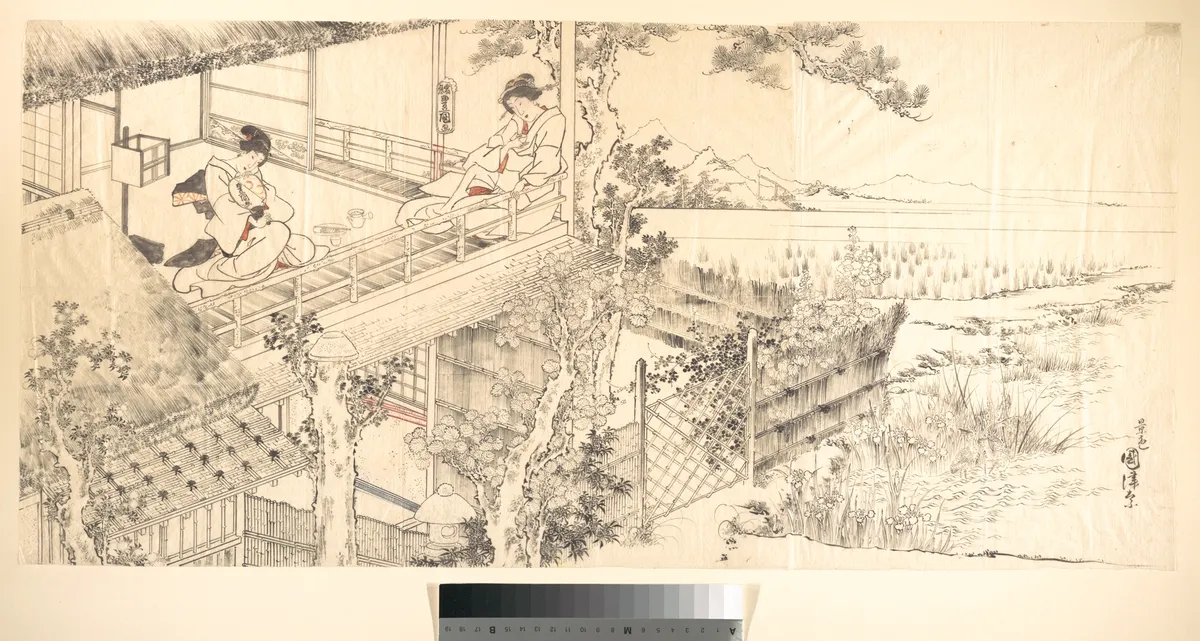
Two Courtesans in Contemplation
A quiet hum of evening settles over the teahouse. The air, thick with the scent of green tea and distant rain, wraps around the room. Two courtesans sit by the open shoji, their silken kimonos whispering with every slight movement. They gaze out, eyes tracing the gentle arc of the horizon as it fades into twilight.
Their hands rest lightly on the tatami, fingers playing with the delicate threads of their obi. The taller one shifts, the rustle of fabric echoes softly in the intimate space. Outside, lanterns flicker to life, casting a warm glow that dances across their serene faces.
The room is a sanctuary of muted colours and soft light, where time drifts like the slow curl of incense smoke. A distant temple bell rings, its deep sound resonating through the evening air, merging with the quiet conversations drifting up from the street below.
The courtesans exchange a glance, a silent understanding passing between them. Their world is one of duty and performance, yet in this moment, they are simply two women, sharing the solitude of the evening and the beauty of the view.
Historical Echo
In the Edo period, courtesans were revered for their beauty and wit, often celebrated in art and literature. Utagawa Kunisada, a master of ukiyo-e, captured their world with sensitivity and detail. This scene, rendered after 1844, is a glimpse into the private moments of those who lived at the heart of Edo's vibrant pleasure quarters. Here, the teahouse becomes a refuge from the bustling streets, a place where courtesans could momentarily escape the gaze of admirers and find solace in the quiet company of each other. The artwork reflects the delicate balance of public performance and private introspection that defined their lives.