

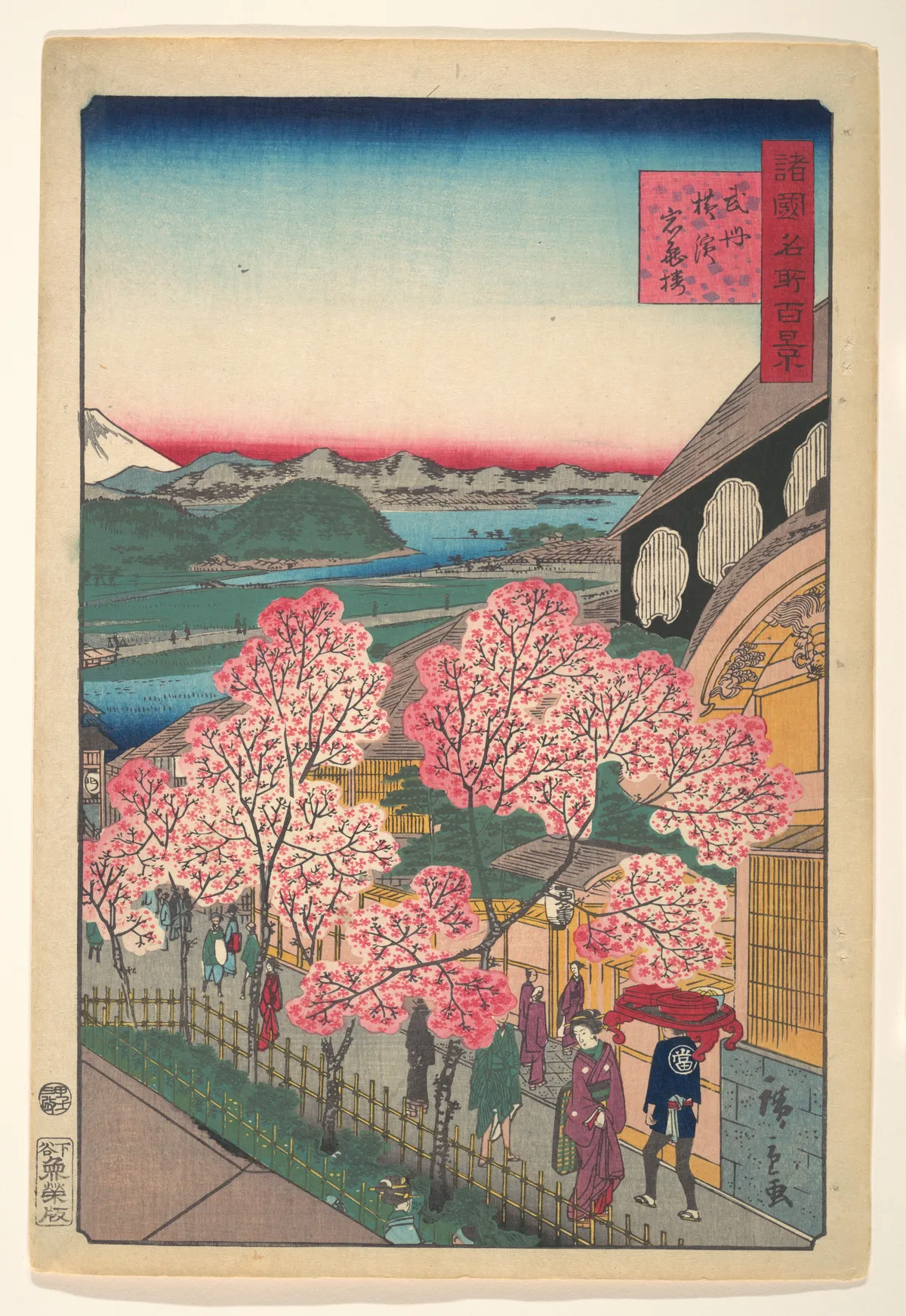
Night at the Gankirō
The evening hush settles over Yokohama. At the entrance of the Gankirō Tea House, lanterns flicker softly, their light casting gentle shadows on the wooden panels. The air is damp with the scent of the nearby harbour, mingling with the sweet aroma of brewing tea. The Gankirō stands, a beacon amid the quiet streets, where laughter and music spill softly into the night.
A lone figure approaches, her footsteps muted on the earth. She pauses at the entrance, her kimono rustling in the breeze. The lanterns sway slightly, their glow reflecting in her eyes. Inside, the murmur of voices and clinking of porcelain invite her in, promising warmth against the chill of the night.
The artist, Hiroshige II, captures this moment—where the night holds its breath, and the world waits just beyond the wooden gate. The scene is alive with the anticipation of stories, whispered secrets, and the gentle pulse of life in a bustling port city.
Historical Echo
In 1859, Yokohama was a city on the brink of transformation. The Gankirō Tea House stood as a symbol of this change, a place where cultures mingled and stories unfolded. Utagawa Hiroshige II painted not just a scene, but a moment in time, capturing the spirit of an era when Japan's doors had just opened to the world. The tea house became a gathering place for those seeking the exotic allure of the unfamiliar, a refuge from the uncertainties of the outside world.