

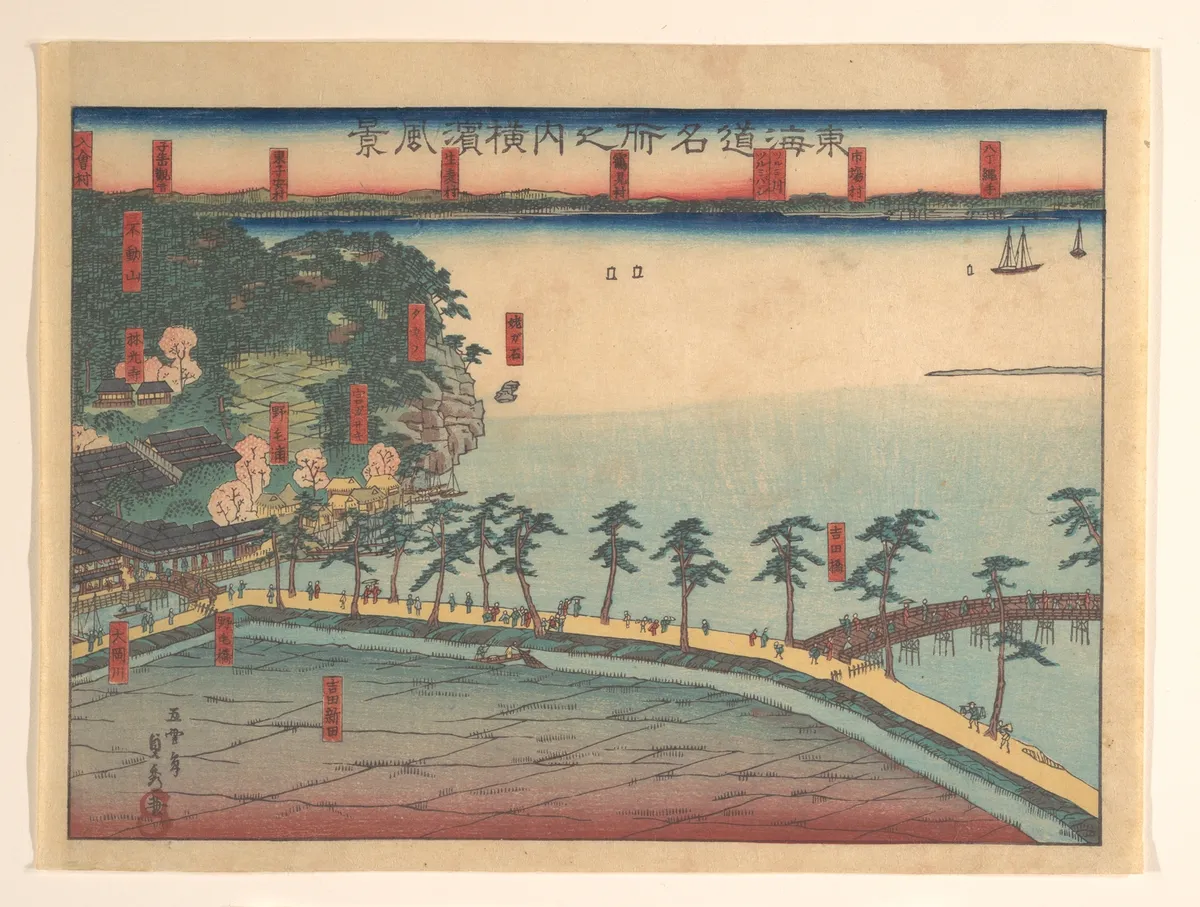
Yokohama's Breath
The harbour stretched wide, a silent witness to Yokohama's restless pulse. Ships, their sails heavy with the promise of distant lands, dotted the horizon. The air hummed with salt and whispered tales of new beginnings. On the docks, figures moved with purpose, their shadows long in the fading light.
A cool breeze swept through, carrying with it the scent of the sea and the murmurs of the curious. The foreign and the familiar converged here; voices mingled in a symphony of tongues. Merchants haggled over exotic wares, their hands speaking a language all their own.
The sun dipped lower, painting the sky in hues of orange and indigo. Lanterns flickered to life, their glow casting a warm embrace over the bustling scene. Children darted between the legs of adults, laughter bubbling like a brook.
Yet beneath the surface, a quiet tension lingered. The world was changing, and Yokohama stood at the threshold. Here, in the meeting of land and sea, of past and future, the air felt thick with possibility.
A lone figure paused at the water's edge, eyes fixed on the horizon. The future beckoned, a siren's call, wrapped in the gentle lull of evening tide.
Historical Echo
Yokohama, once a quiet fishing village, had transformed into a bustling port by 1860. It was a place of first encounters, where Japan opened its doors to the West after centuries of isolation. The ukiyo-e by Sadahide captures this moment of transition, where tradition met the modern world. Amidst the vibrant exchange of goods and cultures, the harbour bore witness to a new era dawning.