

In the Shadow of the Lantern
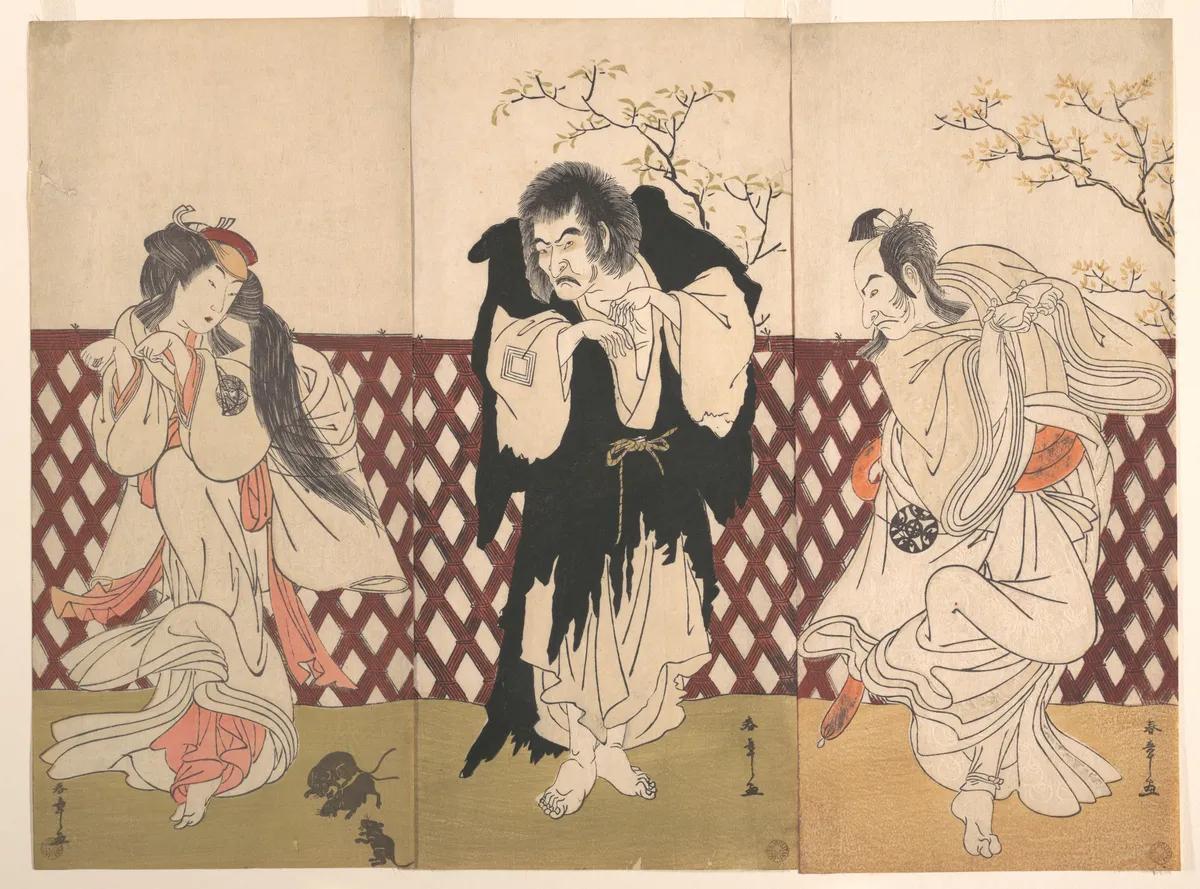
The stage flickered with shadows. Lantern light trembled softly against the wooden boards. Ichikawa Danjuro IV stood as Mongaku, a monk haunted by his past. His robes, heavy with the weight of his role, brushed against the floor. Silence filled the theatre, broken only by the faint rustle of fabric and the audience's breath.
His eyes, dark and piercing, reflected the distant glint of candle flames. They seemed to hold secrets of the character's tormented mind. Sweat trickled down his neck, mingling with the ink-black of his costume. His hands, poised like a sculpture's, bore the tension of a thousand untold stories.
The audience leaned in, caught in the monk's silent plea. The air was thick with incense, a reminder of temple halls and forgotten vows. Shunshō's print captured this moment, freezing the actor's intensity forever. Each line etched with precision, each shadow a testament to the craft.
Outside, the Edo night was still. Only the distant clatter of geta on cobblestones hinted at life beyond. But here, within these walls, the monk's struggle was eternal. The play's ancient whispers entwined with the present, binding actor and audience in shared breath.
Historical Echo
In 1775, Katsukawa Shunshō immortalised Ichikawa Danjuro IV's performance as Mongaku. The print, a study in contrast, melds the ephemeral with the eternal. Kabuki thrived in Edo, giving voice to stories old and new. Danjuro, a master of transformation, embodied roles with unmatched fervour. His Mongaku was not just a character, but a reflection of human conflict. Shunshō’s art preserved this in a delicate balance of ink and emotion.