

A Whispered Missive
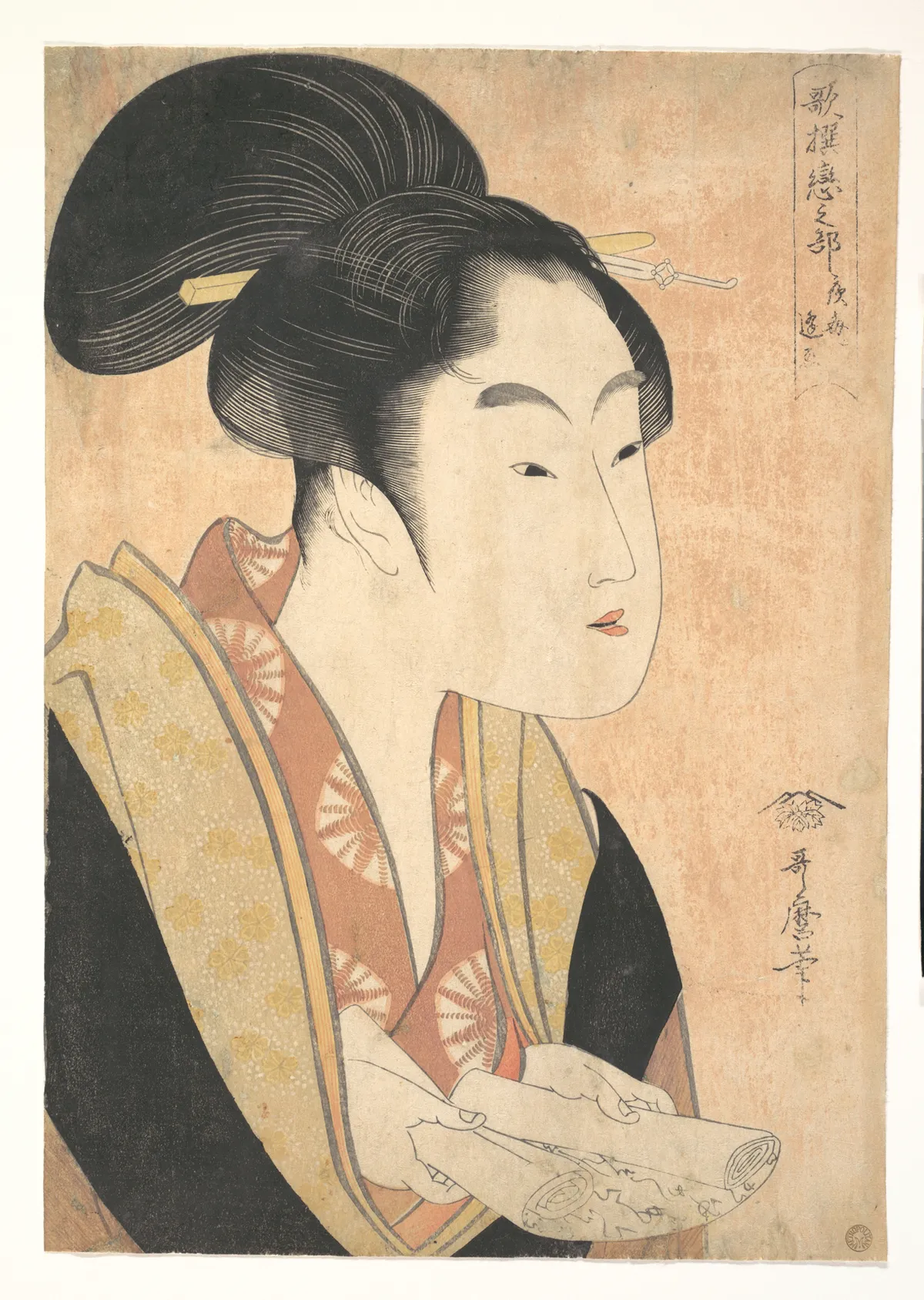
The room is silent, save for the faint rustle of paper. A young woman sits by the window, her kimono a cascade of muted colours. She holds a letter, its edges slightly crumpled from her grip. The ink, dark and deliberate, forms words that seem to whisper secrets only she can hear.
Her eyes, shadowed by the soft light filtering through the shoji screen, move slowly over the text. Outside, the world is hushed. The air is thick with the scent of rain, a promise held in the heavy clouds above.
She shifts slightly, the silken fabric of her sleeve catching the fading light. Her expression, a delicate balance of curiosity and introspection, reveals little. Yet, the letter speaks volumes in its silence, a bridge to a world beyond the confines of her chamber.
A gentle breeze stirs the paper, animating the characters momentarily. Her fingers tighten, anchoring the letter against its flight. Time seems suspended, each breath measured, each heartbeat an echo in the quietude.
In this moment, she is both reader and recipient, an intimate dance between ink and thought. The letter, a testament to unseen connections, holds her gaze, its presence a reminder of the world just beyond her reach.
Historical Echo
In the late 18th century, during the Edo period, letters were a vital form of communication. They carried news, emotions, and secrets across distances. Kitagawa Utamaro captures this intimacy in his depiction of a young woman reading. His work, renowned for its beauty and subtlety, offers a glimpse into the private lives of women, embodying the delicate interplay of solitude and reflection. Utamaro's prints remain a testament to the elegance and complexity of human emotion, etched in the quiet moments of everyday life.