

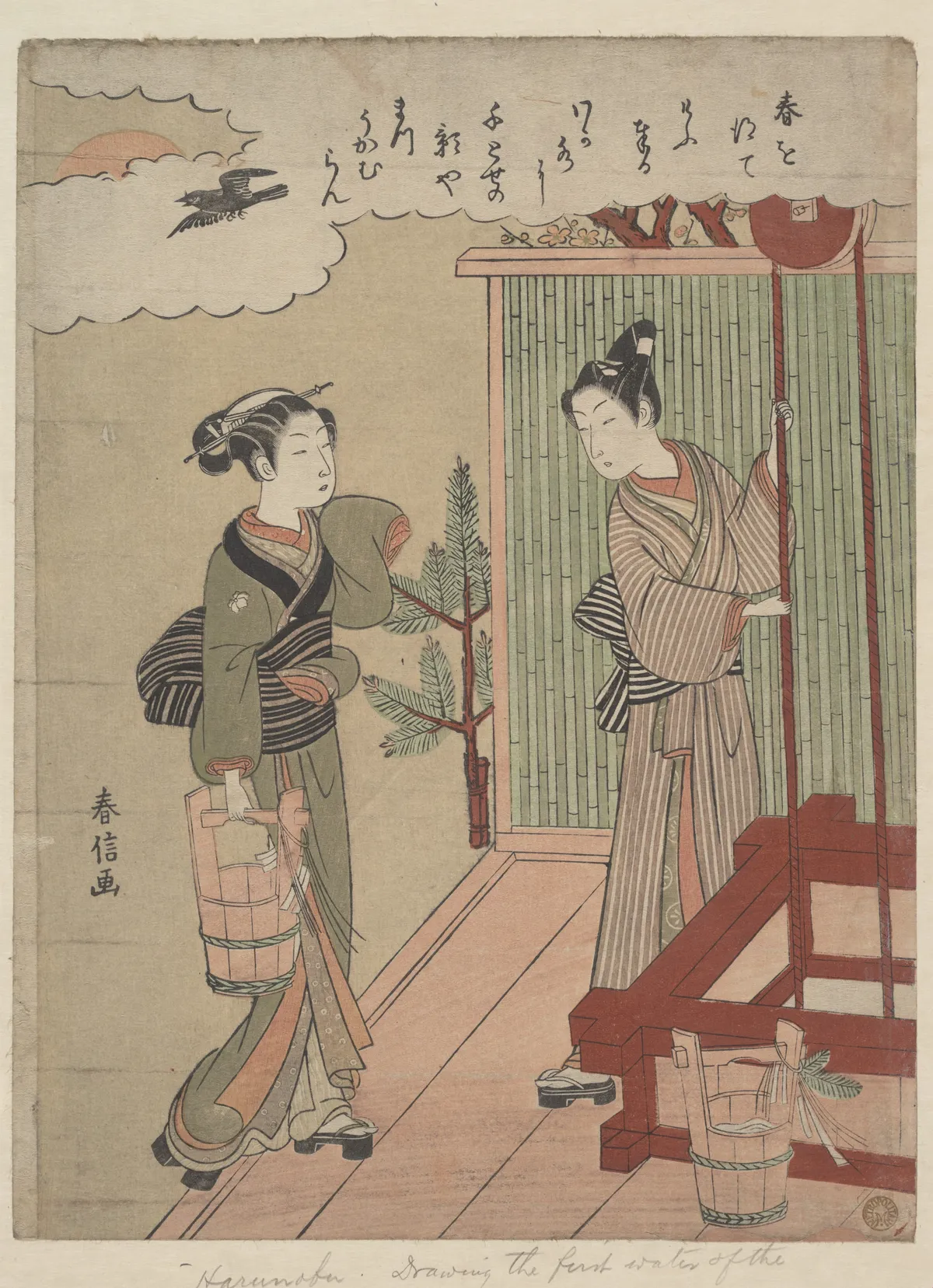
Drawing the First Water of the New Year
In the dim light of dawn, a woman steps softly onto the frost-kissed earth. Her kimono, a tapestry of delicate hues, rustles gently as she moves. Breath hangs in the cold air, mingling with the faint scent of pine. She pauses, glancing towards the horizon where the first light of the New Year stretches its fingers across the sky.
A wooden bucket dangles from her hand, its surface worn smooth by years of use. Her fingers, pale and slender, grip the handle with quiet determination. Each step is careful, deliberate, as she approaches the well. The world is hushed, waiting.
The water is still, a dark mirror beneath the surface. She lowers the bucket, the rope creaking softly, echoing in the silence. As it breaks the surface, a ripple shudders through the water, distorting her reflection. For a moment, the world seems to hold its breath.
The bucket emerges, heavy with the first water of the year. She lifts it with reverence, the liquid swaying gently inside. With a soft exhale, she turns, retracing her steps, leaving only faint impressions in the frost behind her.