

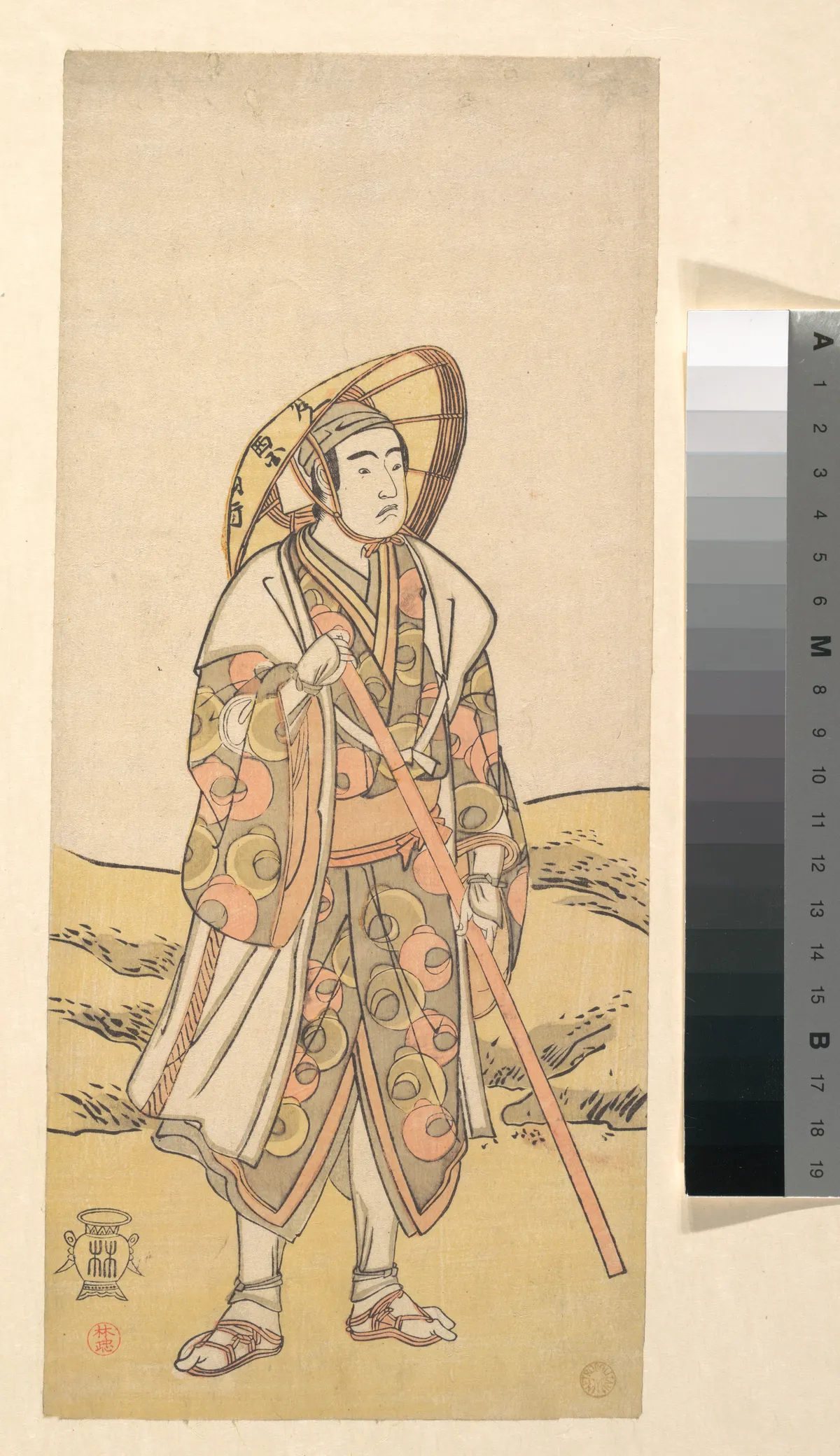
A Pilgrim's Veil
In the dim glow of paper lanterns, Sawamura Sōjūrō III stands. His eyes are shadowed, the actor's face a mask of stories untold. He wears the garb of a Kumano pilgrim, the robes heavy with travel and whispers of ancient paths. Yet beneath this guise, the noble countenance of Taira no Shigemori emerges. The air is thick with the scent of incense and damp earth, mingling with the hushed murmurs of the audience beyond. Each rustle and movement is deliberate, like a leaf falling in still air. Sōjūrō's hand, steady yet burdened, grips the pilgrim's staff.
The theatre holds its breath. Outside, the wind carries the distant sound of temple bells, a reminder of the world beyond this suspended moment. Shadows flicker across the wooden stage, tracing the lines of his expression, each crease a testament to the weight of history embodied. The silence is intimate, a shared secret between performer and spectator.
His voice, when it comes, is a low rumble, resonant with the echoes of a time long past. He speaks of duty, honour, and the inevitable march of fate. As the story unfolds, the illusion of the pilgrim fades, revealing Shigemori's noble spirit beneath. The audience, entranced, glimpses the fleeting nature of identity and the eternal dance of history and theatre.
Historical Echo
In 1785, Katsukawa Shunshō captured the essence of Sawamura Sōjūrō III, a celebrated actor of the Edo period. Disguised as a humble Kumano pilgrim, the actor channels Taira no Shigemori, a figure from Japan's storied past. This print, a testament to the interplay of performance and history, evokes the timelessness of both actor and role. The theatre, a microcosm of society, reflects the ephemeral nature of identity and the enduring resonance of human stories.