

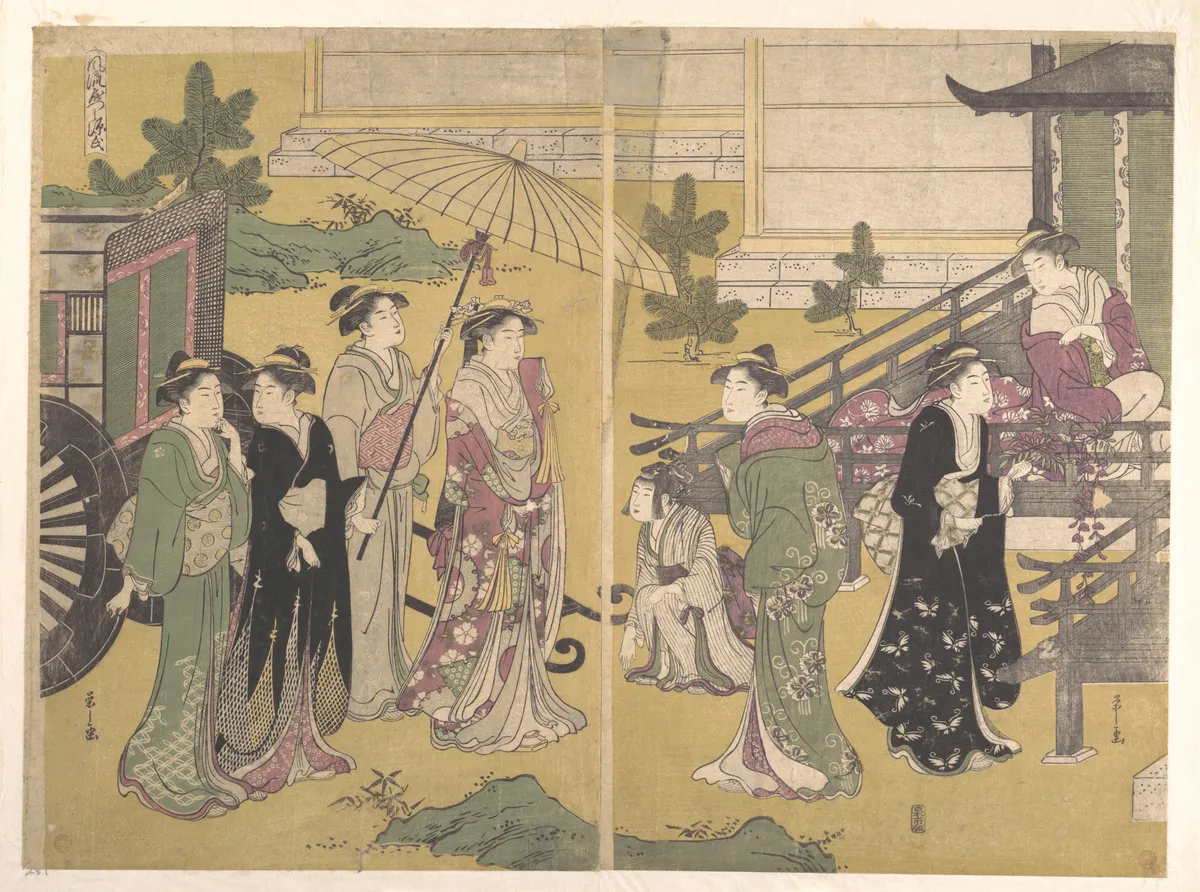
Fuji no Uraha
A gentle breeze caresses the silk of her kimono. She stands poised, her silhouette a whisper against the twilight sky. The air is thick with the scent of pine and distant rain. Her eyes, serene pools, gaze towards the horizon where Mount Fuji slumbers under a veil of mist.
In her hand, a delicate fan flutters like a bird caught between dreams and waking. The paper crinkles softly, echoing the rustle of leaves. Her movements are slow, deliberate, as if each step could awaken the spirits of the ancients.
The ground beneath her is cool, dampened by the evening dew. Shadows stretch long and thin, weaving through the grass like spectral fingers. She inhales the earth’s quiet promise, exhaling a sigh that merges with the night.
A nearby lantern flickers, casting a warm glow that dances across her face, highlighting the quiet strength etched in her features. The silence is profound, only broken by the distant call of a nightingale and the soft murmur of the trees.
She is a vision of grace, a fleeting moment captured in the stillness of time. Her presence is an echo, a reminder of beauty that transcends the mundane. Here, in the embrace of nature, she embodies the fleeting elegance of a world long past.
Historical Echo
Chōbunsai Eishi, renowned for his portrayals of elegant women, captures a moment of serene beauty in "Fuji no Uraha". Created around 1790, this woodblock print reflects the refined aesthetics of the Edo period. Eishi, once a samurai, turned to art, his works often depicting aristocratic women in poised stillness. This print, with its delicate lines and nuanced composition, echoes the timeless allure of Mount Fuji and the ephemeral grace of the ukiyo-e tradition. Eishi’s legacy endures, whispering through the corridors of history, a testament to the enduring beauty of the floating world.