

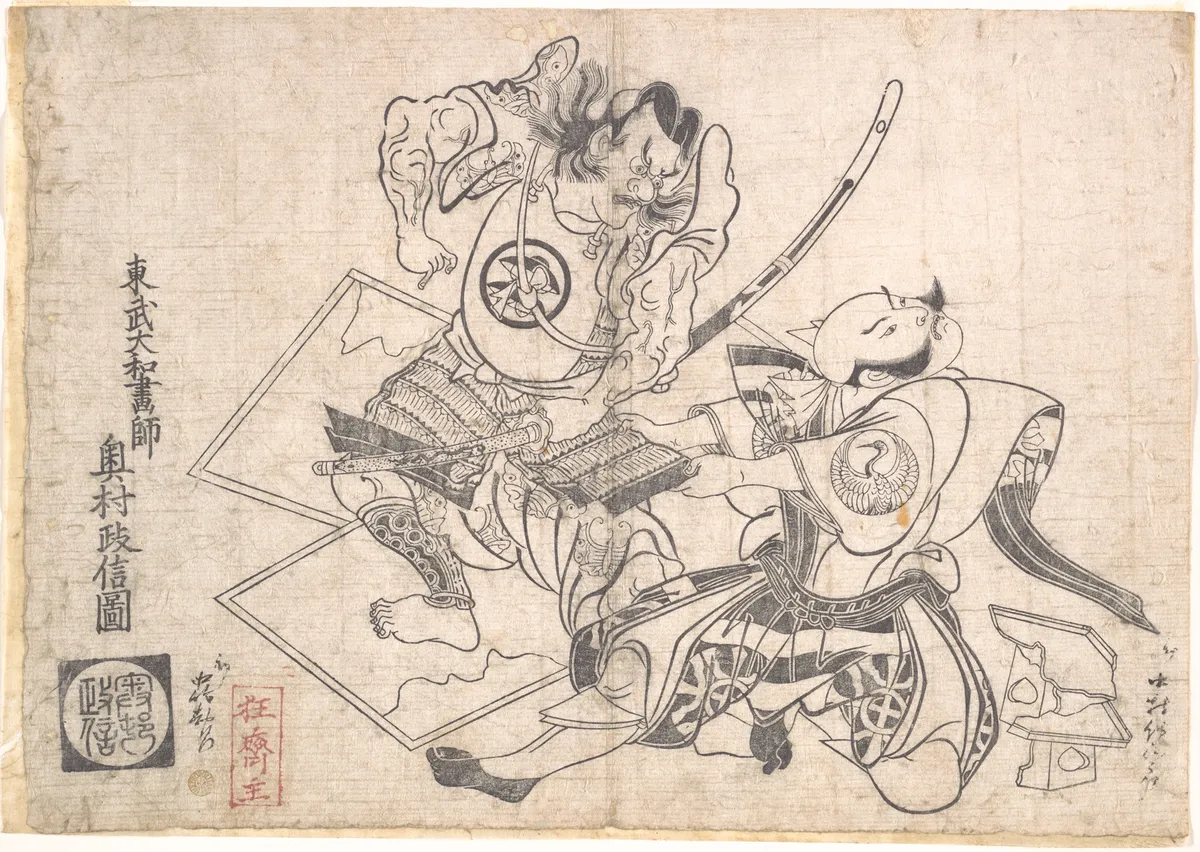
The Torn Armor
The air is thick with incense and anticipation. Two figures stand poised on the stage. Nakamura Denkuro, as Asaina no Saburo, grips the torn armor with determined hands. Opposite him, Nakajima Kanzaemon, as Soga no Gorō, sets his jaw, eyes blazing with vengeance. The theatre is hushed, the audience holding breath.
The scene is the infamous Kusazuri-biki—the tearing of the armor. A symbol of unyielding resolve and tragic destiny. Saburo's fingers tremble, not with fear, but with the weight of honour. The coarse fabric feels cool and heavy under his touch. Gorō's gaze never wavers, his silence louder than any roar.
Candles flicker, shadows dance across painted faces. The scent of wax and sweat mingles with the hushed whispers of the crowd. The actors' movements are deliberate, charged with emotion. Their kimonos rustle like whispers of the past, echoing tales of loyalty and revenge.
A drum beats softly in the background, a heartbeat of the ancient tale. The paper lanterns cast a warm glow, illuminating the wooden stage. Each step, each gesture, tells a story older than the wood itself. The torn armor hangs between them, a silent witness to the unfolding drama.
Historical Echo
In the Edo period, kabuki theatre thrived, a world of vibrant colours and dramatic tales. This print by Okumura Masanobu captures the essence of kabuki—a fleeting moment of intense emotion. The Soga brothers' saga was a favourite, a story of honour and retribution, brought to life by celebrated actors. The torn armor scene, a testament to their skill, remains etched in the annals of theatrical history.