

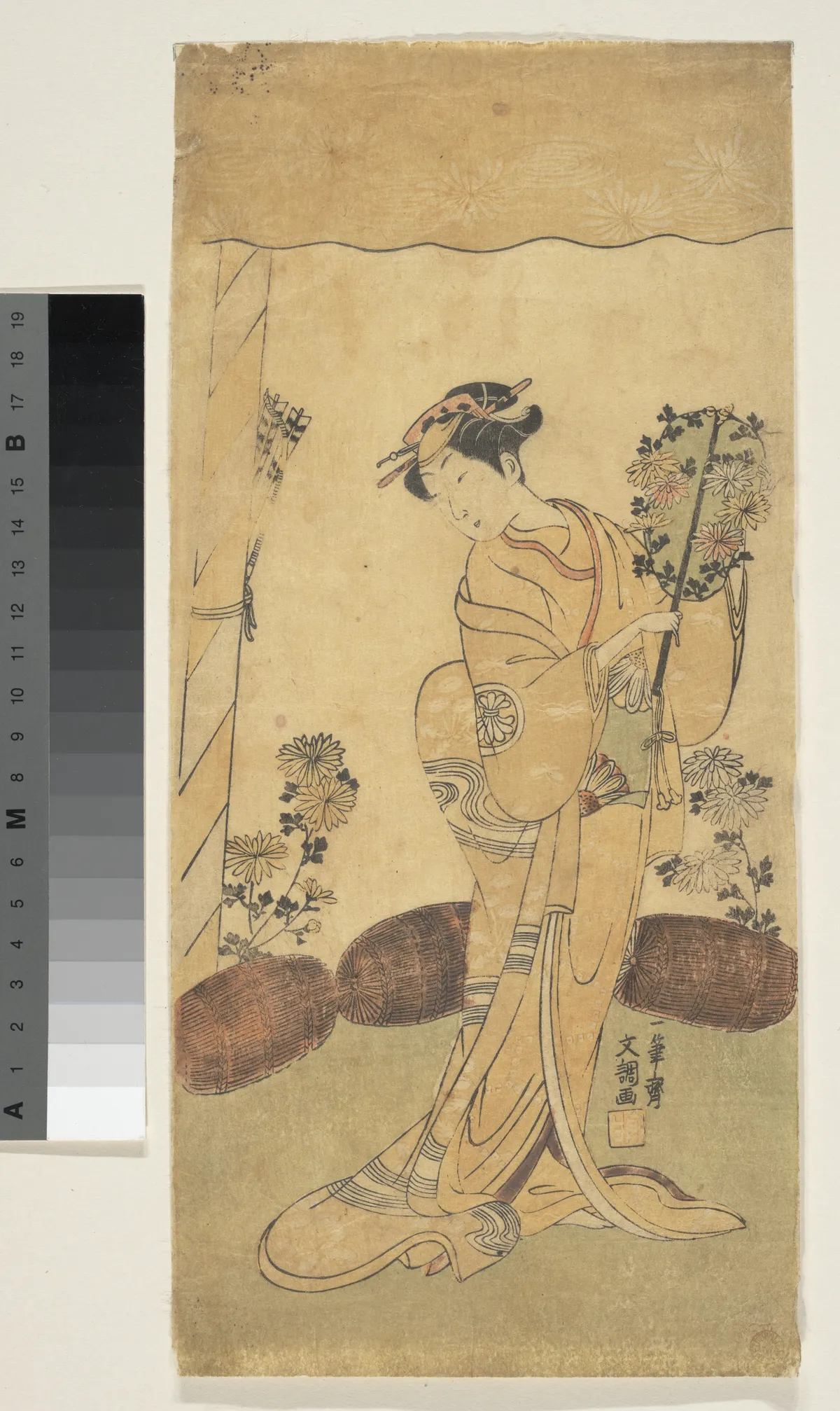
The Actor's Mask
The night was heavy with the scent of pine smoke. Segawa Kikunojō stood still, his face a pale mask under the flickering lamplight. The stageboards creaked softly beneath his feet as he shifted, the sound swallowed by the rustle of silk robes. His eyes, shadowed beneath painted brows, glanced towards the dim audience, a sea of expectant silence.
In this moment, he was not himself. He had become Reizei, a character pulled from the pages of 'Ima-o-sakari Suehiro Genji'. The world outside faded, leaving only the delicate tension of the tale. He felt the weight of the character settle upon his shoulders, as tangible as the heavy fabric of his kimono.
A distant voice, the prompter's whisper, guided him through the labyrinth of lines. Each word emerged like a breath, delicate and deliberate. His hands moved with a grace learned through years of practice, each gesture a brushstroke on the canvas of the air.
The audience, hidden in the shadows, was silent but for the occasional rustle. They watched, enraptured, as Kikunojō transformed the stage into a living scene from the Genji tale. The flicker of the lamps caught the glint of painted fans and lacquered hair, creating a dance of light and shadow across his face.
The night was deep and still, the world beyond the theatre forgotten. Here, in this space, time paused. Kikunojō, the man, vanished, leaving only Reizei to breathe in the silence.
Historical Echo
In December 1768, the Edo theatre scene was alive with transformation. Ippitsusai Bunchō captured this metamorphosis in his woodblock print. Actors like Segawa Kikunojō were revered, their performances a bridge between reality and the world of the story. This print, a snapshot of Kabuki's vibrant history, reflects the ephemeral nature of theatre—a moment suspended in time, a character brought to life by a master's hand.