

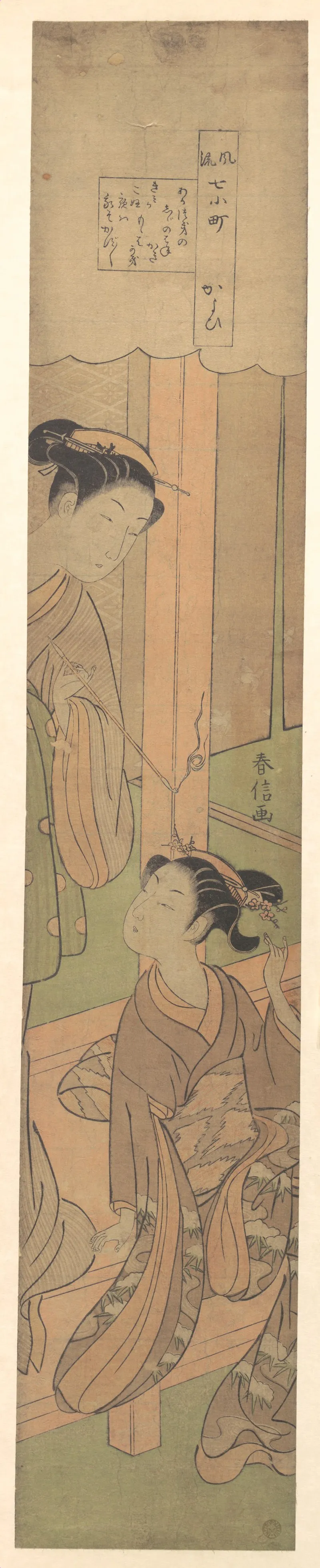
A Quiet Visit
A gentle knock disturbs the stillness. The shoji slides open, paper rustling softly. A woman steps inside, her kimono trailing like whispers on tatami. The air, thick with the scent of incense, swirls around her. She pauses, tilting her head slightly, listening for the sound of a distant koto. Her eyes, dark and gentle, search the dim room.
The lantern light flickers against the walls, casting shadows that dance like fleeting memories. She moves with grace, each step measured, deliberate. Her presence fills the space, warm and serene. The silk of her kimono shimmers, a cascade of colours reflecting the soft glow.
Outside, the garden murmurs with the song of crickets. The night air is cool, carrying the faint fragrance of pine. She kneels, quietly arranging a small offering of autumn flowers. Her hands, delicate and precise, move as if in a dance. The petals tremble under her touch.
The silence returns, deep and profound. She closes her eyes, breathing in the quiet. The world outside fades, leaving only the gentle rhythm of her heartbeat. Time stretches, a long, languid moment.
Her visit, a silent communion, lingers in the air. Then, with a final, lingering glance, she rises. The shoji slides shut, enclosing the room once more in shadow. Her footsteps fade into the night.
Historical Echo
In the Edo period, visits such as these were moments of quiet connection. Suzuki Harunobu captured the essence of seasonal beauty and the intimacy of human presence. His prints, delicate and ethereal, invite us to pause and listen to the echoes of a bygone era.