

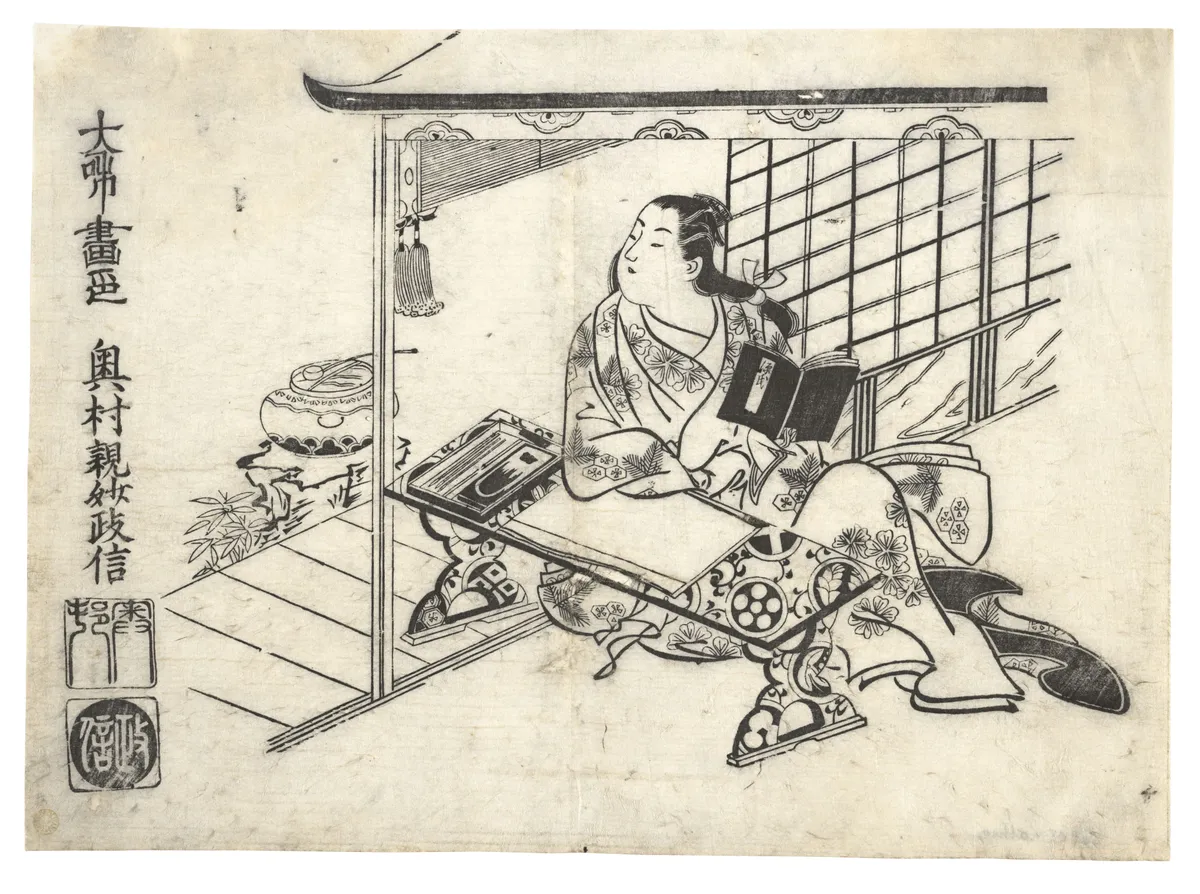
Murasaki's Quiet Parody
A candle flickers. Shadows stretch across the tatami floor. In the dim light, a woman sits, her back straight, her gaze intent on the paper before her. The brush in her hand hesitates, then dances across the page, leaving trails of ink that seem to breathe with life.
Her kimono rustles softly with her movements. The room is filled with the scent of ink and the faint mustiness of aged paper. Outside, the world is muted—a gentle rain taps against the wooden eaves, a reminder of the quiet night that envelops them.
This is no ordinary scene of contemplation. It is a playful echo, a parody of Murasaki Shikibu herself, the famed author of "The Tale of Genji." Yet, there is no mockery here. Only a tender tribute to the act of creation, the solitude of the writer, the intimate dance between thought and expression.
The woman pauses, her brush hovering above the page. Her lips curve into a small, secret smile. Perhaps she is imagining the characters she brings to life, or the world she weaves with each stroke. The air is heavy with potential, with stories yet untold.
The candle flickers again, casting a momentary glow over her face. Her eyes, dark and knowing, hold the secrets of a thousand tales. In this silent room, she is both the creator and the creation—a living homage to the great Murasaki Shikibu.
Historical Echo
The early 18th century saw the rise of ukiyo-e, woodblock prints capturing the fleeting world of Edo, from actors and courtesans to everyday life and literary figures. Okumura Masanobu, an innovator in this art form, brings us a whimsical yet respectful nod to Murasaki Shikibu. Through parody, he honours the timeless legacy of a woman whose words have echoed through centuries. In this portrayal, we glimpse the quiet reverence and subtle humour of Edo culture, a world where past and present intertwine in gentle harmony.