

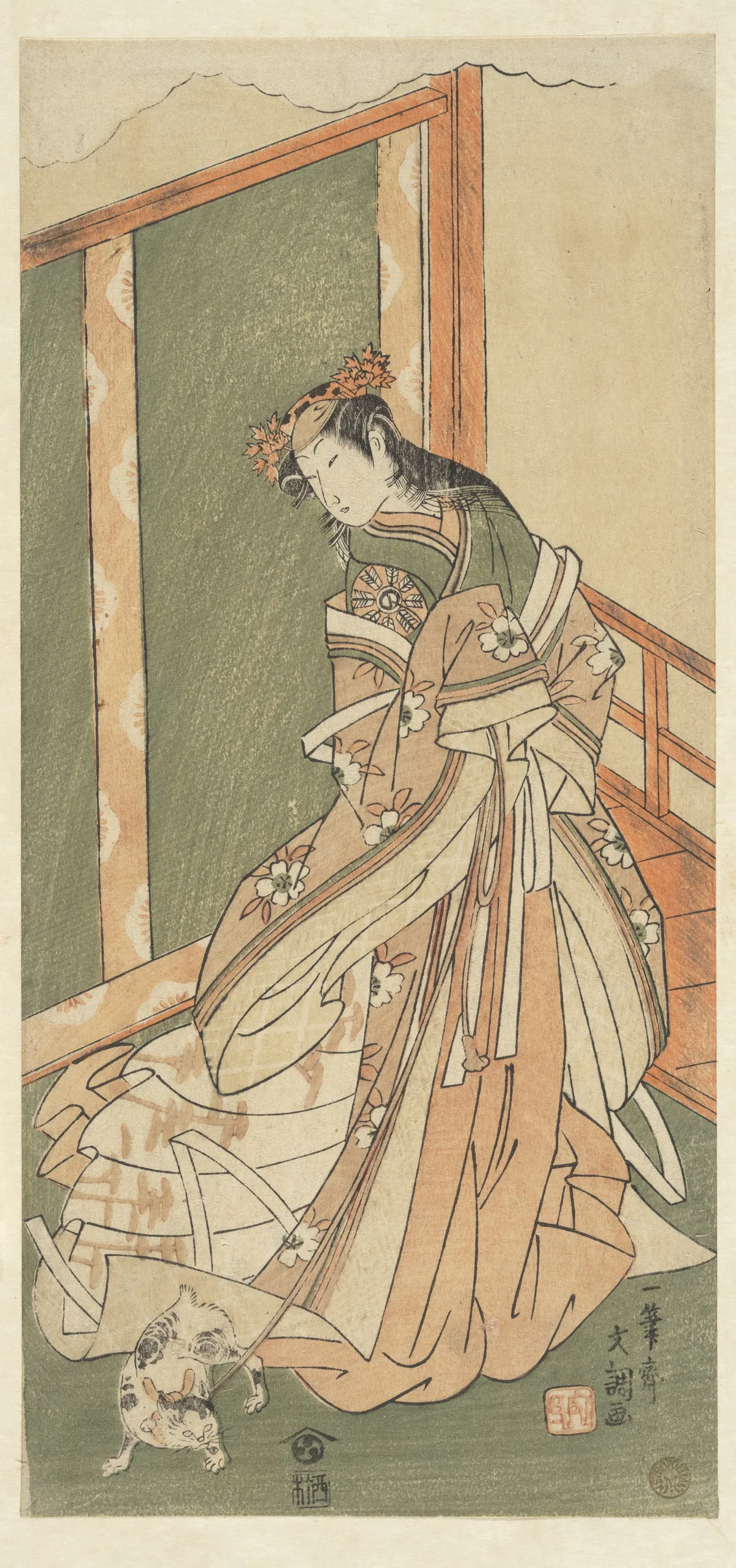
The Third Princess
The room was silent, save for the gentle rustle of silk. The Third Princess sat by the window. Moonlight spilled over her, casting a delicate glow on her pale face. Her fingers brushed the edge of her kimono, the fabric whispering secrets of lineage and duty. The air was fragrant with the scent of distant plum blossoms, mingling with the faint mustiness of old tatami.
Outside, a nightingale's song pierced the stillness. Her heart tightened at its mournful tune. She remembered the court's bustling halls, the whispers behind painted fans, the silent weight of expectations. Here, away from prying eyes, she felt the soft pull of longing, a desire for a life unchained by duty.
A single candle flickered beside her, its light dancing on the papered walls. Shadows of leaves trembled, like whispers of stories untold. The world seemed vast and intimate at once, a tapestry of dreams woven into the night. She sighed, her breath a soft, invisible cloud in the cool air.
In the distance, the river murmured, a gentle reminder of time's unending flow. The Third Princess closed her eyes, the weight of her title slipping away, if only for a moment. Here, in this quietude, she embraced the solitude, the silent echo of her own longing heart.
Historical Echo
The Third Princess, Onna San no Miya, is a character from "The Tale of Genji," a classic work of Japanese literature written by Murasaki Shikibu in the early 11th century. This ukiyo-e print by Ippitsusai Bunchō, created around 1771, captures the ethereal beauty and melancholic solitude of the princess. Ukiyo-e artists often drew inspiration from literature, depicting scenes that resonated with viewers familiar with the tales. The Third Princess represents nobility, grace, and the silent burdens carried by women of the court. Bunchō's delicate lines and subtle colour palette evoke a world both intimate and timeless.