

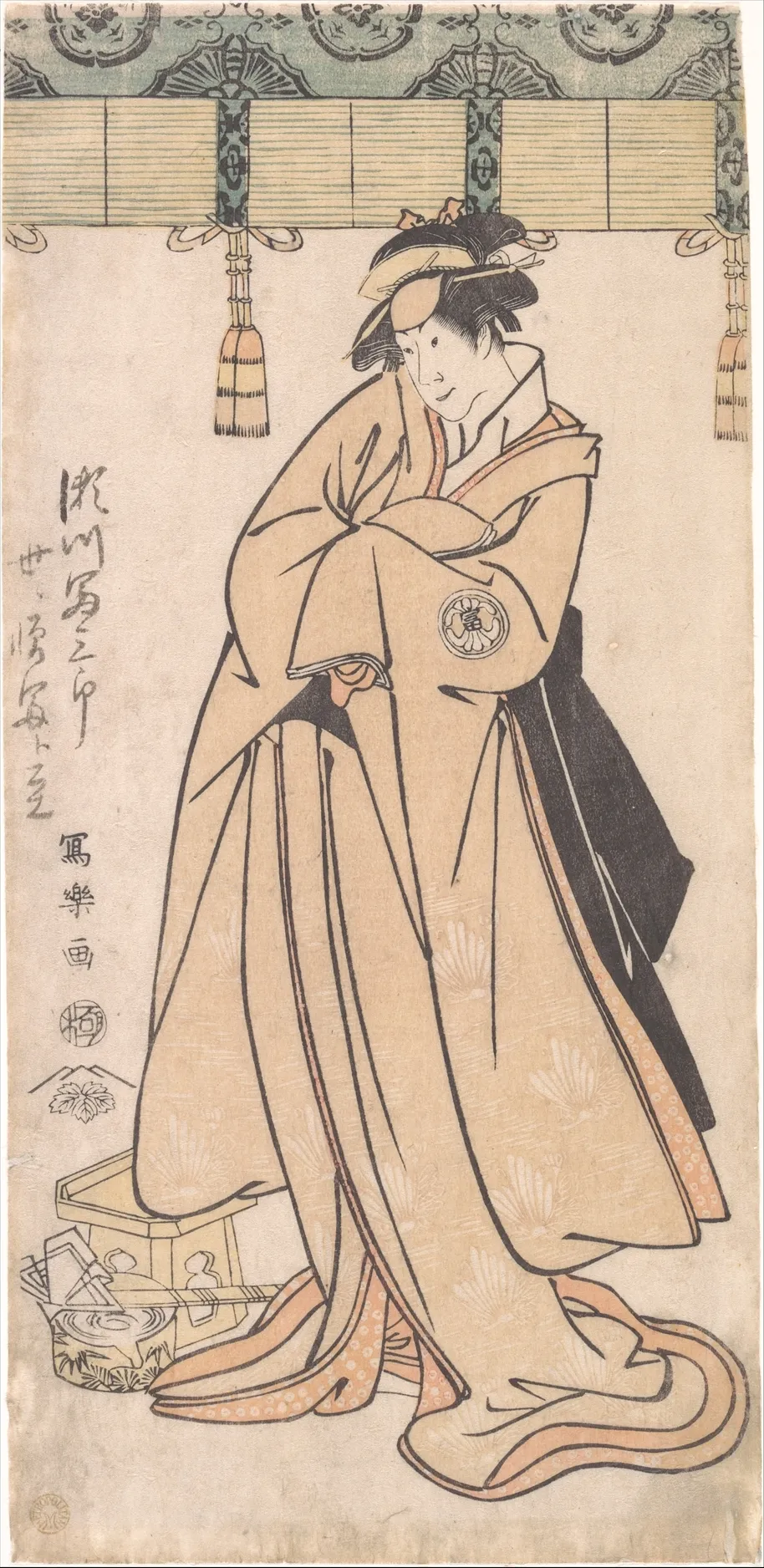
The Actor's Veil
The lantern light flickered across the stage. Shadows danced across Segawa Tomisaburo II's face. He stood as Wakakusa, the Otomos' maid, each movement deliberate. The air was thick with anticipation. The audience sat silent, breaths held, eyes fixed on the slight figure.
The actor's kimono whispered with his every gesture. Silk rustled softly, a melody beneath the theatre's hushed silence. Tomisaburo's eyes, dark and knowing, peered from beneath painted lids. His lips curved slightly, a secret shared with no one.
Yet the truth lay beneath the layers of fabric, paint, and persona. He was no mere maid. He was Prince Korehito, hidden in plain sight. His poise carried the weight of nobility. The room seemed to hold its breath, caught in the tension of unspoken truth.
The scent of incense hung in the air, mingling with the musty smell of the wooden stage. The walls absorbed the murmurs of past performances, whispers of long-gone crowds lingering in the beams. Candlelight wavered, casting fleeting illusions on the actor's face.
In that confined world, the actor became the prince, and the prince became the maid. The audience, spellbound, saw only what they wished to see. The illusion was perfect. The transformation complete.
Historical Echo
In the realm of Edo's kabuki theatre, disguise was an art. Tōshūsai Sharaku captured this intricate dance of identity. His prints revealed layers of persona, much like the actors themselves. Segawa Tomisaburo II was renowned for his ability to transform, to cloak his true self beneath another's skin.
Sharaku's work, created between 1794 and 1795, remains a testament to this theatrical era. It echoes with the voices of actors who became legends, their stories woven into the fabric of Japan's cultural history. The boundaries of reality and performance blurred, leaving only the haunting beauty of the moment.