

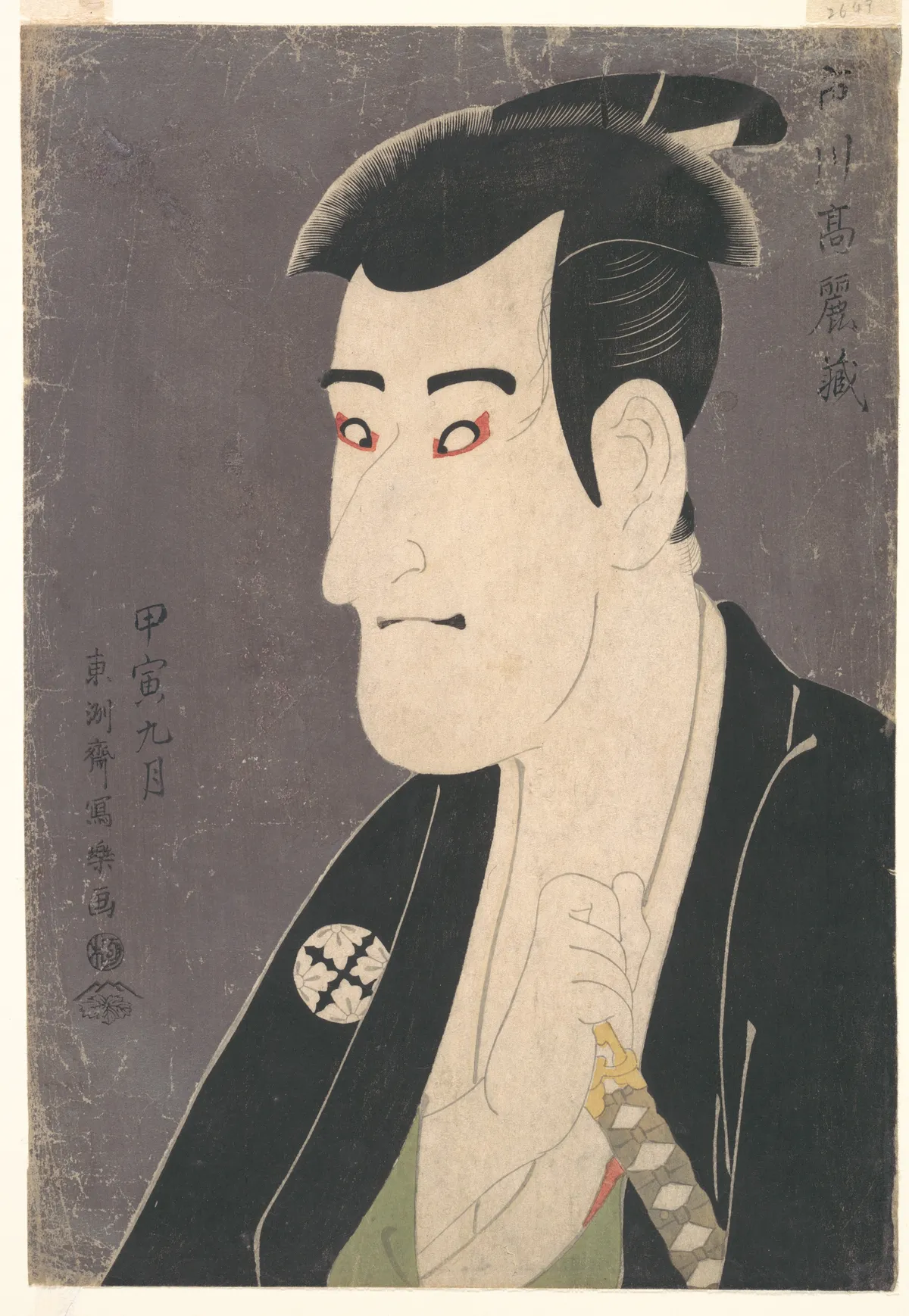
A Quiet Stage
The wooden stage creaked softly under the weight of Ichikawa Komazō III. His eyes, intense and unwavering, held the air captive. He embodied Shiga Daishichi, a man of revenge. The audience held their breath, a collective silence. The flickering lanterns cast long shadows, their light barely touching the actor's stern features. The kabuki theatre, filled with the scent of sandalwood and the murmur of expectation, seemed to pulse with a life of its own.
Komazō's kimono whispered with his every movement. Each gesture deliberate, each pause meaningful. The tale of revenge unfolded, not with words alone, but with the very essence of his presence. Daishichi's vengeance was palpable, an unseen force that trembled in the heavy air. The actor's face, a mask of painted emotions, shifted with a subtlety that spoke volumes.
As the play reached its climax, the tension became a tangible thing. The audience's anticipation hung like mist, thick and unyielding. Komazō, as Daishichi, stood poised, a figure carved from the shadows itself. His eyes, aflame with purpose, met the audience's gaze. In that moment, time faltered, held in the balance by the story of a man and his unyielding quest for revenge.
Historical Echo
In the late spring of 1794, Tōshūsai Sharaku captured the essence of kabuki theatre. His depiction of Ichikawa Komazō III as Shiga Daishichi is a testament to the power of performance. Sharaku's art immortalised the fleeting intensity of the stage, a world where reality and illusion danced in tandem. In the dim glow of Edo's theatre, the echoes of Daishichi's revenge still linger, whispering through the corridors of history.