

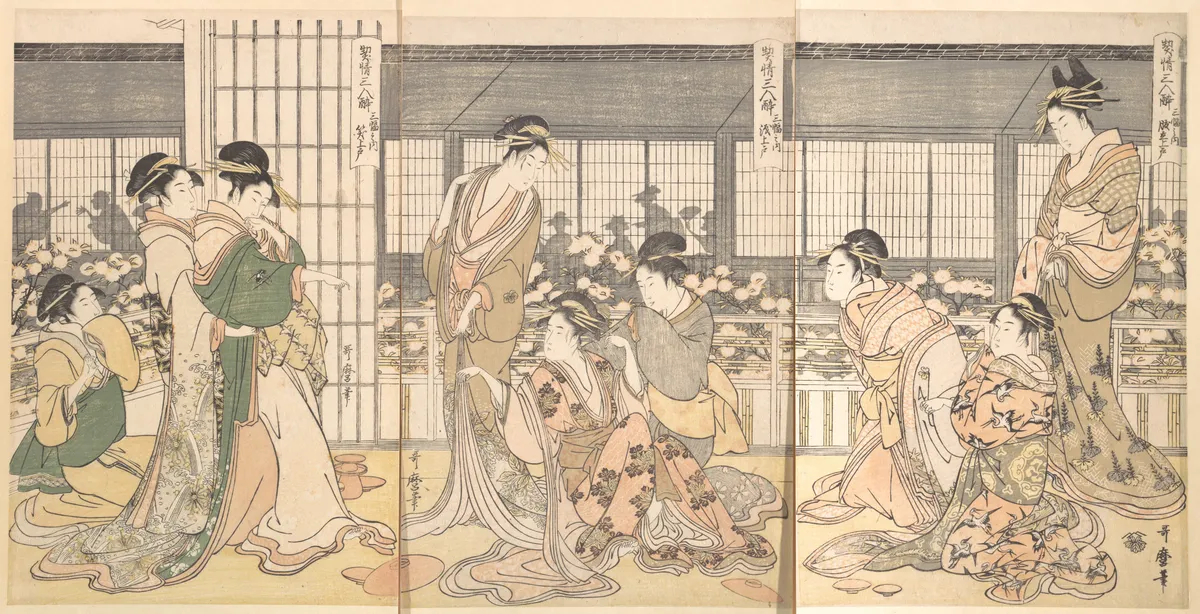
Three Intoxicated Courtesans
The room is dimly lit by flickering lanterns. Shadows dance across the tatami mats. Three courtesans, their kimonos rich with intricate patterns, sit close together. Their faces, powdered and serene, are touched with a faint flush. Sake cups lie scattered around them, some tipped over, leaving dark stains on the woven floor. The air is thick with the sweet scent of plum wine and laughter that bubbles up, soft and unrestrained.
A gentle rustle of silk accompanies their movements. One courtesan leans back, her head tilting slightly, eyes half-closed as if caught in a distant dream. Another traces the rim of her cup with a slender finger, her gaze lost in the play of light and shadow. The third leans forward, whispering something that elicits a soft giggle, her lips barely parting.
Outside, the night is hushed, the world beyond their laughter and murmured secrets forgotten. The courtesans, caught in a moment of shared abandon, embody both grace and vulnerability. Their presence lingers, like a delicate fragrance, haunting the night.