

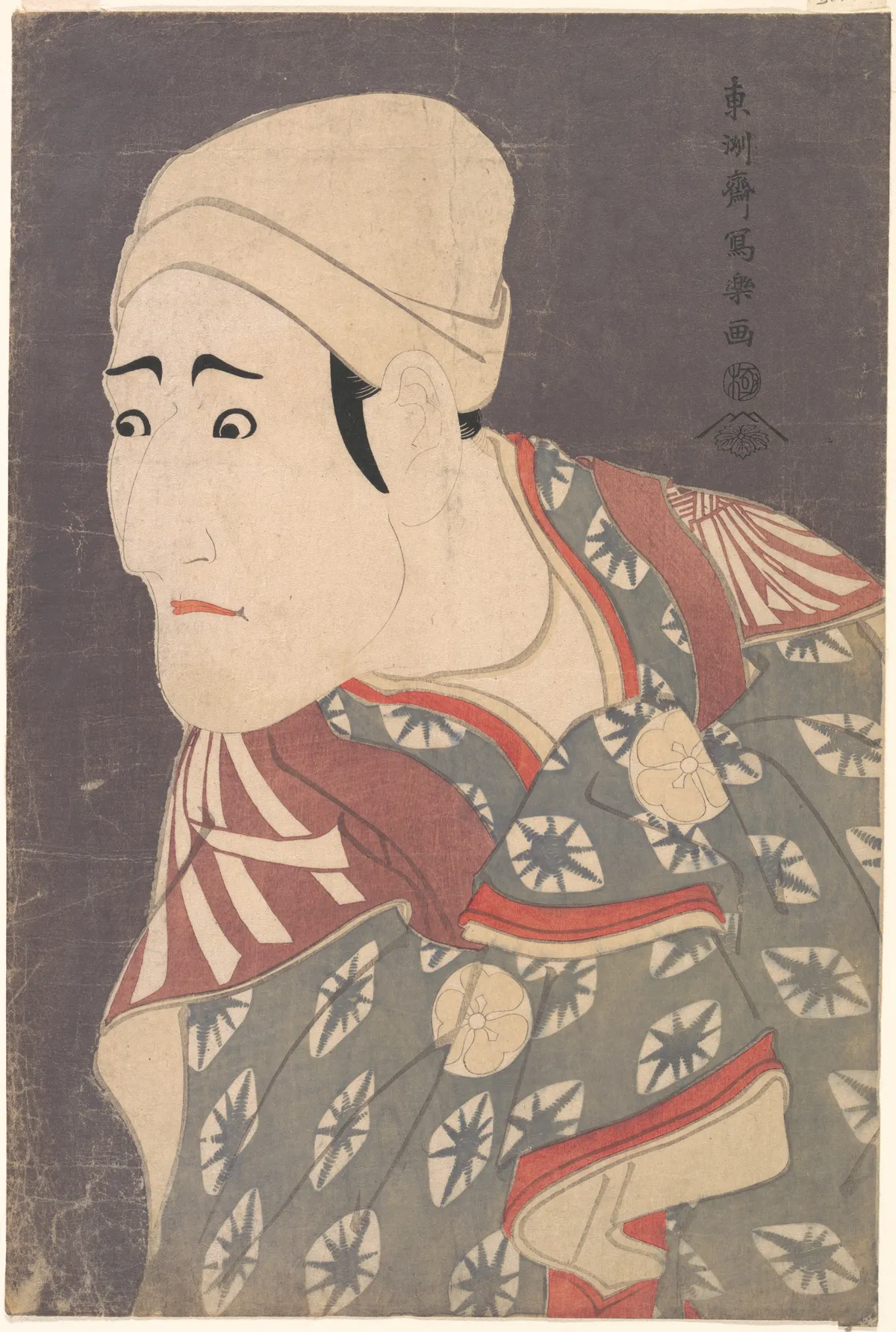
The Palanquin-Bearer's Night
The lanterns flicker softly against the night. The air, heavy with mist, clings to the narrow streets. Morita Kan’ya VIII stands, his figure cloaked in shadow, his eyes piercing the darkness. He wears the guise of a palanquin-bearer, yet his presence holds the weight of a thousand tales.
His hands, rough and calloused, grip the edges of the palanquin. The wood creaks under the strain. Somewhere in the distance, a shamisen wails, its notes mournful and haunting. The night is alive with whispers of revenge, the air thick with unspoken promises.
Kan’ya’s kimono clings to his frame, damp with sweat under the relentless gaze of the stage lights. Each movement is deliberate, each gesture steeped in purpose. His character, a vessel for the spirit of vengeance, moves with a quiet intensity.
The audience sits in silence, their breath held, their hearts caught in the thrall of his performance. The world beyond the stage fades, leaving only the palanquin-bearer's tale. Shadows dance across the actor’s face, revealing the depths of his inner turmoil.
In this fleeting moment, the line between actor and role blurs. Kan’ya’s eyes meet the audience, and they are drawn into the story’s dark embrace. The night stretches on, the echoes of the kabuki play lingering long after the final curtain falls.
Historical Echo
Tōshūsai Sharaku captured the enigmatic presence of Morita Kan’ya VIII in the fifth month of 1794. The print belongs to Sharaku's brief yet impactful career, marked by intense portrayals of kabuki actors. This image, part of a larger series, reflects the cultural fascination with theatrical storytelling and revenge plays during the Edo period. Kan’ya’s portrayal as a palanquin-bearer speaks to the actor’s mastery in embodying complex roles, his talent immortalised in Sharaku’s striking composition. The ukiyo-e print stands as a testament to the enduring allure of kabuki theatre and its legendary performers.