

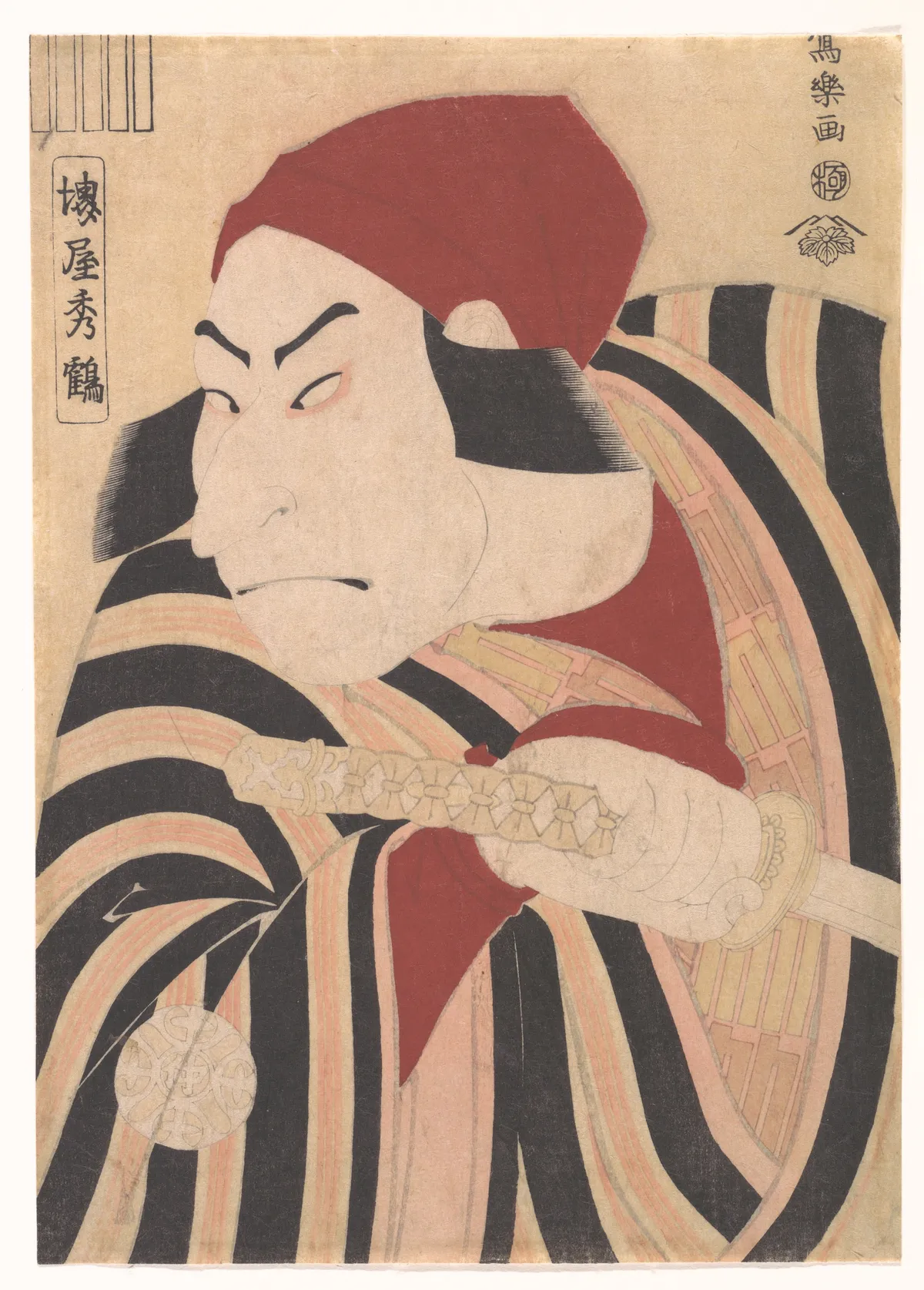
Nakamura Nakazo II's Disguise
The dim glow of lanterns casts flickering shadows across the stage. Nakamura Nakazo II stands as Prince Koretaka, draped in elaborate robes. His eyes are sharp, intense, capturing the audience in their gaze. The air is thick with anticipation, the quiet rustle of silk woven into the silence. A faint scent of incense drifts from the wings, mingling with the dampness of the wooden stage. The actor's breath is steady, measured, as he embodies the prince's disguise, a mask within a mask. Each gesture is deliberate, each pause pregnant with meaning. The weight of his costume presses down on him, grounding him in the character's solemnity. His presence fills the space, commanding attention without a word. In the stillness, the audience leans forward, drawn into the drama unfolding before them.
Historical Echo
The year is 1794, a time when the kabuki theatre thrived in Edo. Tōshūsai Sharaku, a mysterious figure in the art world, captures the essence of the actors with uncanny precision. Nakamura Nakazo II, renowned for his powerful performances, portrayed many roles, yet his turn as Prince Koretaka stands out. Sharaku's depiction reveals the actor's skill in conveying complex emotions through subtle expressions and poised bearing. This print, a fragment of a vibrant cultural tapestry, whispers of a bygone era where theatre and art intertwined, leaving echoes that resonate through time.