

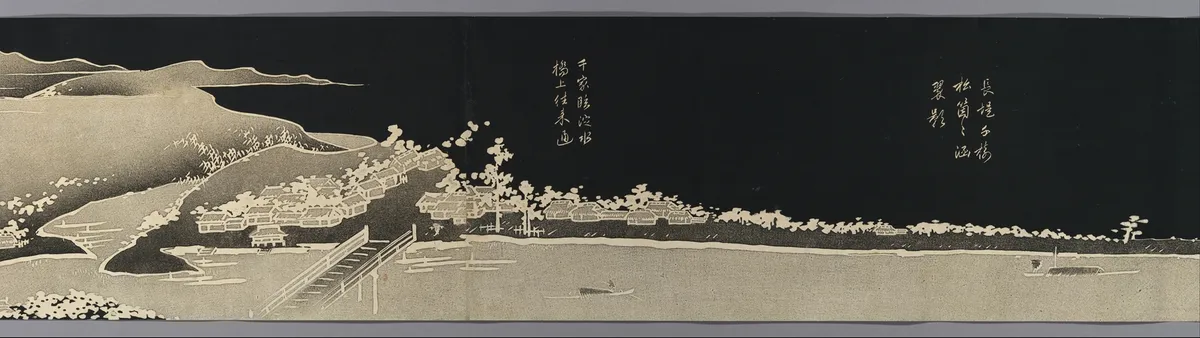
Happy Improvisations on a Riverboat Journey
Voices carried over the water, mingling with the gentle lapping of the river against the wooden hull. Laughter and music wove through the air, light and unburdened. A biwa's strings resonated, plucked with expert fingers, harmonising with the soft drumbeat of hands on the boat's side. The river was a mirror, reflecting the lanterns' glow, casting a warm shimmer on the faces of those aboard.
The evening sky stretched endlessly above, deepening into indigo as the sun surrendered to night. Willow branches dipped into the water, trailing softly behind the boat. The scent of damp wood and distant pines mixed with the cool breeze that ruffled silk sleeves and hair.
Figures moved gracefully, silhouetted against the twilight. Their robes whispered as they shifted, bright patterns muted by the evening's embrace. Conversation buzzed, a tapestry of voices, each adding to the river's song. There was no rush, only the slow passage of time marked by the rhythmic splash of oars.
In this fleeting moment, the world beyond the river ceased to exist. Here, laughter reigned, and music held sway. The boat drifted, an island of joy and improvisation, floating gently down the stream.
Historical Echo
Itō Jakuchū, known for his imaginative and vibrant works, captured the essence of Edo's leisure culture. This print, dated around 1767, reflects the era's fascination with nature and pleasure. Riverboat journeys were a common escape from the bustling city, offering a serene yet lively atmosphere. Jakuchū's depiction of this joyous scene invites the viewer to experience the harmonious blend of music, conversation, and the tranquil beauty of the river, echoing the transient joys of Edo life.