

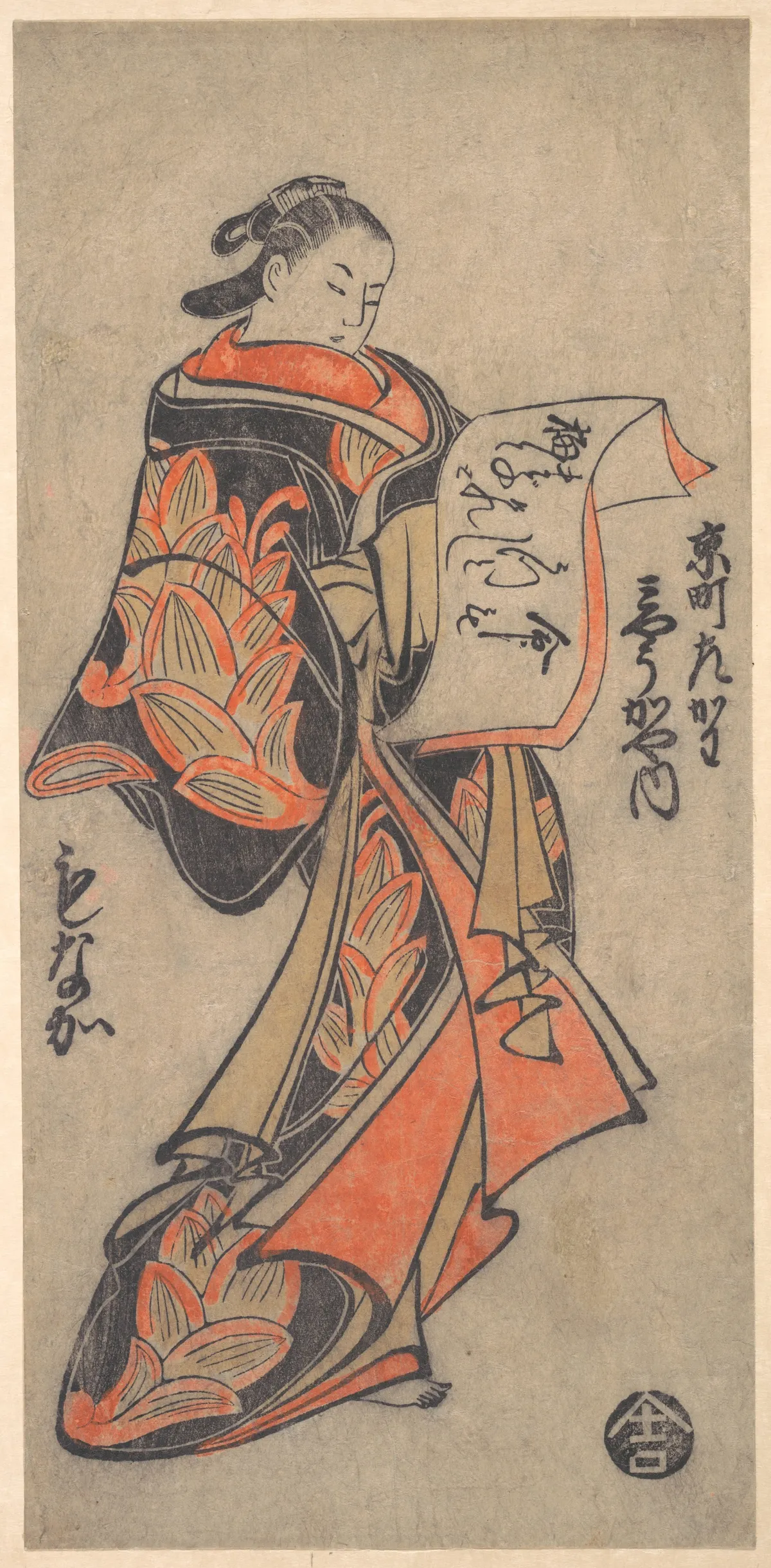
Courtesan's Silent Evening
The room is dim, lit by a single lantern. Shadows stretch across tatami mats. A courtesan stands, poised and serene. Her kimono shimmers in the soft glow, a tapestry of delicate patterns and muted colours. The air is heavy with incense, sweet and smoky, clinging to the silk of her sleeves.
Outside, the city murmurs. Footsteps and distant laughter slip through paper walls. She listens, eyes distant, holding secrets behind painted lids. Her hair, an elaborate crown of pins and combs, speaks of her status. Each ornament catches the flickering light, a constellation in miniature.
The silence within is thick, broken only by the rustle of fabric as she moves. Her gaze drifts to the open shoji, where moonlight spills onto the veranda. The world beyond is a ghostly realm, hushed and waiting.
In the Myōgaya House, time flows differently. Moments stretch and bend, echoing with unspoken stories. She breathes in the night, feeling its weight settle around her. Her heart beats in time with the distant drums of Edo, a city alive with dreams and desires.
Historical Echo
During the Edo period, courtesans were both admired and isolated. Their lives were performances, crafted with precision and care. The Myōgaya House was renowned, a place where art and elegance entwined. Torii Kiyomasu I captured this world with grace, his lines delicate yet bold. Each print a window into a vanished world, where beauty masked the burdens beneath.