

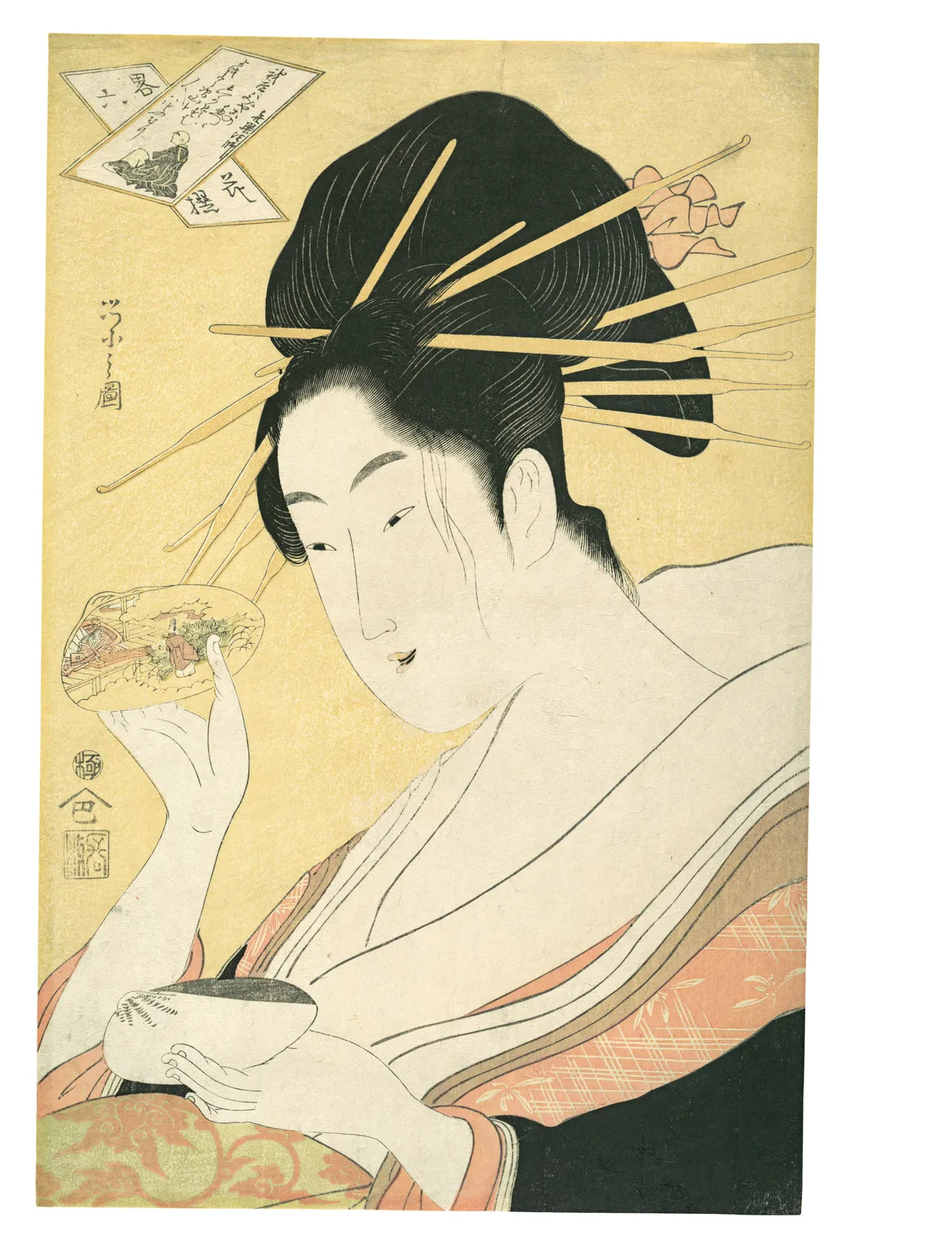
Kisen Hōshi's Quiet Riddle
The room is dimly lit. A single lantern flickers, casting shadows on the tatami mats. Kisen Hōshi sits alone, his robes pooled around him like ink spilled on parchment. Before him, a set of shells, each meticulously painted, lies in wait. The air is heavy, tinged with the scent of pine and distant rain.
Kisen Hōshi lifts a shell, tracing its edge with a fingertip. The cool, smooth surface whispers secrets of the sea. Outside, the wind rustles through the trees, a gentle murmur that mingles with the distant echo of a temple bell. He closes his eyes, listening to the silence between the sounds.
His mind drifts to the past, to verses exchanged under moonlit skies. The Six Poetic Immortals, his companions in spirit, their words etched in memory. He smiles, a fleeting shadow on his lips, as he matches the shells with a deft touch. Each pairing is a riddle, a dance of form and meaning.
The lantern's light grows dim, the wick sputtering as the oil wanes. Kisen Hōshi places the last shell, its twin nestled beside it. The game is complete, yet the echoes linger. In the stillness, his thoughts return to the present. The room, the shells, the quiet riddle of existence.
Historical Echo
Kisen Hōshi, a revered poet of ancient Japan, was known for his ascetic life and enigmatic verses. This ukiyo-e print by Chōbunsai Eishi captures a moment of introspection, a blending of tradition and parody. The game of matching shells, or kai-awase, was a popular pastime among the nobility, symbolising the beauty and transience of life. In this portrayal, the artist invites us to ponder the delicate balance between solitude and connection, the past and the present.