

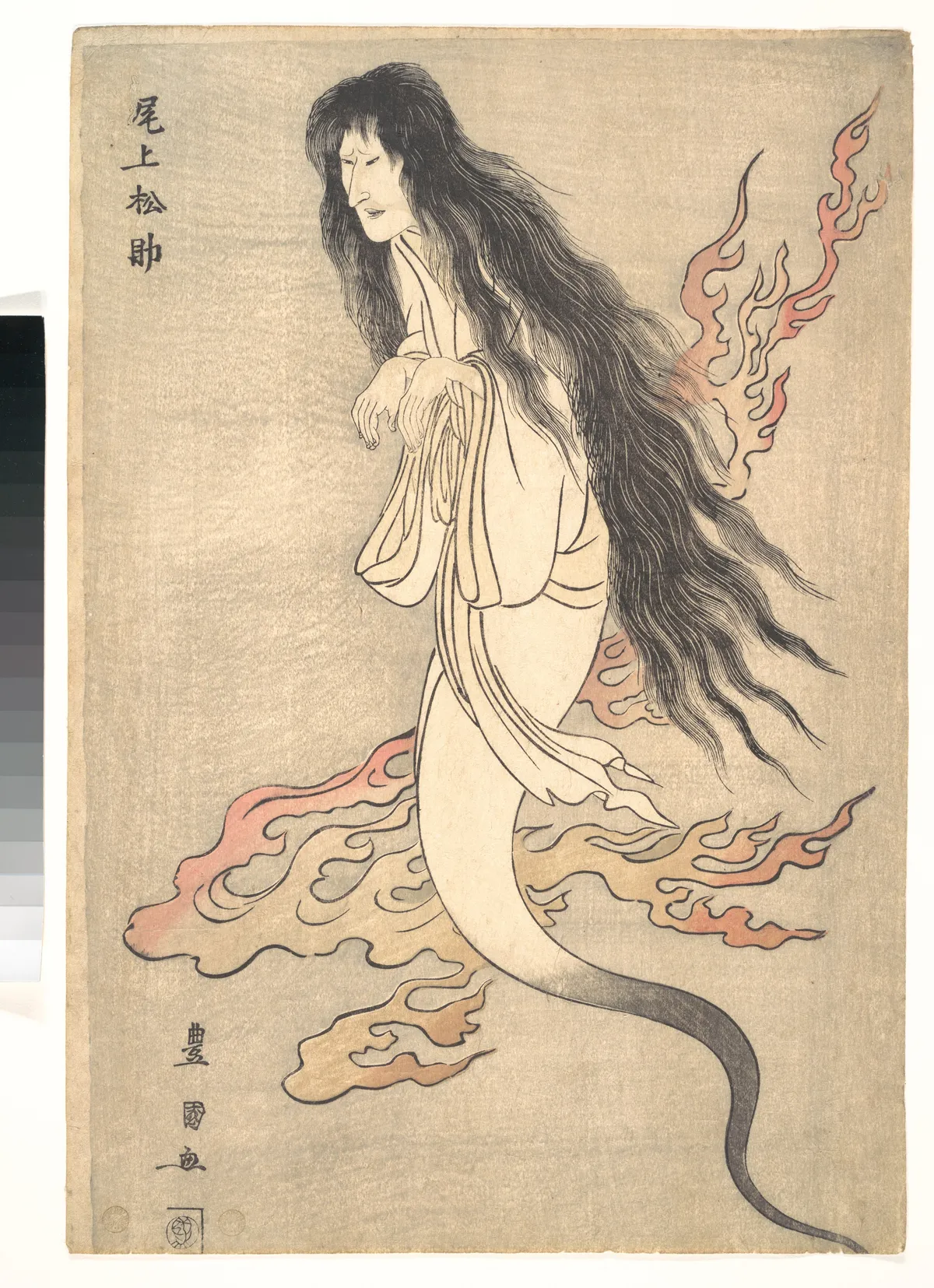
The Ghost of Oiwa
The lanterns flicker in the heavy night air. Onoe Matsusuke, draped in spectral robes, stands on stage, his eyes hollow with sorrow. The crowd holds its breath. No one moves. Silence stretches like a thin thread. Matsusuke's voice breaks it, soft yet piercing. He embodies Oiwa, the wronged wife, her anguish and wrath seeping through his every gesture.
The air is thick with incense and anticipation. Shadows play across the wooden boards, echoing the tale's dark corners. Oiwa's spirit, wronged and restless, haunts the Yotsuya station. Her voice, a whisper carried by the wind, tells of betrayal and revenge.
Matsusuke's presence is unnerving. His movements deliberate and slow. A pale hand reaches out, longing, accusing. The audience shudders, feeling the chill of Oiwa's tale. The boundaries between life and death blur.
A single tear glistens in the dim light, tracing a path down his painted face. It speaks of love turned to despair, of justice sought beyond the grave. The scene is thick with emotion, the weight of unforgotten wrongs.
In the dim glow of the kabuki theatre, Oiwa's spirit lingers, eternal and haunting. The night deepens, holding its secrets close.
Historical Echo
In 1812, Utagawa Toyokuni I captured a scene from one of the most enduring ghost stories of the Edo period. Onoe Matsusuke, a celebrated kabuki actor, portrayed Oiwa, the vengeful spirit from "Yotsuya Kaidan". This tale of betrayal and supernatural revenge was a staple of Edo theatre.
Toyokuni's woodblock print immortalises Matsusuke's performance. The actor's portrayal of Oiwa was renowned for its intensity and emotion. The story of Oiwa, poisoned by her unfaithful husband, resonated deeply with audiences. Her ghost, seeking retribution, became a powerful symbol of wronged women.
Kabuki theatre, with its dramatic storytelling and vivid characters, was a cultural cornerstone. Prints like Toyokuni's preserved these ephemeral performances, allowing their haunting echoes to reach beyond the stage.