

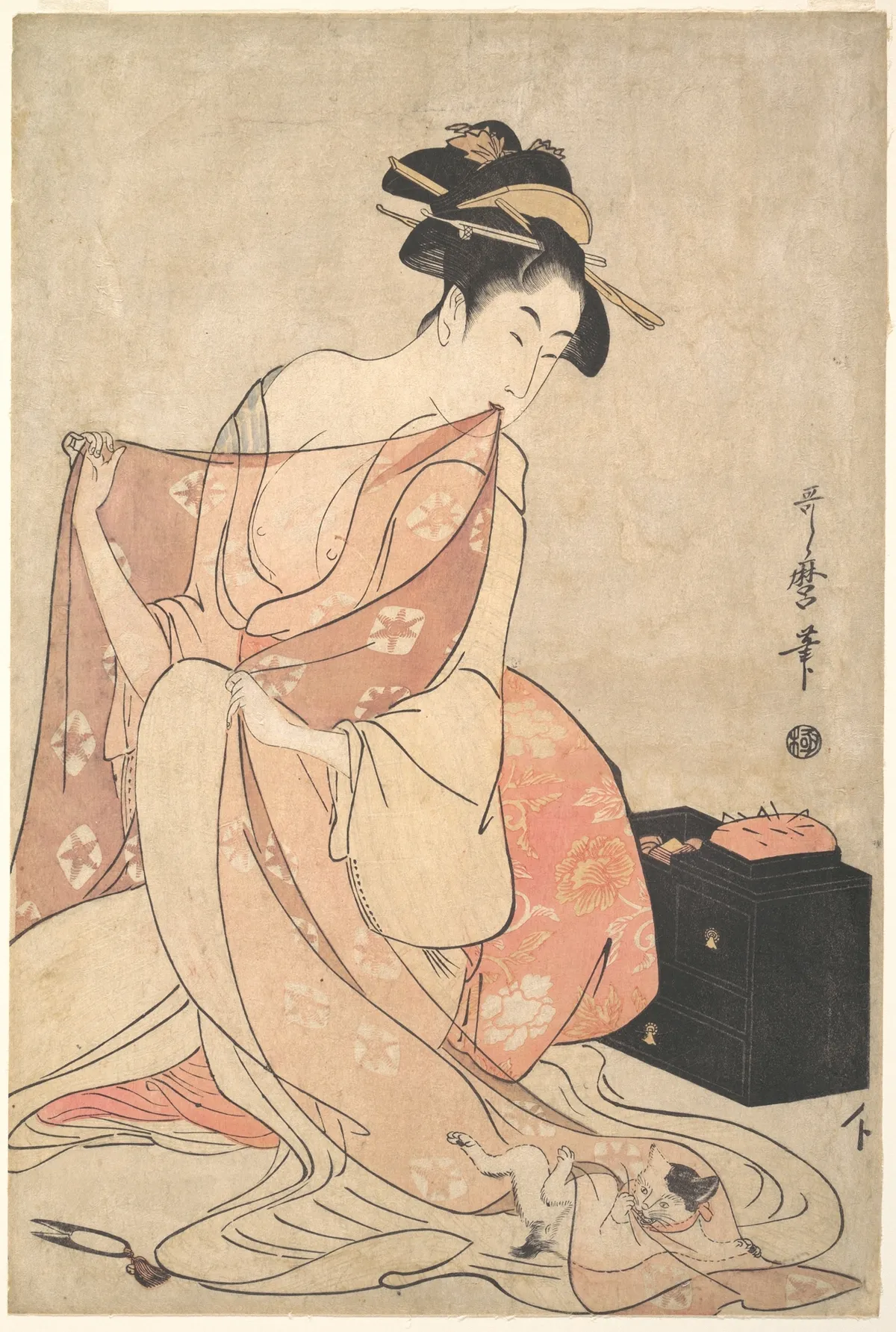
A Woman and a Cat
She sat by the window, the paper screen casting soft shadows. Her kimono, a cascade of silk, rustled as she shifted. Beside her, a cat stretched languidly, its fur catching the dim light. The air was thick with the scent of rice and ink.
Her fingers, delicate and pale, traced the rim of a porcelain cup. She listened to the distant murmur of the street, the muted clatter of geta on stone. The day was slowly dying, leaving a gentle twilight in its wake.
The cat purred, a low, comforting sound that filled the quiet room. It nuzzled against her, seeking warmth and familiarity. She looked down, a faint smile playing on her lips, her thoughts like drifting clouds.
In that moment, time seemed to pause, suspended between the fading day and the encroaching night. The world outside was forgotten, leaving only the woman, the cat, and the silent, shared space.
Historical Echo
Kitagawa Utamaro, a master of portraying beauty and intimacy, captured this serene moment around 1793-94. The print reflects the Edo period's fascination with everyday life and the quiet elegance of domestic scenes. Utamaro's work often focused on the subtle expressions of women, offering glimpses into private worlds. Here, the bond between the woman and her cat is timeless, a testament to the enduring nature of companionship. In the delicate interplay of light and shadow, Utamaro reveals a world of quiet introspection.