

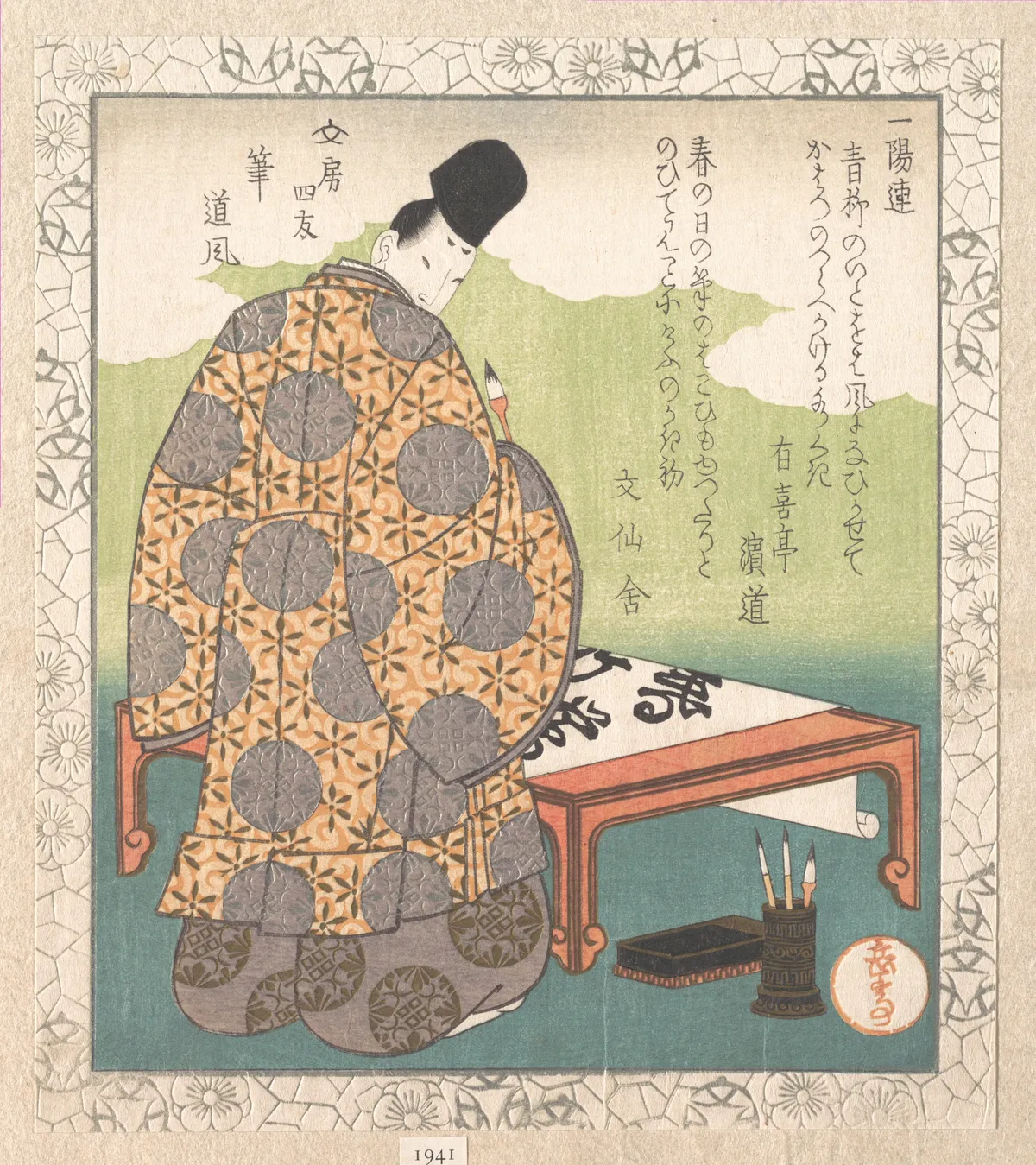
The Calligrapher in Rain
The room is dim, with shadows pooling in the corners. Ono no Tōfū sits at a wooden table, the air thick with the scent of wet earth. Outside, rain taps a gentle rhythm against the paper screen. The calligrapher's brush hovers above rice paper, poised like a bird ready to dive. Each stroke, deliberate and measured, whispers across the surface, leaving trails of deep black ink. His hands, steady and sure, bear the quiet authority of years. Tōfū's mind, however, wanders to distant days at the Heian court, where whispers of poetry and politics mingled beneath silk banners. The rain continues, a steady companion to his solitude.
Historical Echo
In the Heian period, calligraphy was not merely a skill but a spiritual practice. Ono no Tōfū, a master calligrapher, was revered for his unmatched elegance and precision. His legacy persisted through centuries, inspiring poets and artists alike. Yashima Gakutei, in the early 19th century, captured Tōfū's essence in a moment of quiet creation, celebrating the enduring beauty of ink and brush.