

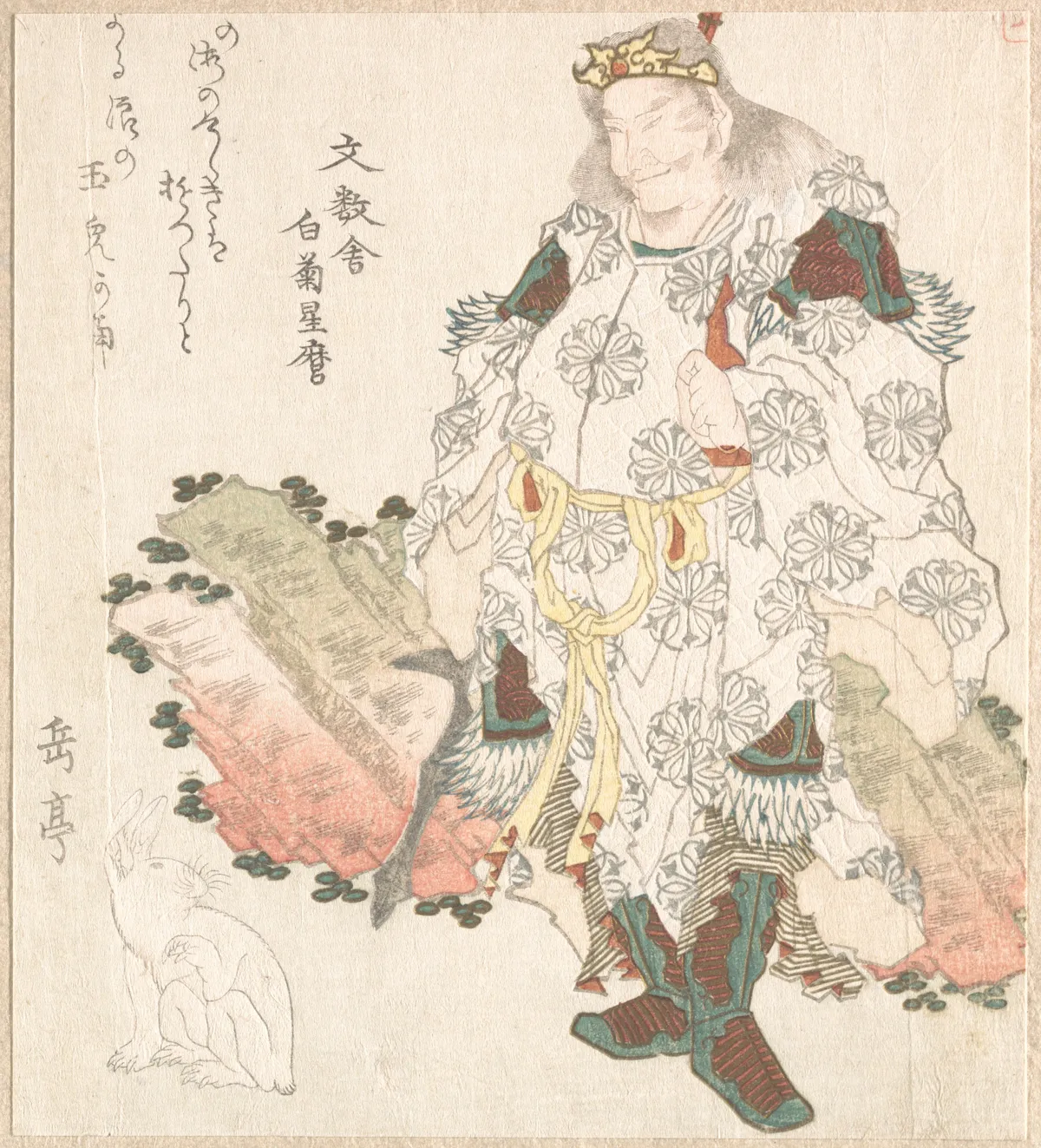
Prince Okuni and the Hare
Prince Okuni stands beneath the broad canopy of a pine tree. The air is thick with the scent of damp earth. He wears a robe that whispers as he moves, heavy with silk and history. His eyes, dark and serene, gaze upon the creature at his feet—a hare, fur like moonlight against the shadowed ground.
A breeze stirs the branches, rustling leaves like distant whispers. The prince listens, a quiet stillness enveloping him. In the dim light, the hare seems to shimmer, a living spirit from the tales of old. Okuni bends slightly, his hand reaching with slow grace towards the animal.
The world holds its breath. The air hums with ancient stories, the kind told by flickering lantern light, filled with ghosts and gods. Okuni's fingers hover above the hare's back, sensing the warmth of life, the pulse of something eternal.
The hare does not flinch. It meets his gaze with eyes that reflect the universe. Time stretches, a moment suspended in the gentle balance of nature and man, of nobility and the wild.
Far off, a temple bell tolls, its sound rolling over the hills like a wave. The prince straightens, the spell broken yet lingered in the air. The hare remains, a guardian of secrets, as Okuni turns away, footsteps soft on the moss-covered path.
Historical Echo
In the Edo period, figures of nobility often featured in art, embodying ideals of grace and connection with nature. Yashima Gakutei captures this harmony with simplicity and reverence. The hare, a symbol of luck and fortune, stands as a bridge between the human world and the ethereal, a reminder of the delicate interplay between man and the mysteries of the natural world.