

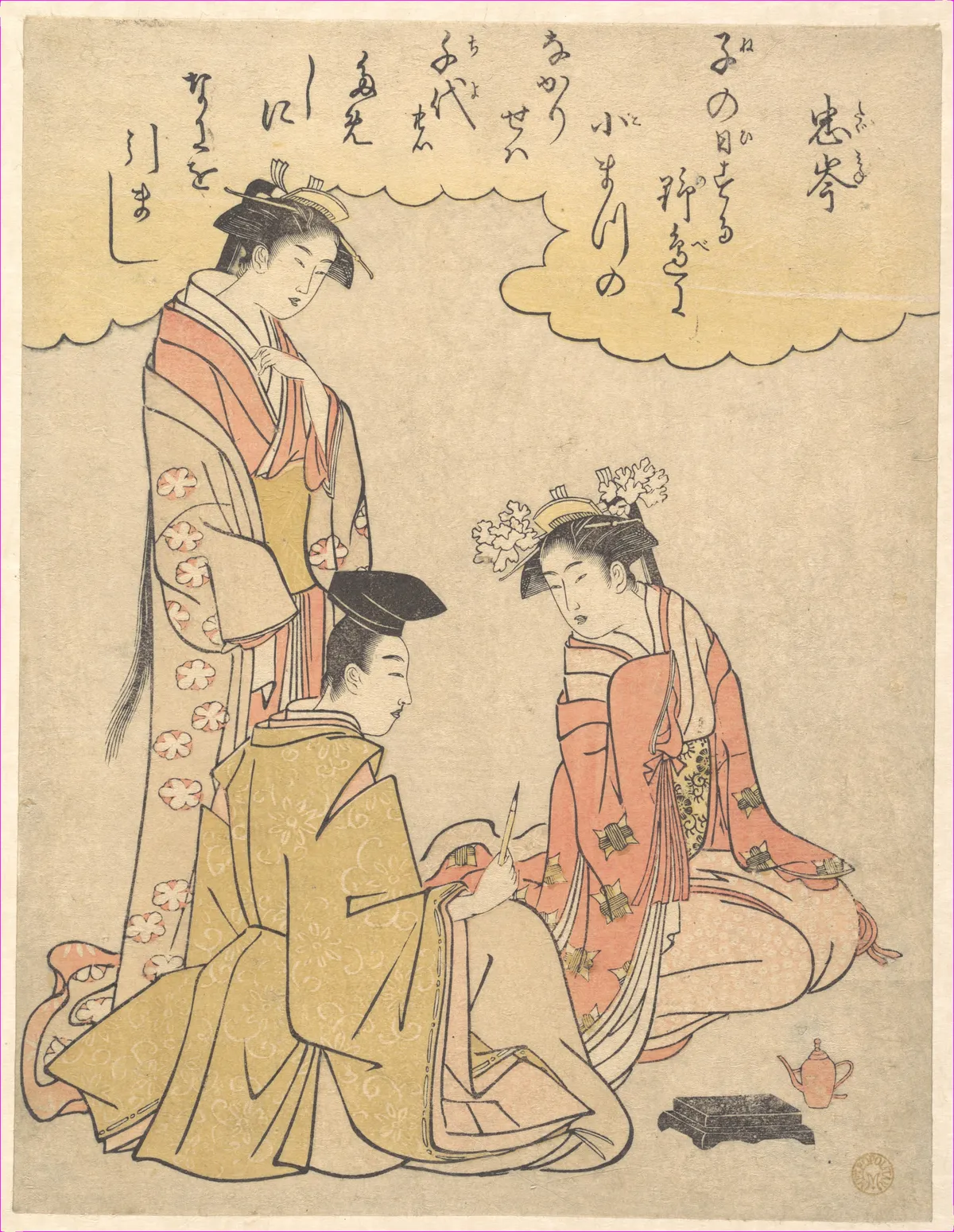
Courtly Whispers
The courtier stood beneath the muted light of the paper lanterns. His robes flowed like water, heavy with the scent of incense and the weight of brocade. He spoke softly, each word a feather drifting through the air. Beside him, two ladies of the court listened, their kimonos whispering as they shifted, silk against silk.
The garden beyond was a shadowed expanse, the moonlight just a pale memory on the gravel. Night insects sang unseen, a reminder of the world outside this cocoon of courtly intrigue. The poem by Mibu no Tadamine lay between them, ink still fresh, a bridge of words spanning time.
The ladies exchanged glances, their eyes dark pools reflecting the flickering light. They knew the power of poetry, how it could bind hearts and sever ties. The courtier paused, letting the silence fill the space between verses. His gaze lingered on the paper, the calligraphy a dance of shadows and light.
In that moment, the world outside ceased to exist. Only the court, the words, and the unspoken tensions remained, suspended in the night.
Historical Echo
In the late 18th century, Japan's court life was a world unto itself. Poetry was not mere decoration; it was a vital part of communication and expression. Rekisentei Eiri captures this delicate interplay between words and emotions, where a single verse could change destinies. The courtier and his companions are ensnared in this web, their fates intertwined with the ink on paper.