

The Silent Presentation
The night air was thick with the scent of pine and ash. Lanterns flickered, casting long shadows on the tatami. Silent figures stood, their eyes fixed on the ground. A chill seemed to seep through the wooden walls, whispering of endings.
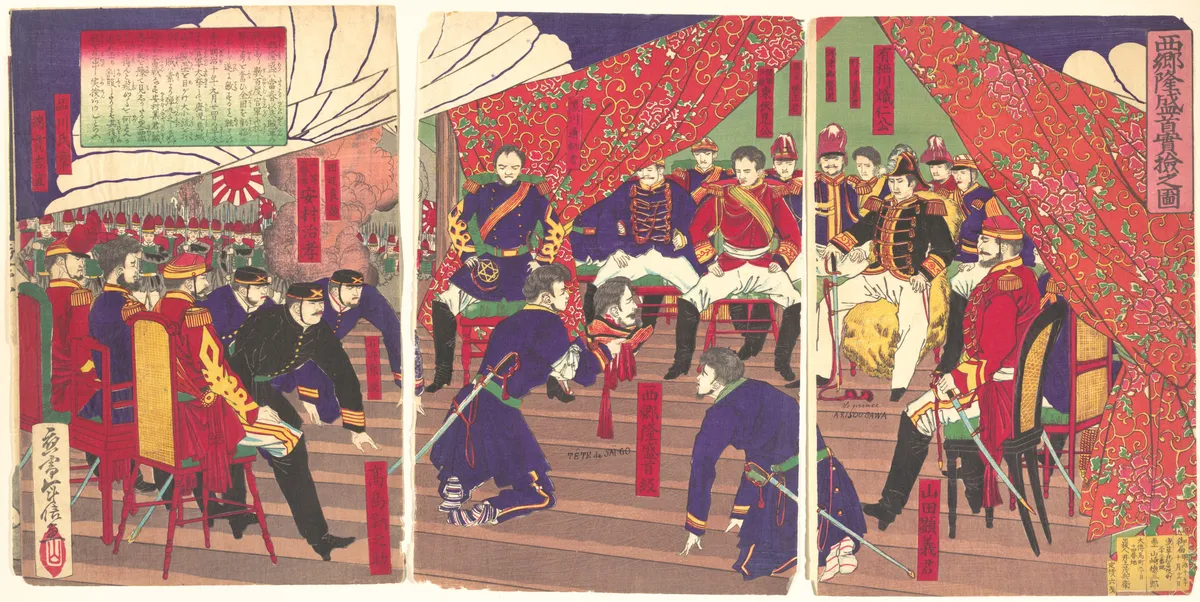
The head of Saigo Takamori lay on a lacquered tray, its pallor stark against the deep red. It was an offering to Prince Arisogawa, a token of loyalty and defeat. The prince sat, unmoving, a silhouette against the shifting light. His robes rustled quietly, a sound almost lost in the tense silence.
A breeze stirred the paper screens, carrying the distant cries of a city on edge. The room held its breath. Outside, the moon hung heavy, watching over the somber gathering. One by one, the men paid their respects, their footsteps soft, as if afraid to disturb the spirits.
Yamazaki Toshinobu captured this moment of quiet horror, where history and honour met in a single, unyielding gaze. The colours were muted, the lines precise, as if to hold the weight of the moment within the frame. The print was more than an image; it was an echo of a nation's sorrow.
Historical Echo
In October 1877, the Satsuma Rebellion came to its bloody conclusion. Saigo Takamori, once a revered leader, now lay defeated. His death marked the end of an era, the samurai's final stand against modernity.
Prince Arisogawa received the head in a solemn ceremony, a gesture of submission from the rebels. It was a scene fraught with political tension, a reminder of the shifting tides in Meiji Japan. This ukiyo-e does not merely depict a moment; it embodies the weight of change, the silent resignation of a world fading into history.
Yamazaki Toshinobu's work remains a poignant testament to this turning point, capturing the stillness before the storm of a new age.