

The Heavy Silence
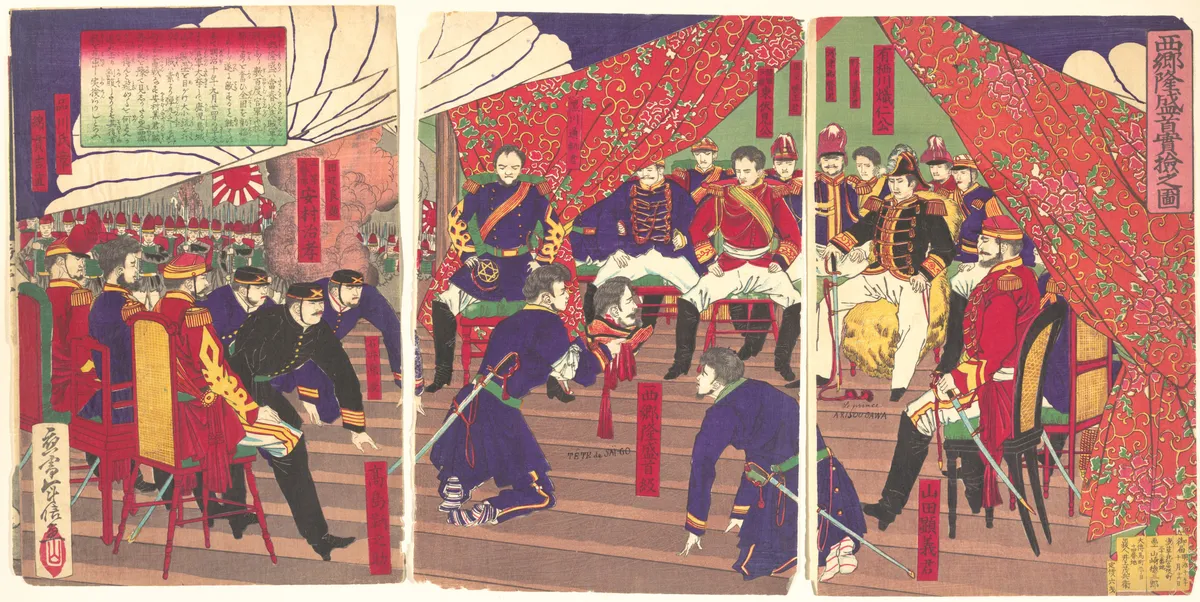
The air hung heavy with the weight of defeat. A dim, flickering lantern cast an uneasy light upon the wooden planks. Soldiers stood rigid, faces obscured by shadow. In the centre, a lacquered box lay, its purpose grimly clear. The head of Saigo Takamori rested inside, still and silent.
Prince Arisugawa, cloaked in sombre robes, stepped forward. The steady beat of his footsteps filled the room. Silence swallowed the murmurs of the gathered men. All eyes fixed upon the sombre prince. His gaze fell upon the box, lingered.
Outside, the night was quiet. The echoes of battle faded into memory. Only the distant rustle of leaves disturbed the stillness. Inside, the weight of history pressed down. The head of a fallen hero, once a beacon of resistance, now a symbol of an era's end.
No words were spoken. None were needed. The presentation was a ritual, a final act in a tragic tale. The prince nodded, a slow, deliberate gesture. The box closed with a soft thud. The heavy silence continued its reign.
Historical Echo
The year was 1877, marking the end of the Satsuma Rebellion. Saigo Takamori, a revered samurai, had led the last stand against the Meiji government. His death symbolised the fall of the samurai class. The presentation of his head to Prince Arisugawa was a sombre acknowledgment of both victory and loss. This ukiyo-e captures the weight of that moment, a silent testament to the shifting tides of Japanese history. The Meiji era was a time of transformation, and this print reflects the stark realities of change.