

The Stage's Whisper
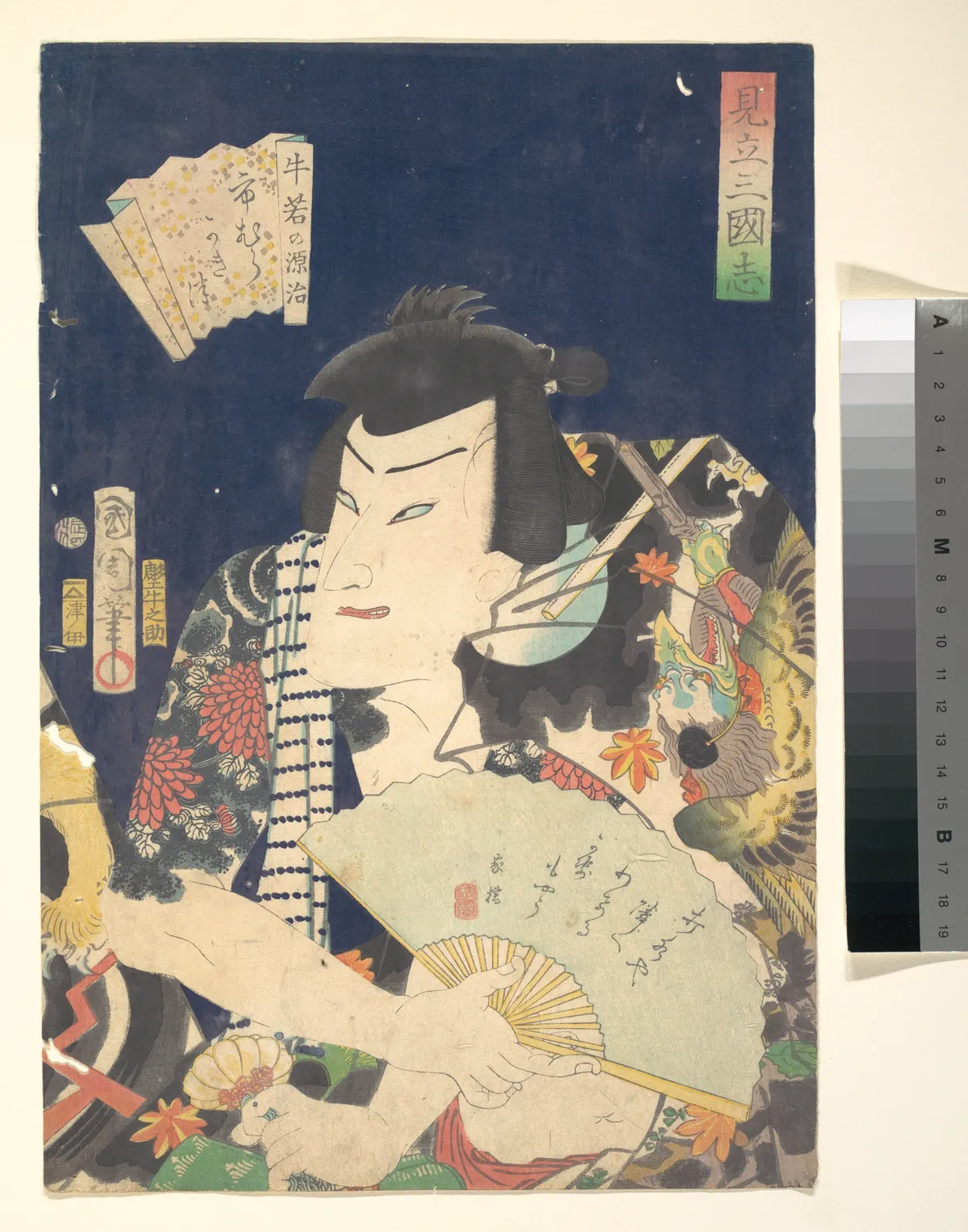
The theatre trembled with anticipation. Heavy curtains rustled, a whisper against the expectant silence. Ichimura Kakitsu IV stood poised, embodying Ushiwaka no Genji with an intensity that seemed to draw breath from the very air.
His costume, a tapestry of vivid silks, caught the dim glow of lanterns. Shadows danced across his face, accentuating the sharp lines of his expression. Eyes narrowed, a warrior's resolve flickering within. The audience held its breath, the weight of history pressing down like the darkened sky.
Wooden boards creaked softly underfoot. Each step deliberate, a metronome to the heart's anxious beat. The scent of incense hung in the air, mingling with the musk of old wood and expectation. Ushiwaka, the legendary hero, stood not in fiction but before them; the boundary between actor and character blurred into nothingness.
The play unfolded, a parody of ancient tales. Yet, here in this moment, authenticity reigned. The whispers of the past echoed, weaving through the theatre like a forgotten melody. Kakitsu's voice rose, clear and commanding, a river's rush amidst stillness.
In this ephemeral world, the audience was swept into a realm where history and fantasy danced. Applause erupted, breaking the spell, but the echoes lingered. Ushiwaka no Genji faded into the shadows, leaving only the memory of his presence etched in the minds of those who witnessed his brief return.
Historical Echo
In 1868, the Meiji Restoration was reshaping Japan. Amidst this turbulent transformation, the Kabuki theatre offered a refuge, a place where tradition held firm. Toyohara Kunichika captured this world, immortalising actors like Ichimura Kakitsu IV in prints that transcended mere likeness.
Kunichika's work, vibrant and alive, mirrored the dynamic shifts of the era. He depicted not just actors but the essence of Kabuki's cultural heartbeat. In portraying Kakitsu as Ushiwaka no Genji, he bridged the gap between the old and the new, honouring the stories that shaped Japan's identity.
The print remains a testament to the enduring power of performance. It speaks of a time when the stage was both a sanctuary and a mirror, reflecting the hopes and fears of a nation on the brink of modernity. Through Kunichika's eyes, we glimpse the spirit of an age, forever captured in the silent eloquence of wood and ink.